- When you hike in the mountains, you begin to see the connections between the topography, the creatures, and the local culture.
- Take the ropeway straight up to an altitude of 2,612 meters.
- Senjojiki Cirque is a massive "glacial remnant."
- From Senjojiki to Norikoshi Jodo—the mountain's appearance changes dramatically.
- On the first hike, we headed towards Nogaike and Komagai-no-ike.
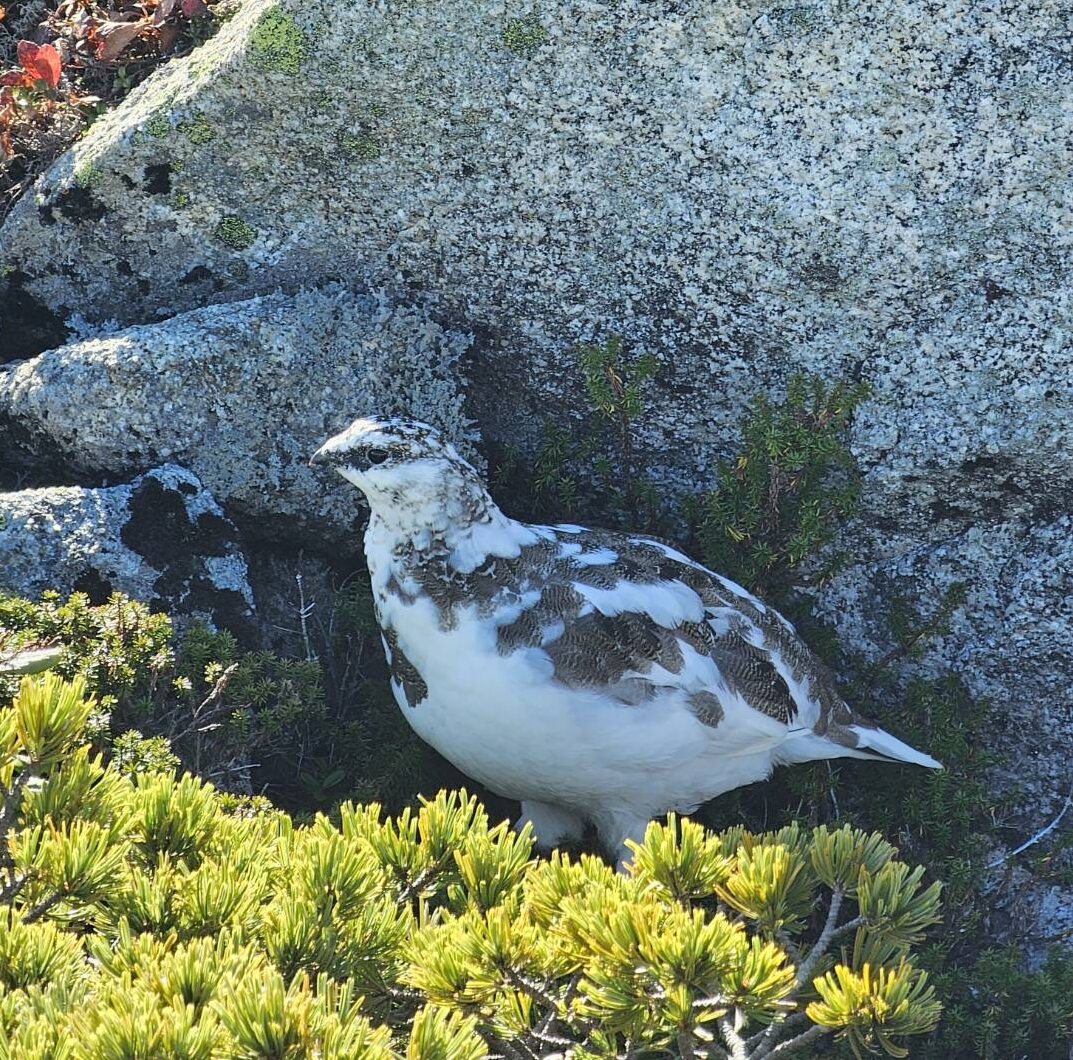
- A white and brown ptarmigan was hiding in the shade of a rock.
- Second time. There was already snow on the mountain.
- There was a white ptarmigan in the snow.
- Why have ptarmigan disappeared from the Central Alps?
- Kōzenji Temple at the foot of the mountain—not just Hayataro, but an ancient temple of moss and cherry blossoms
- After descending the mountain, we went to Komagane for a katsudon (pork cutlet rice bowl) with sauce.
- Someday, I'll make a ceramic piece of the ptarmigan I saw on Mount Kiso-Komagatake.
When you hike in the mountains, you begin to see the connections between the topography, the creatures, and the local culture.
I've climbed Mount Kiso-Komagatake twice before. And strangely enough, I encountered ptarmigan both times.
The first one I saw had a mix of white and brown feathers. It was motionless between a rock and a dwarf pine, blending into the surrounding landscape.
On my second visit, the mountains were already covered in snow. The ptarmigan I encountered there was much whiter than the one I saw the first time.
While hiking the same mountain, the scenery changes with the seasons, and even the creatures that live there change. Mount Kiso-Komagatake is a mountain where you can experience this "high-altitude world" relatively close by, in addition to the spectacular views from the summit.
This time, while reflecting on two climbs, I will introduce some background information to help you enjoy Mount Kiso-Komagatake more deeply, including the formation of the Senjojiki Cirque, the ecology of the ptarmigan and its resurgence in the Central Alps, the Hayataro legend that remains at the foot of the mountain, and even Komagane's katsudon with sauce and hot spring facilities.
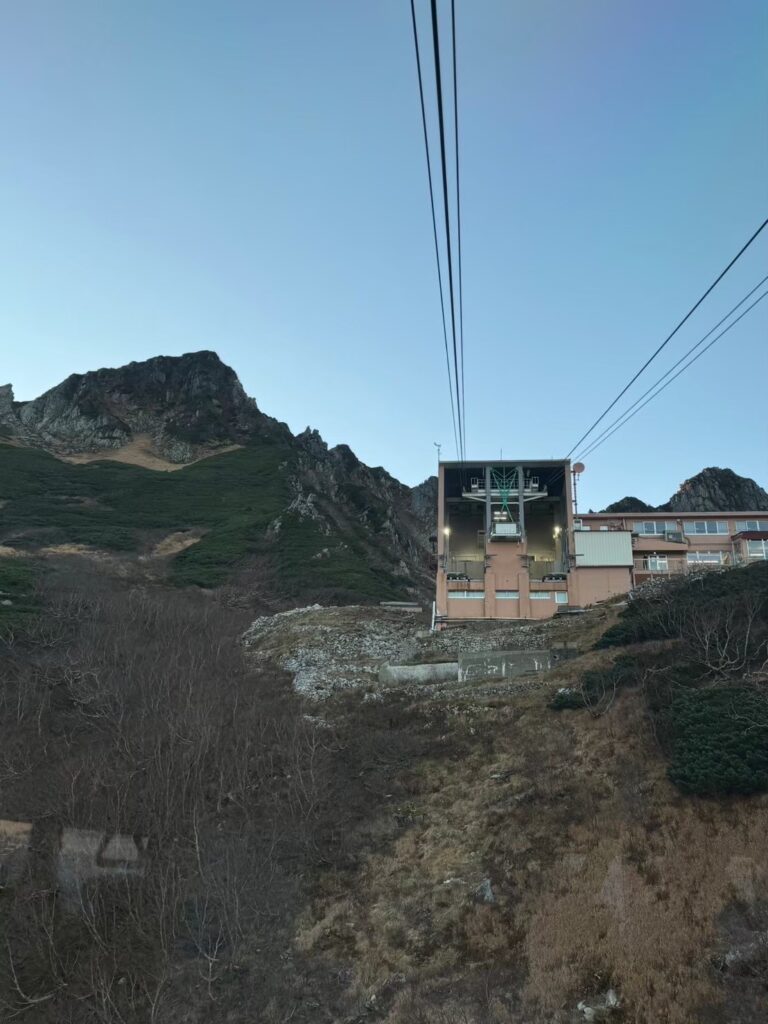
Take the ropeway straight up to an altitude of 2,612 meters.
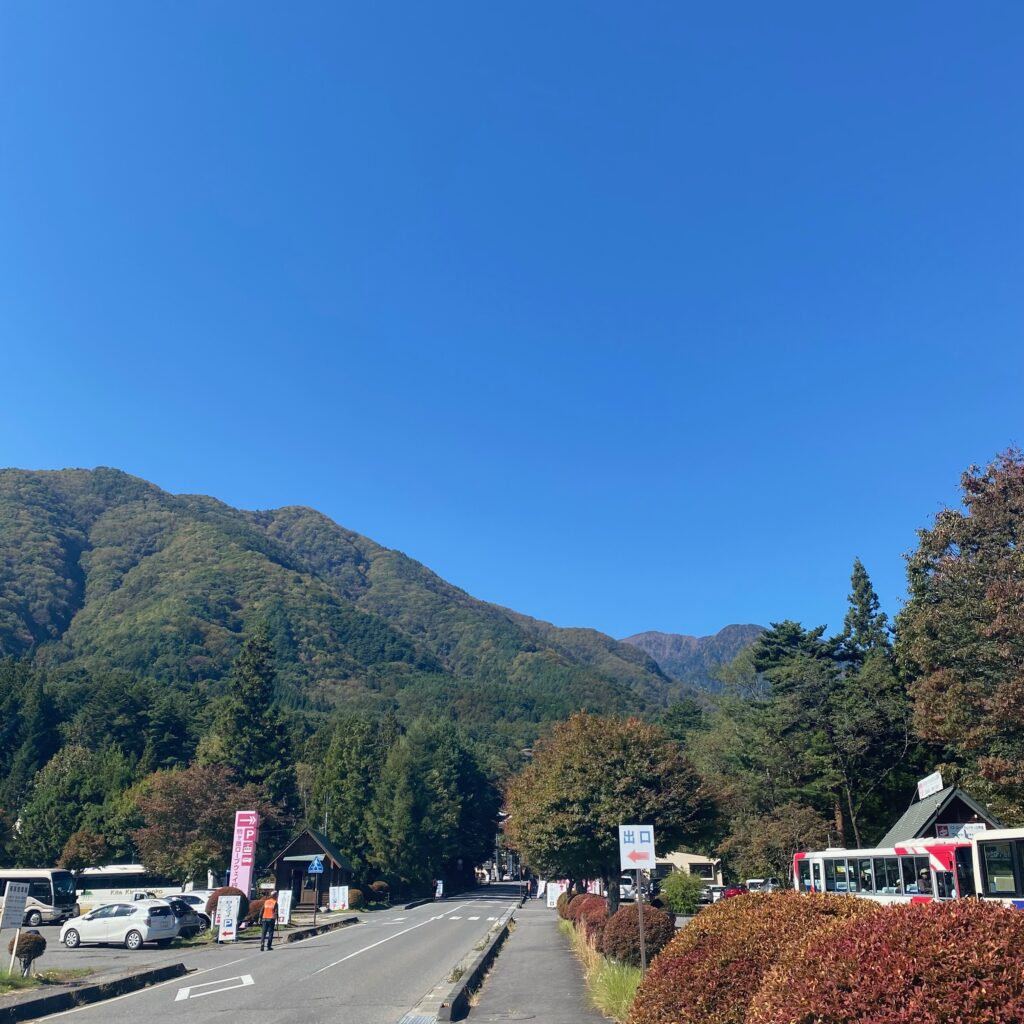
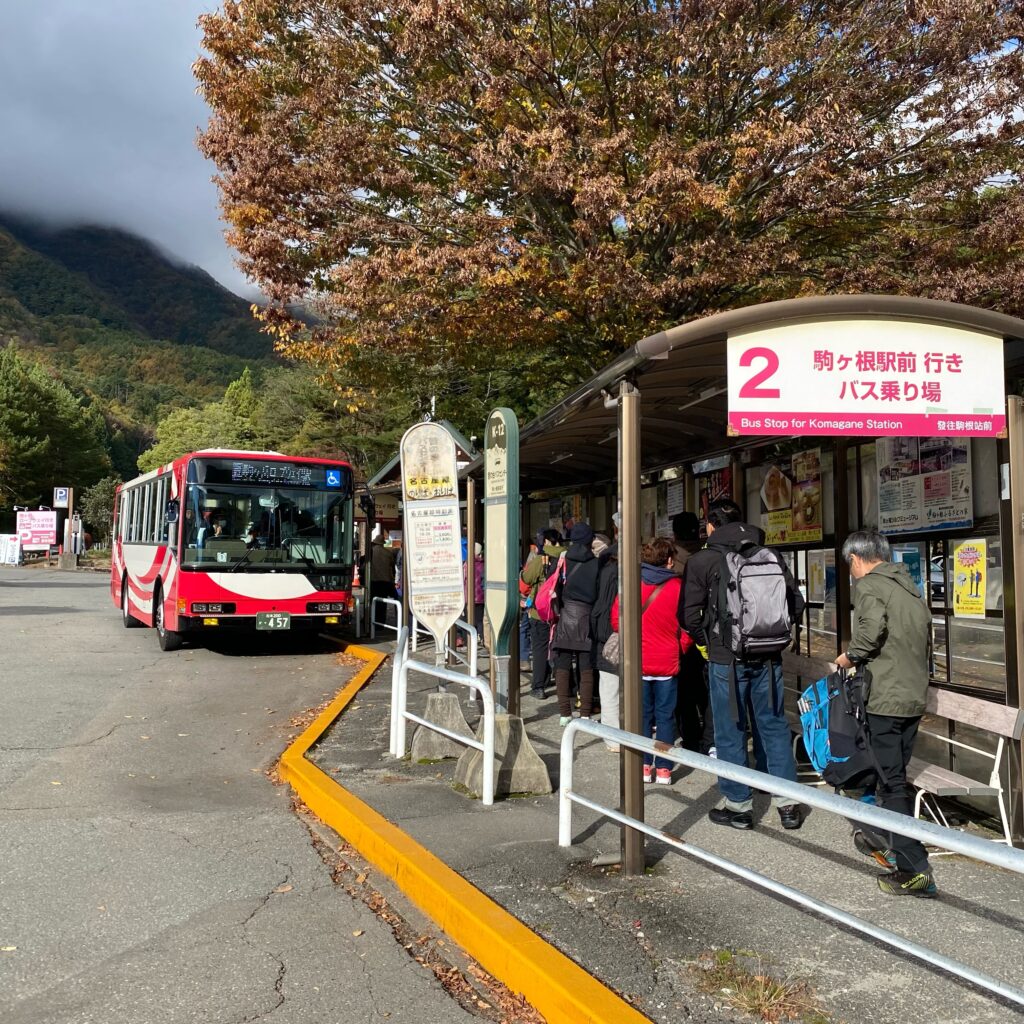
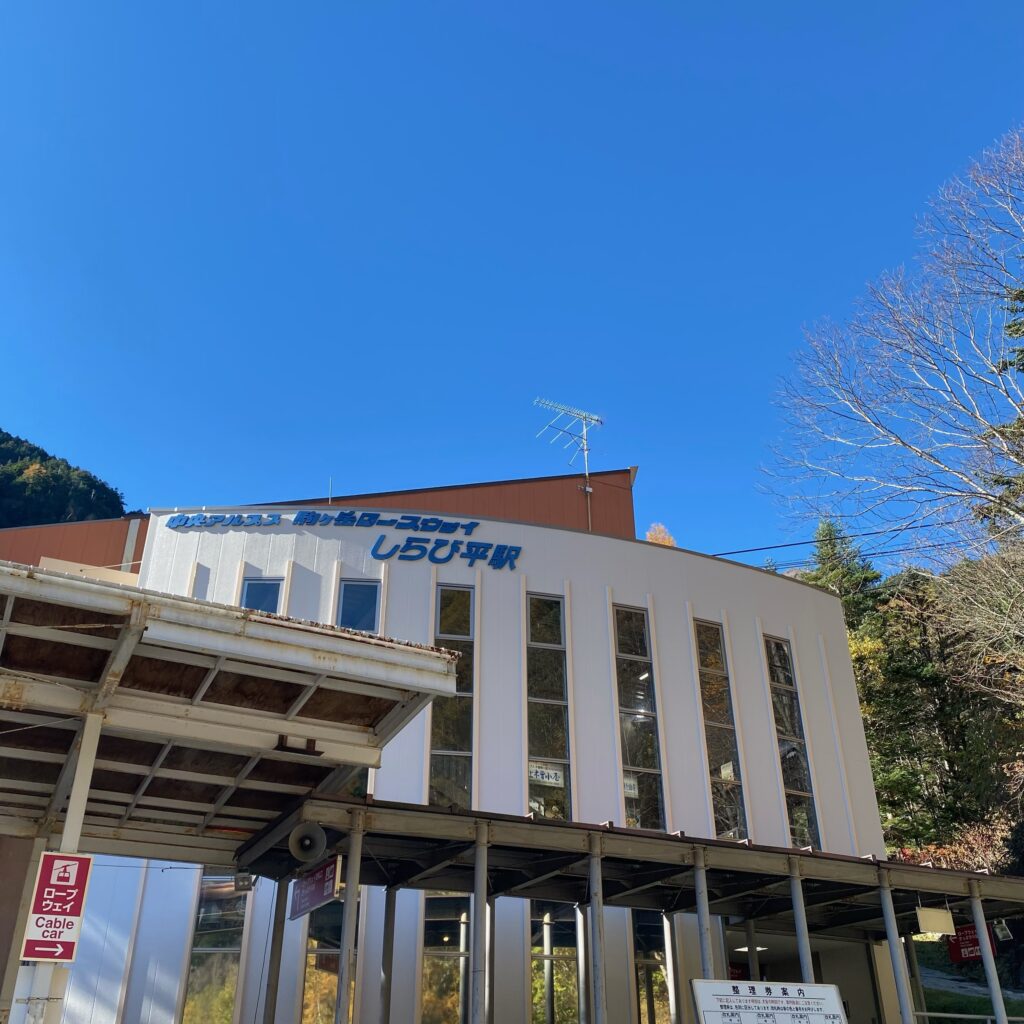
The most distinctive feature of climbing Mount Kiso-Komagatake is the ability to reach a high altitude in one go. From the base of the mountain, you take a bus to Shirabidaira Station, and from there you board the Central Alps Komagatake Ropeway.
Both times the bus was incredibly crowded,Akaho TaxiI made a reservation with [Name of person/organization] and headed to Shirabidaira Station. The fare was a little less than 5,000 yen.
The elevation of Shirabidaira Station is 1,662m. The final stop, Senjojiki Station, is 2,612m. The ropeway alone ascends a height difference of 950m in one go. This is said to be the greatest elevation difference in Japan.
Even before you begin your climb, you're already in an environment completely different from that of the lowlands. That's why Mount Kiso-Komagatake is a popular mountain for those who want to easily experience the world of mountains nearly 3,000 meters high.
On the other hand, it's dangerous to assume that a mountain is easy just because it's accessible by ropeway. At higher altitudes, temperatures are lower and winds are stronger. Even on the same hiking trail, conditions can change drastically depending on the weather.
In fact, the mountain looked quite different on the two occasions I visited. The first time, rocky cliffs and withered alpine plants were prominent, but the second time, snow had accumulated on the hiking trails and around the mountain huts.
Even a mountain you've hiked before can feel like a different mountain in a different season. Mount Kiso-Komagatake is a very clear example of this.
Senjojiki Cirque is a massive "glacial remnant."
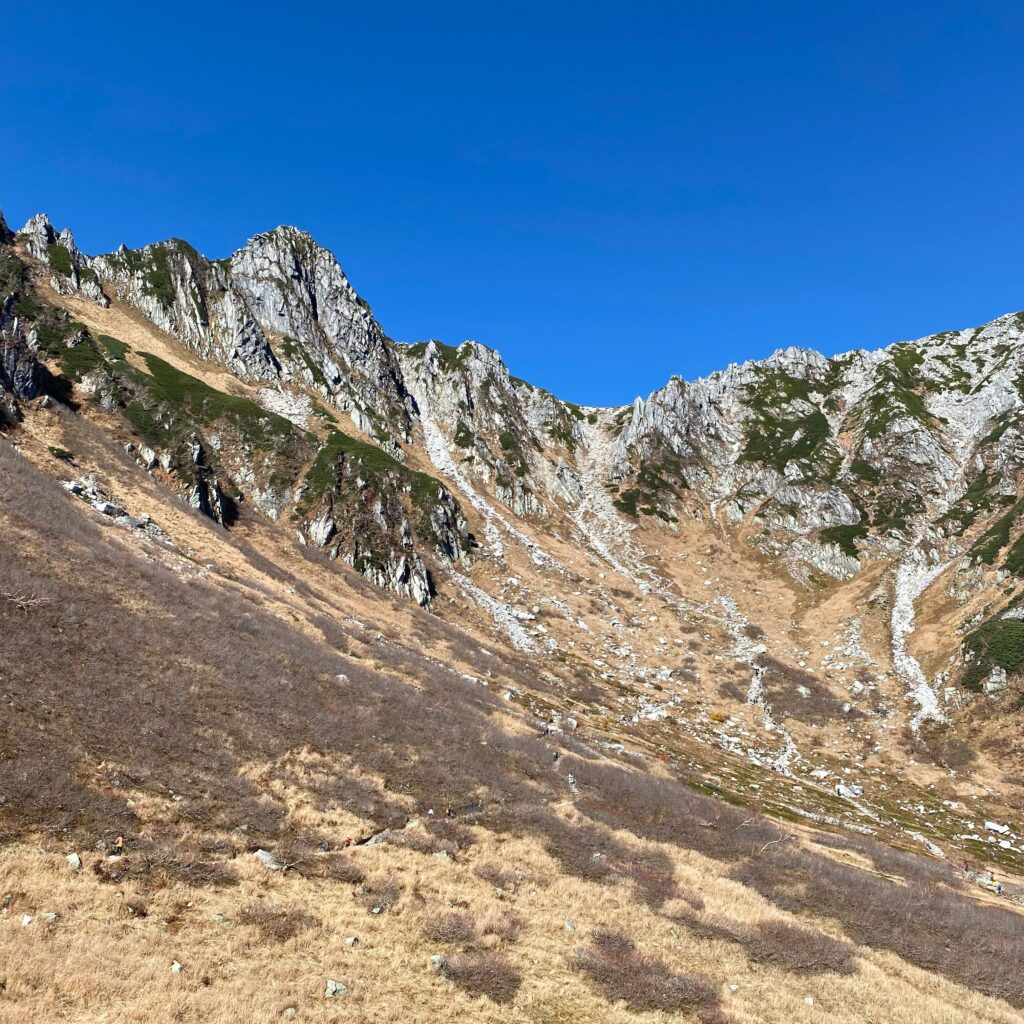
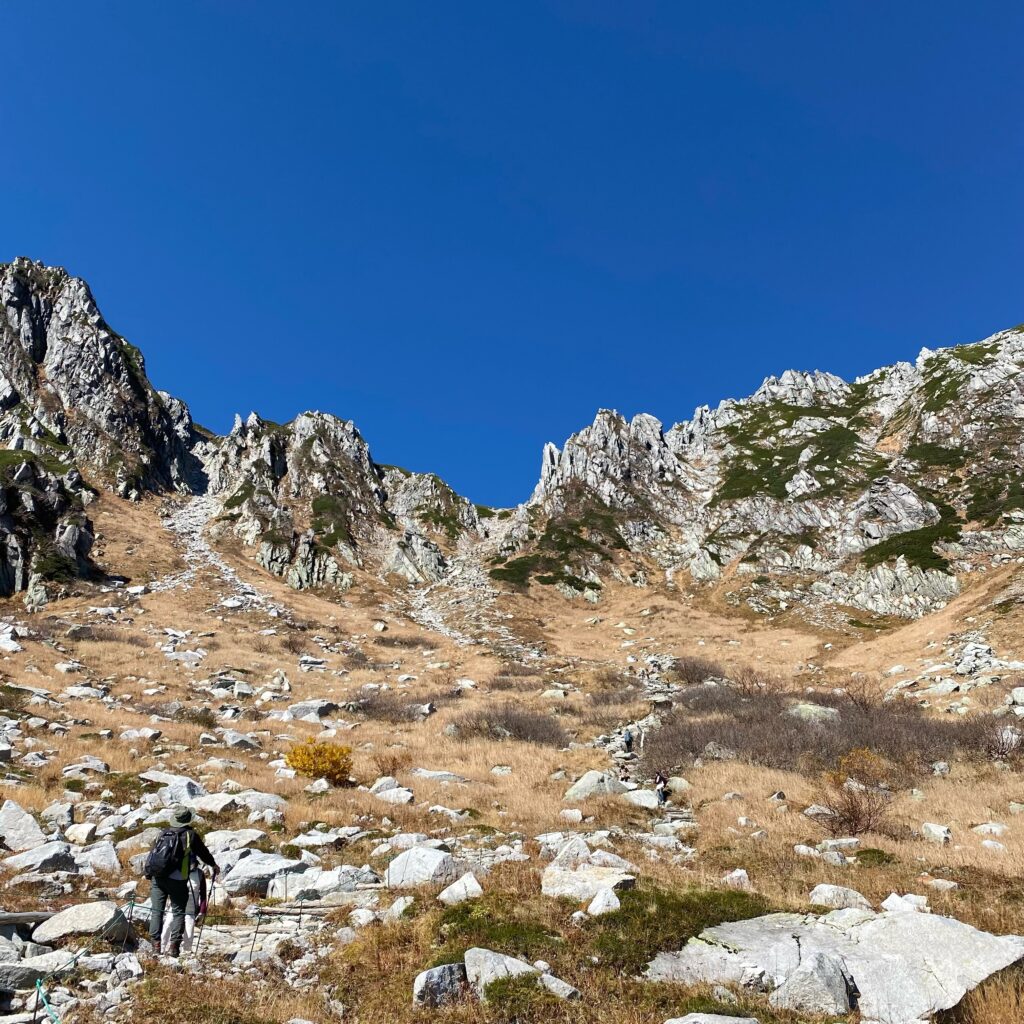
The first thing you see after getting off the ropeway is Senjojiki Cirque. A massive rock face surrounds a semicircular area, with a wide slope stretching out below. At first glance, it might look like a volcanic crater, but Senjojiki Cirque is not a landform created by an eruption.
A "cirque" is a landform that was created over a long period of time when a mountain glacier carved out the mountainside, resulting in a bowl-shaped formation. The Senjojiki Cirque is thought to have formed during the Ice Age about 20,000 years ago. The name "Senjojiki" (meaning "thousand tatami mats") comes from the fact that it is so large that a thousand tatami mats could be laid out there.
Once you know this and look at it again, the way you see the landscape changes. The huge depression before you is a trace left behind by changes in the Earth that have been ongoing since long before humans were born.
When mountain climbing, we tend to think of the summit as the only destination.
However, simply knowing a little about how the terrain was formed adds another layer of enjoyment, beyond just "how high you've climbed," to "what you're walking on right now."
From Senjojiki to Norikoshi Jodo—the mountain's appearance changes dramatically.
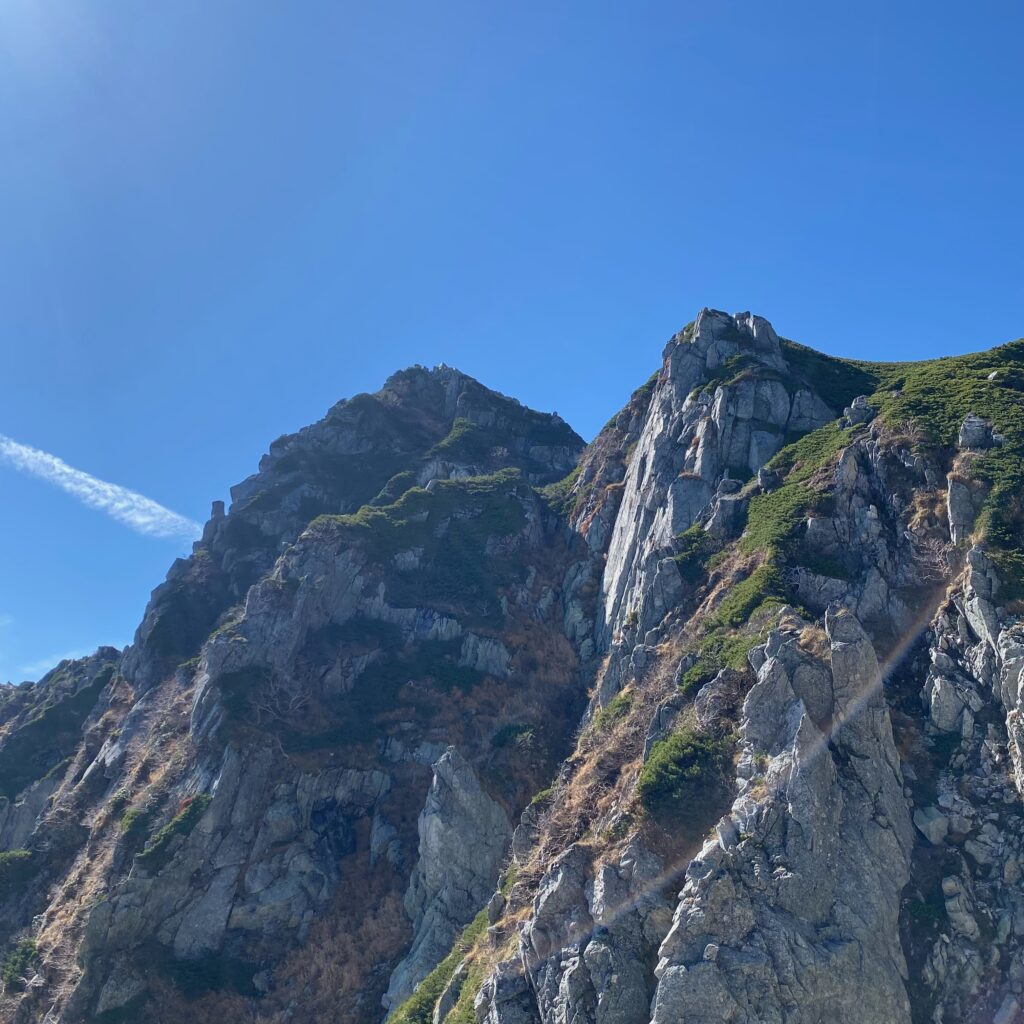
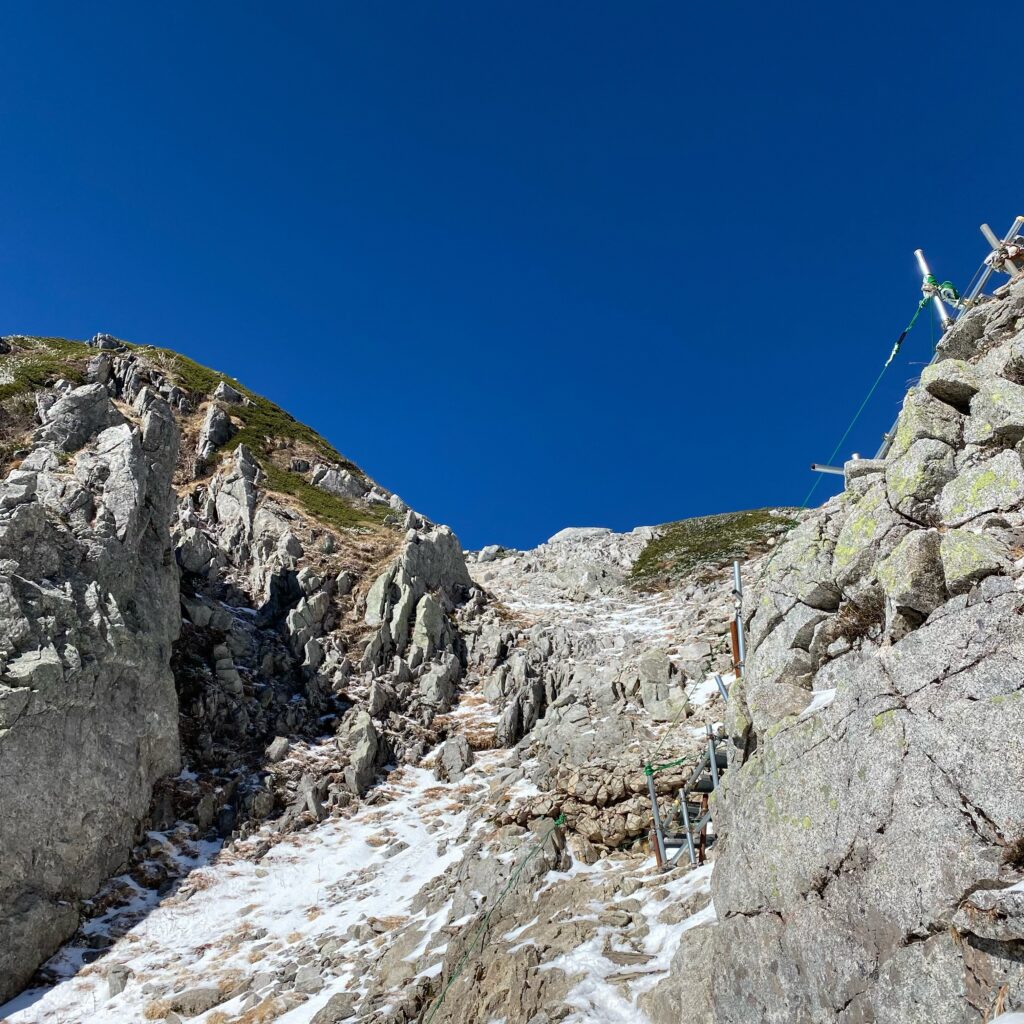
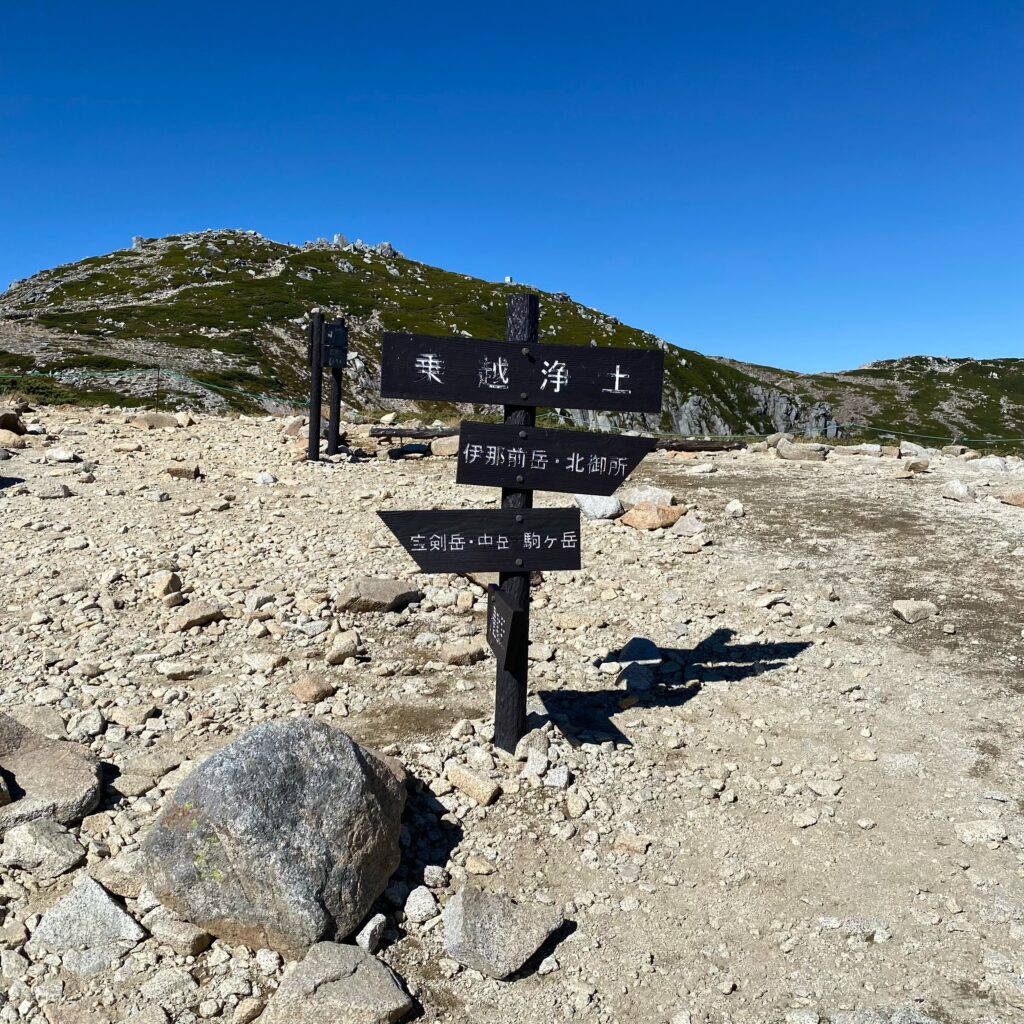
When heading from Senjojiki towards Mount Kiso-Komagatake, you first climb a steep slope towards "Norikoshi Jodo." Looking up from below, you can see the hiking trail running between the rock faces.
While the area around the ropeway station has a touristy feel, the scenery rapidly transforms into that of a "mountain" as you begin to ascend. Large rocks become more frequent at your feet, and when you look back, the Senjojiki Cirque stretches out below.
Once you reach "Norikoshi Jodo," you'll find yourself in a world of ridgelines leading to peaks like Mount Kiso-Komagatake, Mount Nakadake, and Mount Hokendake. At this point, there are hardly any trees, and the landscape is dominated by rocks and low-lying plants.
The boundary at which tall trees can no longer grow due to high altitudes, low temperatures, and strong winds is called the "tree line." The alpine zone beyond this point is a harsh environment for humans, but it is an important habitat for plants and animals that have adapted to that environment.
On the first hike, we headed towards Nogaike and Komagai-no-ike.
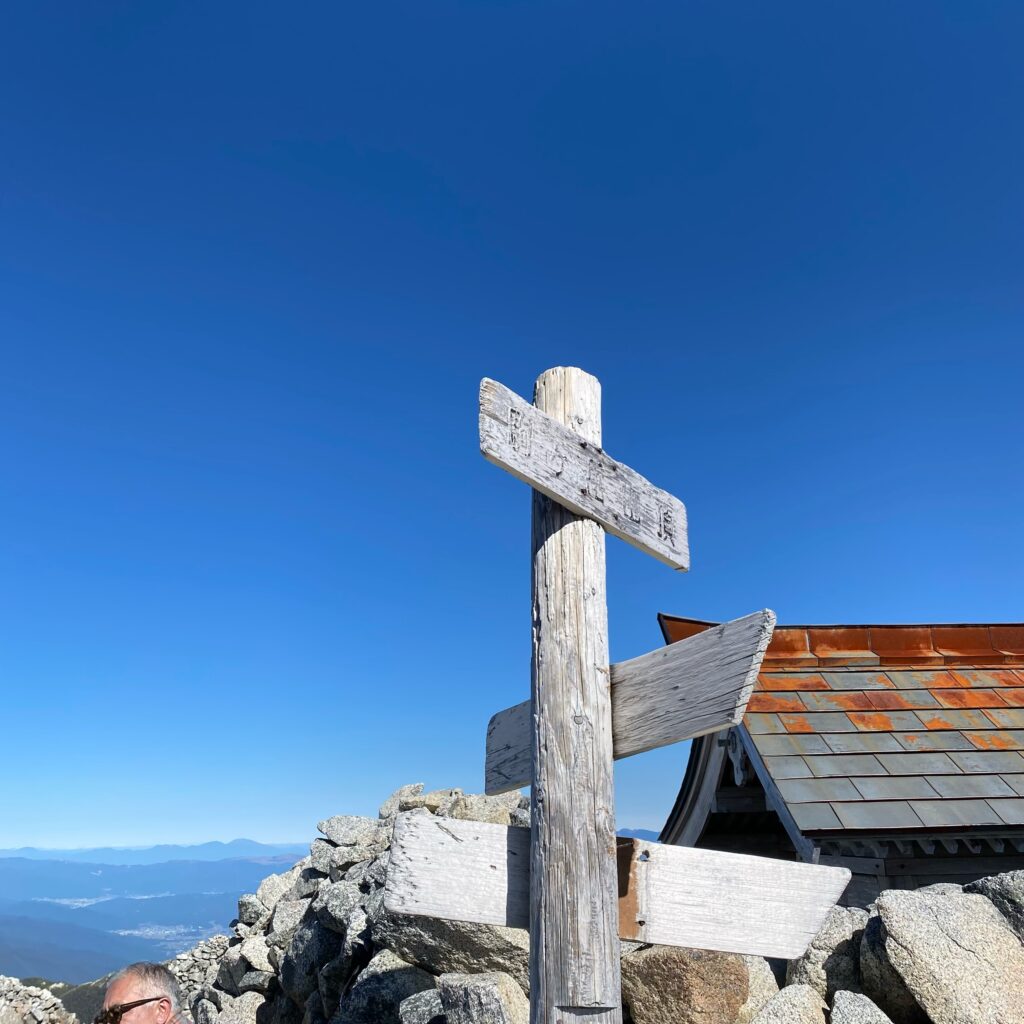
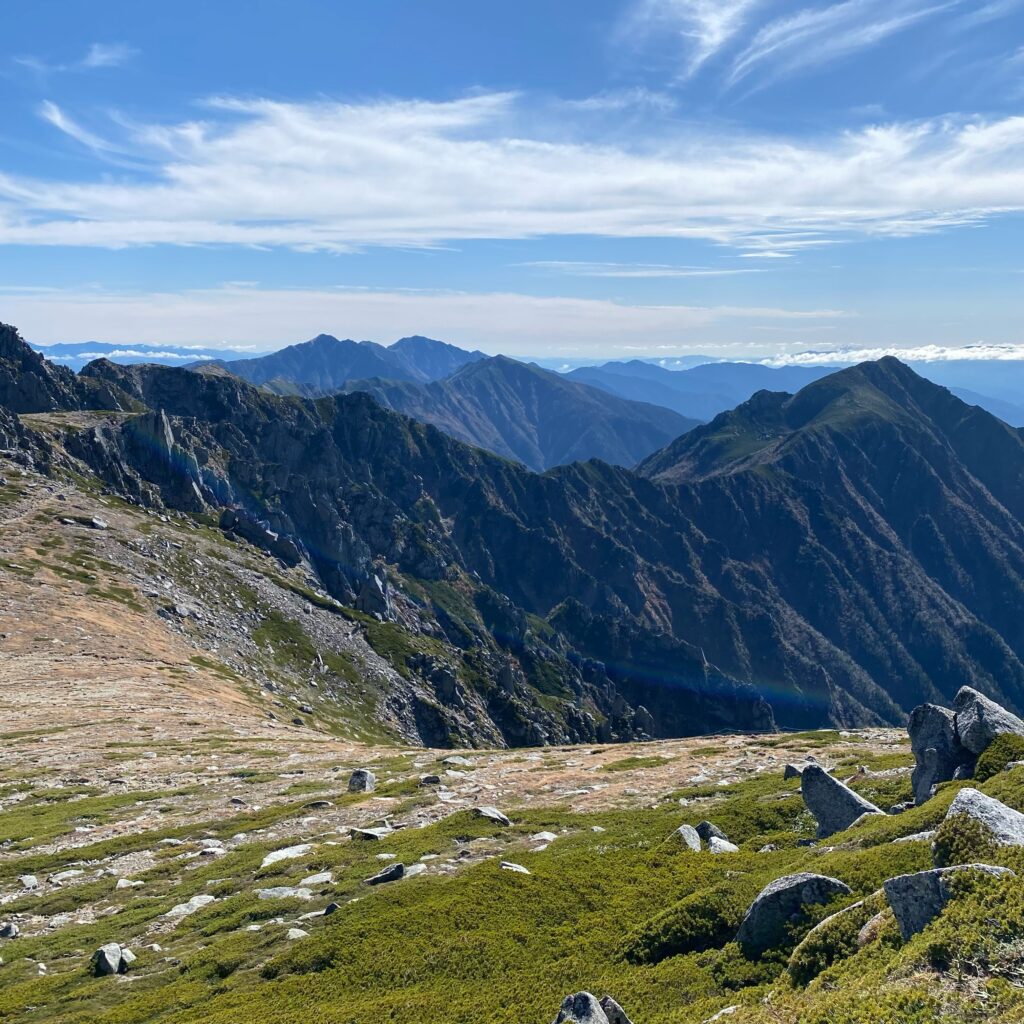
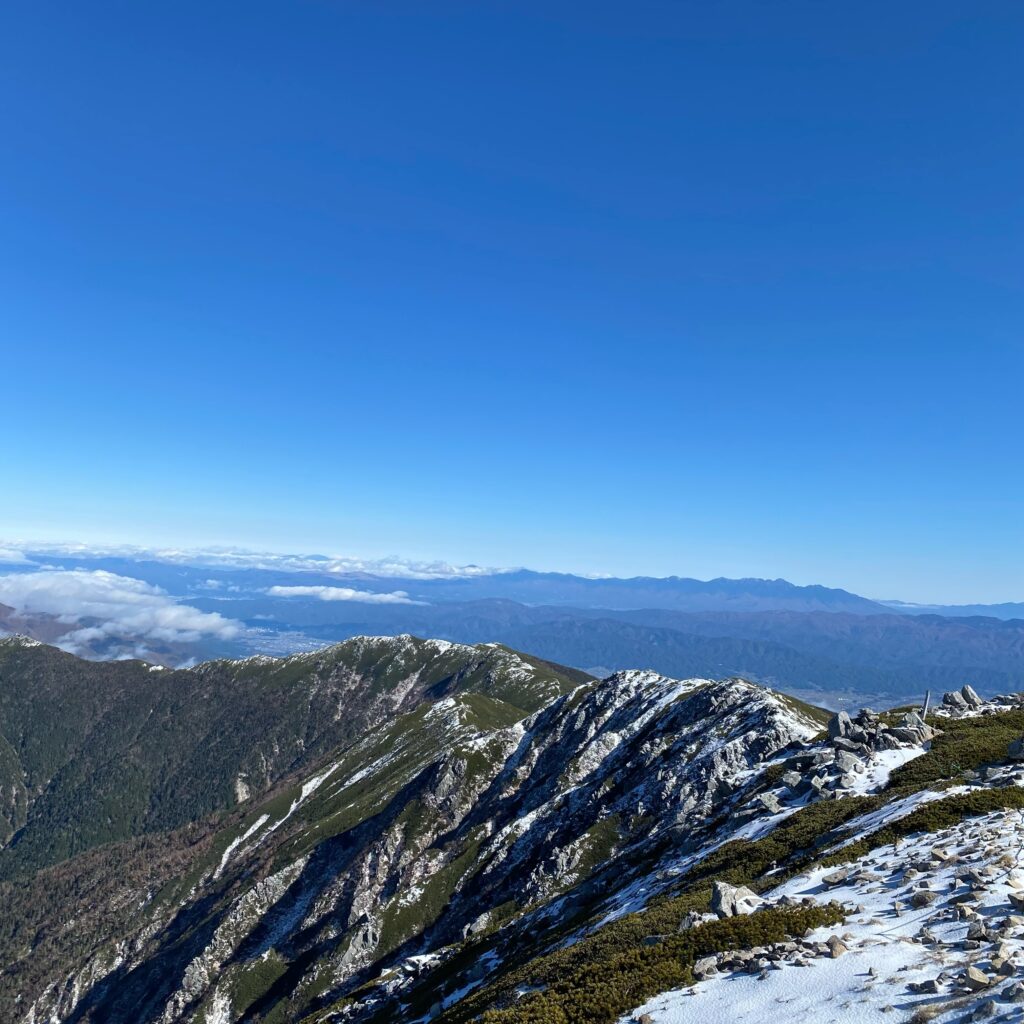
When I first visited Mount Kiso-Komagatake, I ventured not only around the summit but also towards Nogaike and Komagai-no-ike ponds. Unlike a simple out-and-back hike to the summit, the scenery changes as you walk. A little way down from the rocky ridge, a pond appears, surrounded by lush vegetation.
Even within the same mountain, Mount Kiso-Komagatake, the environment is not uniform due to differences in altitude and topography. Rocky peaks, dwarf pines, ponds, and grasslands—these diverse environments are intricately combined, contributing to the biodiversity of the high mountains.
And on this first climb, I spotted a ptarmigan between the rocks and dwarf pines.
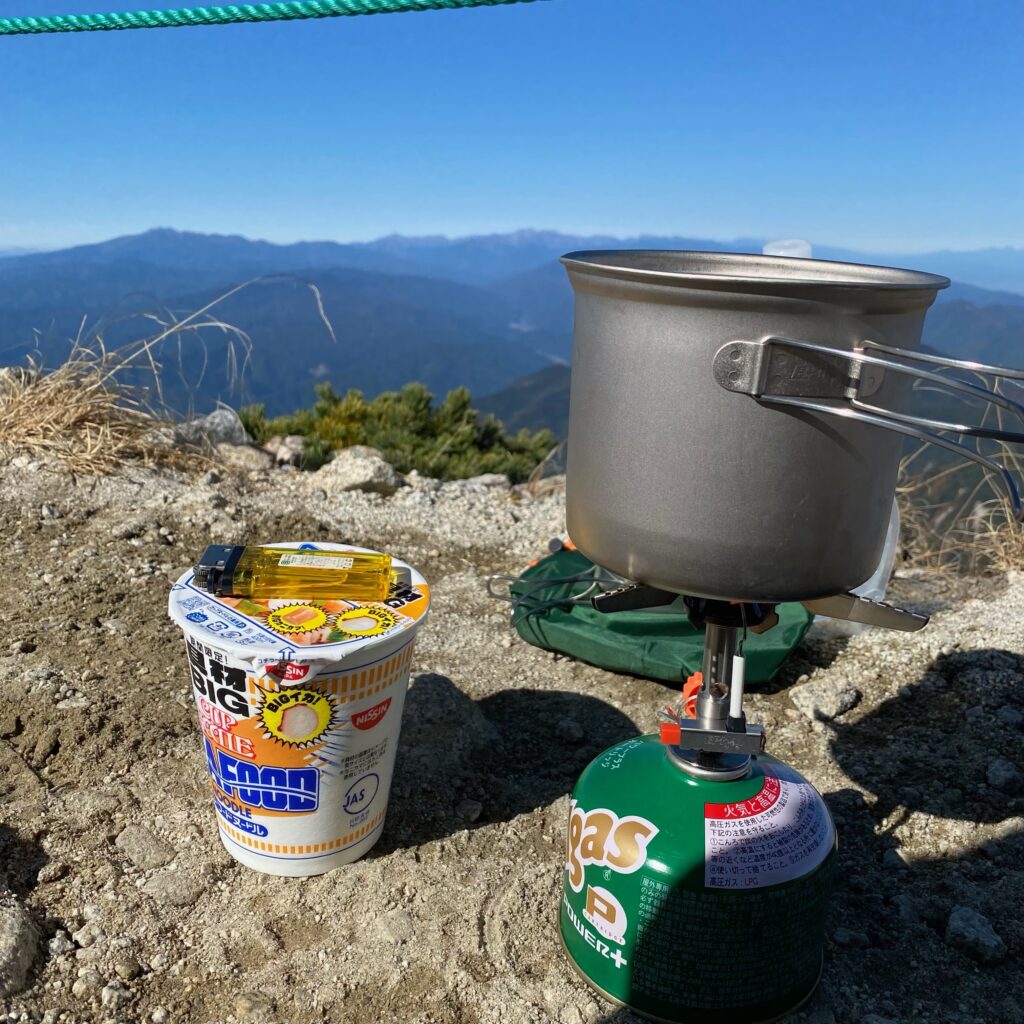
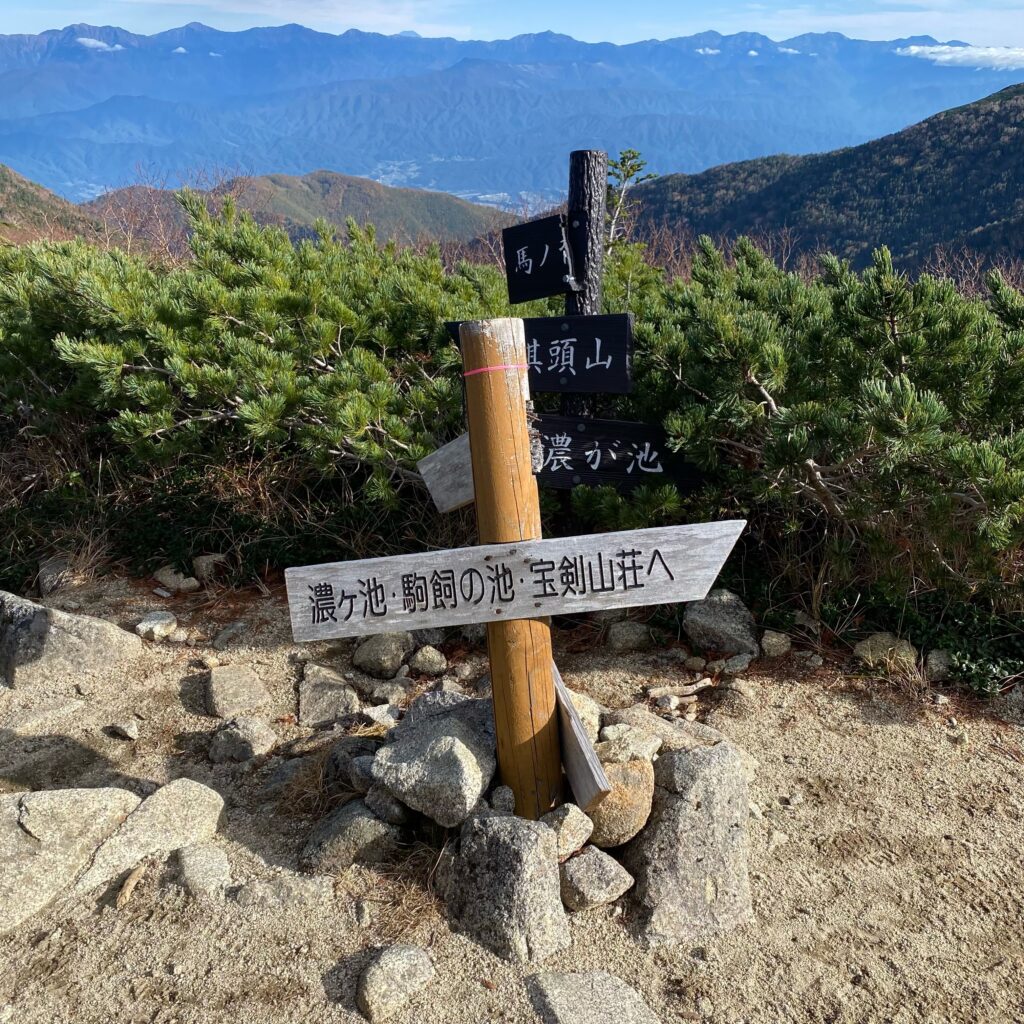
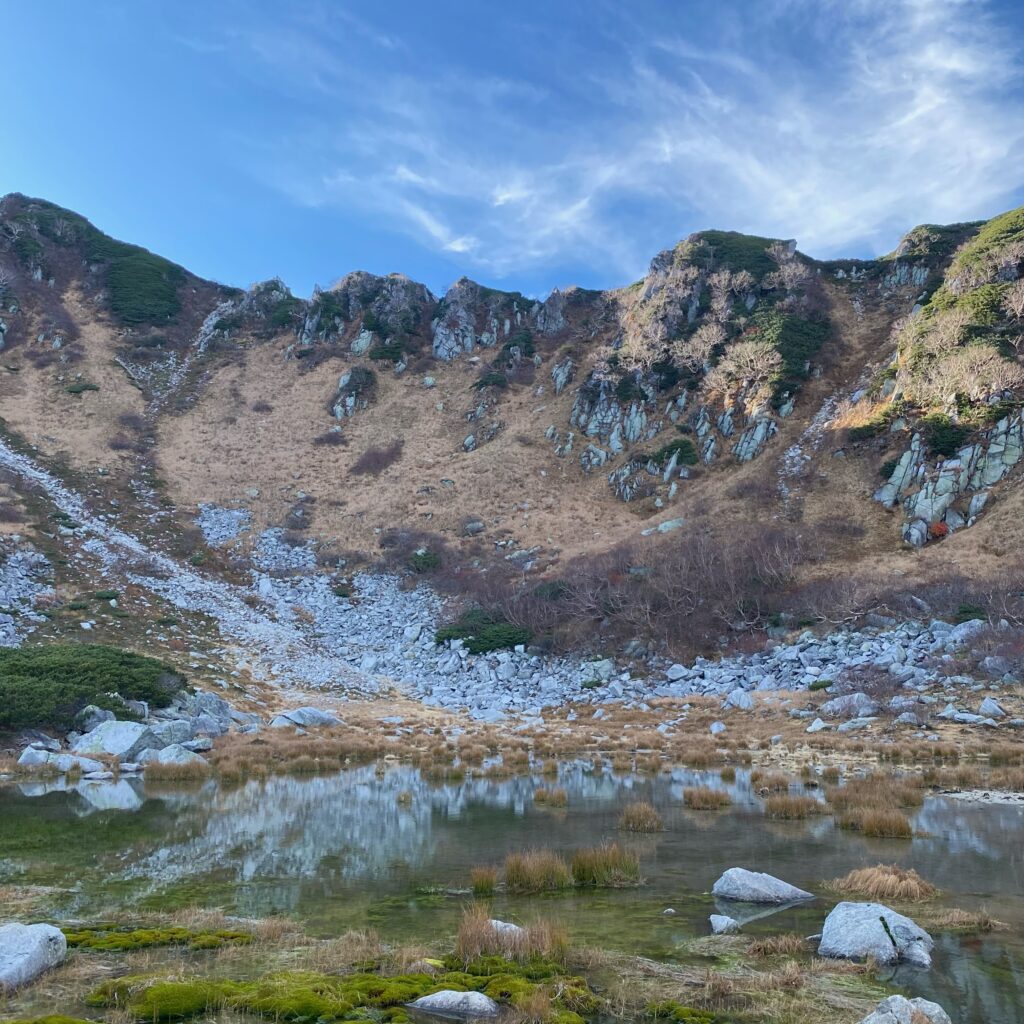
A white and brown ptarmigan was hiding in the shade of a rock.
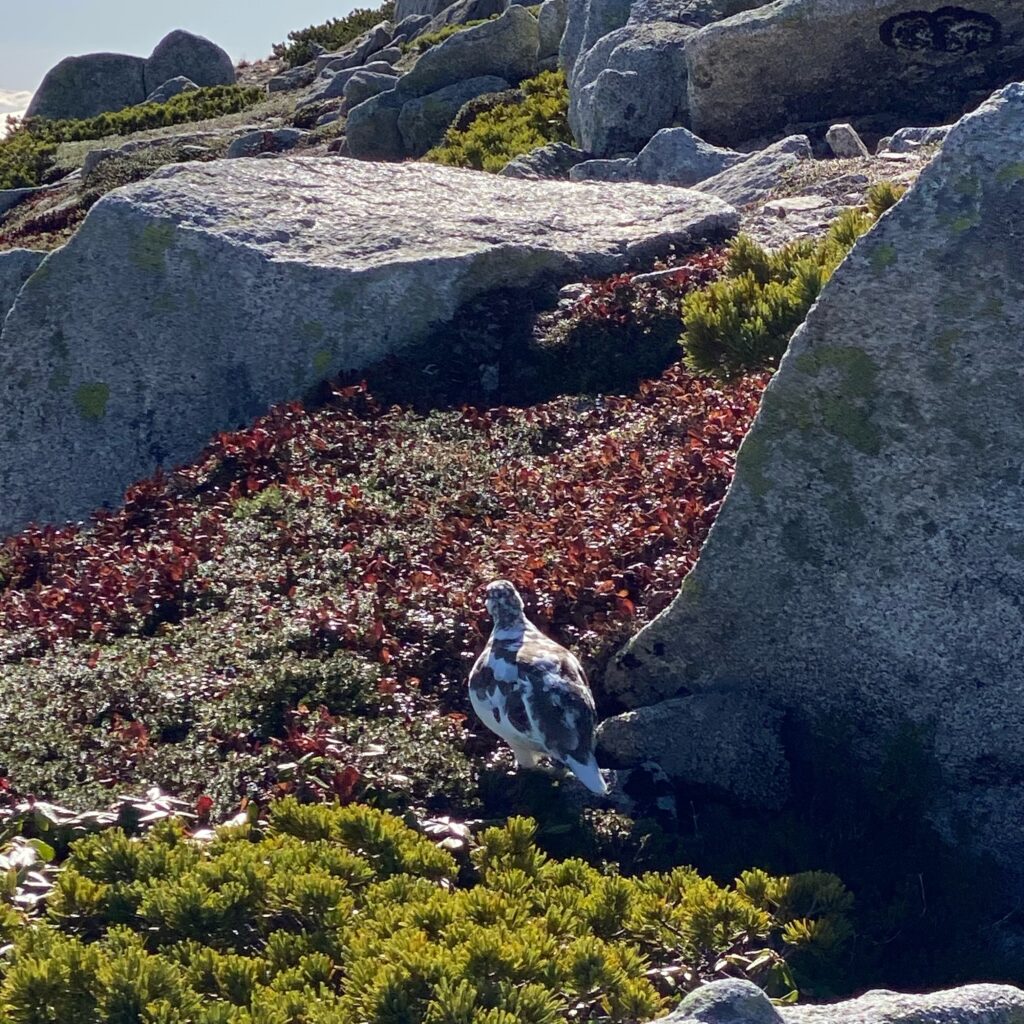
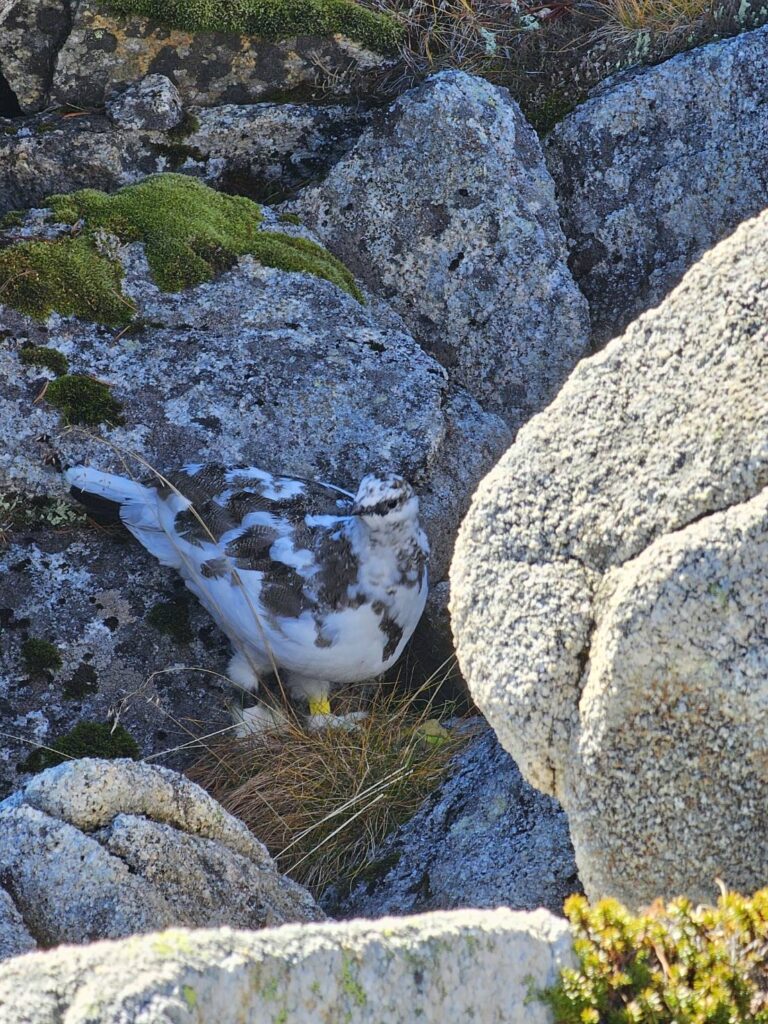
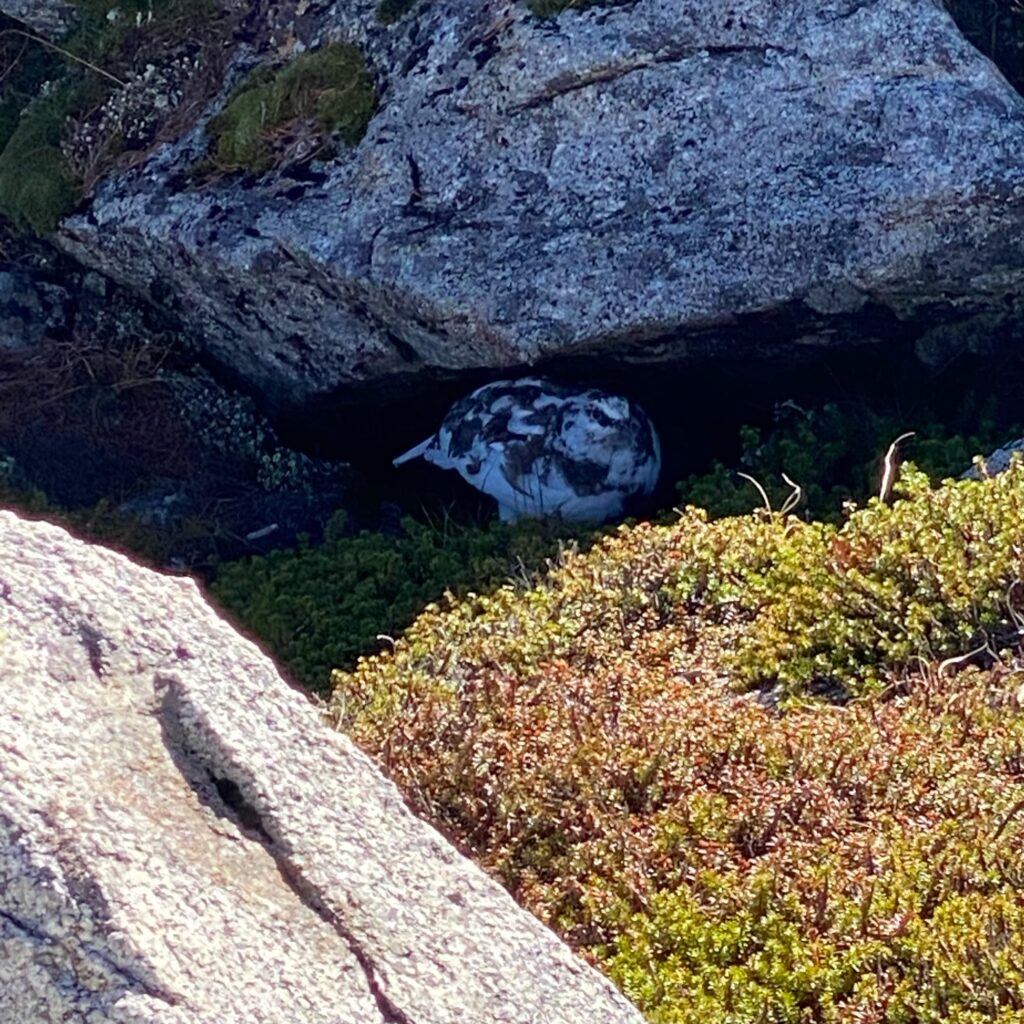
At first, I honestly thought it was part of the rock. Its feathers, a mix of white and brown, blended beautifully with the surrounding granite and vegetation. Up close, it has a rounded body, but from a distance, it blends into the landscape surprisingly well.
The Japanese rock ptarmigan is a bird belonging to the pheasant family.
According to the Ministry of the Environment, the Japanese rock ptarmigan is a subspecies of rock ptarmigan that is widely distributed in the northern hemisphere, and it lives in isolation in the alpine zone of central Honshu.
In summer, the ptarmigan has a mottled pattern of white, black, and brown, while in winter, almost its entire body, except for the tail feathers, becomes white. Furthermore, Japanese ptarmigan molt three times a year, changing the appearance of their feathers according to the season.
The first specimen I saw also had a mix of white and brown coloration.
While it's impossible to determine the exact stage of molting from the photograph alone, it certainly illustrates the characteristic of ptarmigans to change their feather color with the seasons.
What's interesting is the "location" where the ptarmigan was. Behind it was a large rock, and at its feet were low-growing dwarf pines.
Japanese rock ptarmigan primarily breed in alpine zones at elevations of 2,200 to 2,400 meters or higher, inhabiting areas such as dwarf pine forests and rocky zones. They build their nests at the base of dwarf pines and feed on the buds and seeds of alpine plants.
In other words,
Rocks + Dwarf pines + Ptarmigan
This combination itself represents the ecosystem of the alpine zone. The experience of "seeing a ptarmigan" becomes more understandable when viewed not as a single creature, but in conjunction with its habitat.
Second time. There was already snow on the mountain.
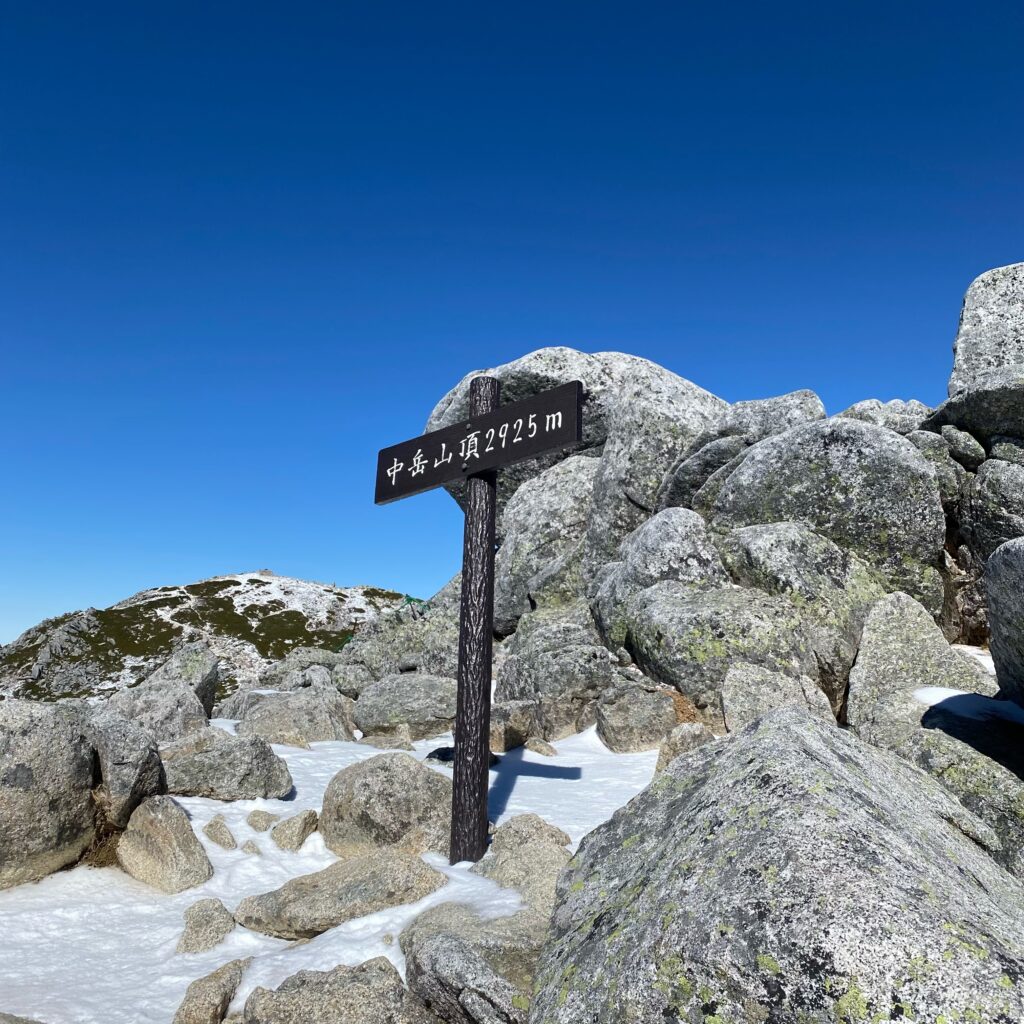
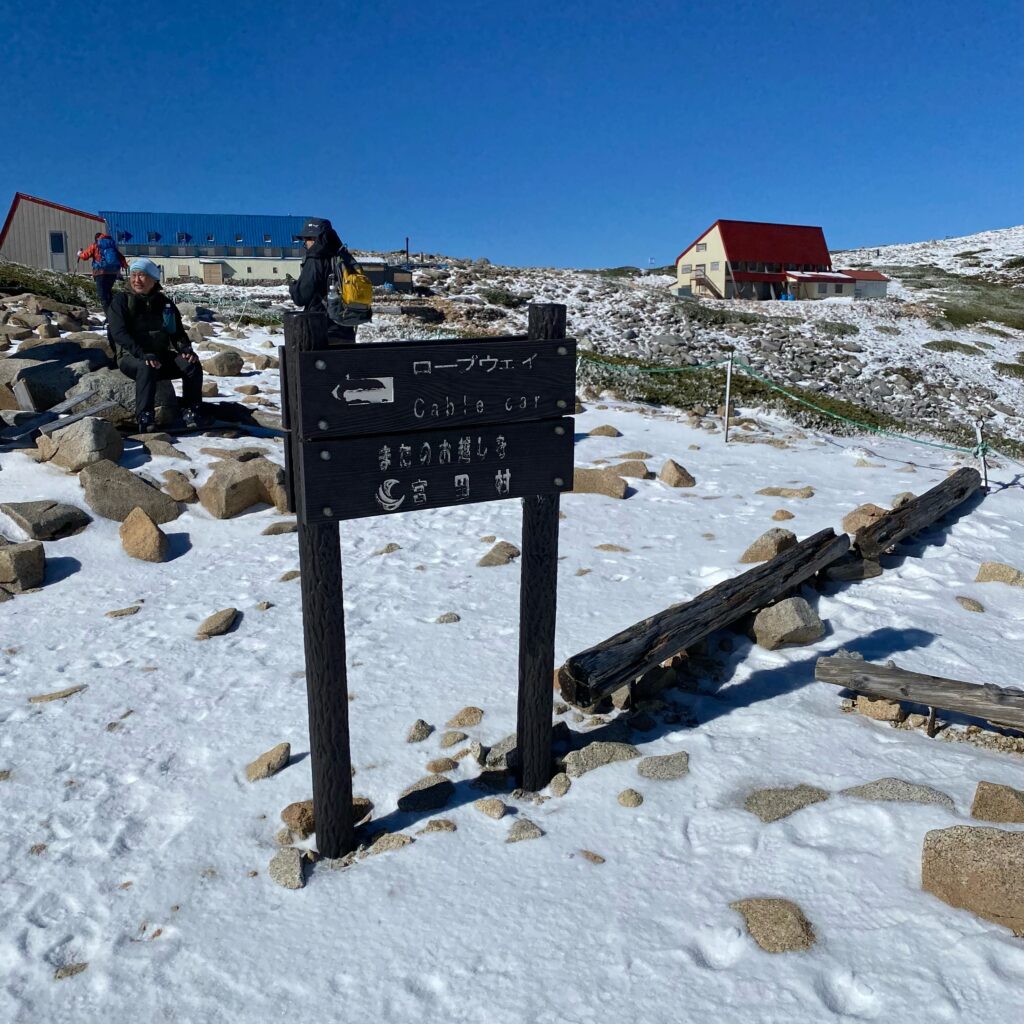
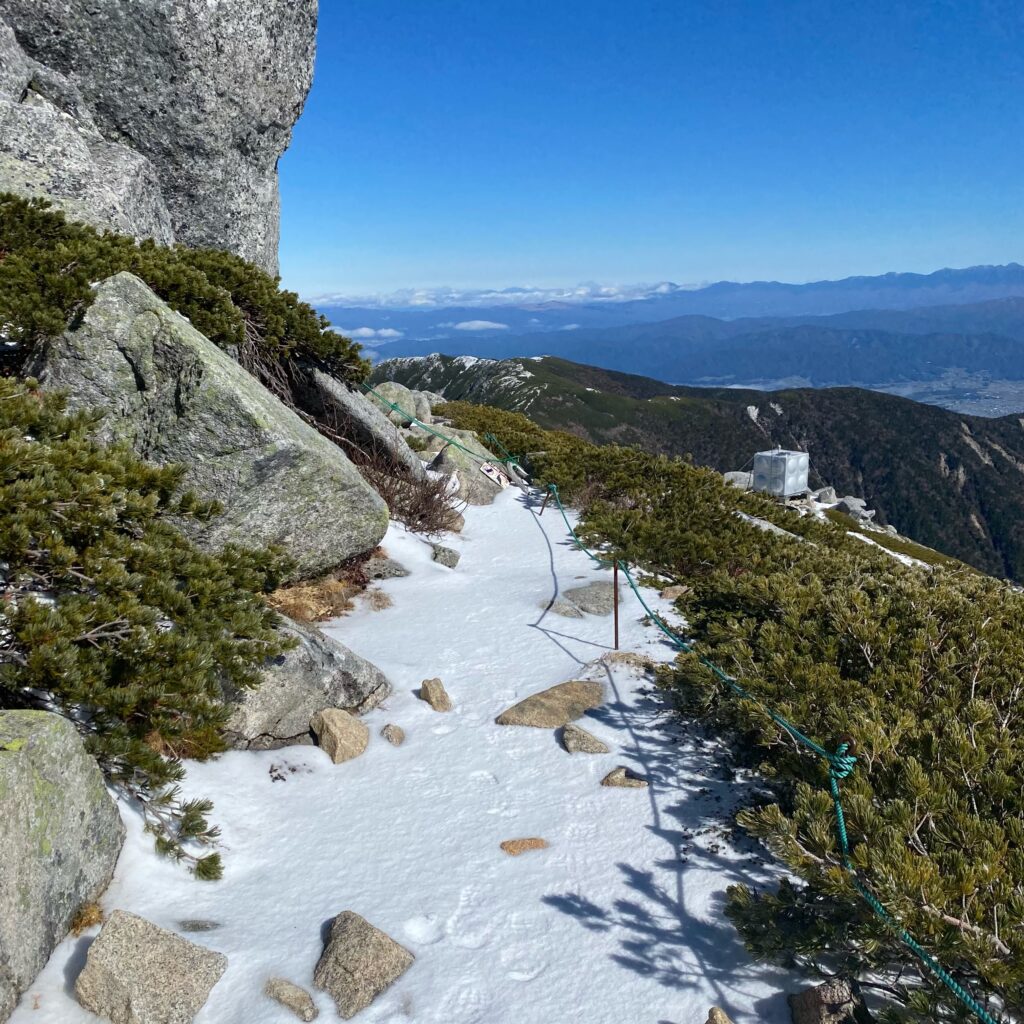
When I visited Mount Kiso-Komagatake for the second time, the mountain's appearance had changed dramatically. Snow remained on Senjojiki and beyond Norikoshi Jodo. The area around the mountain hut was also covered in white, and snow had seeped into the gaps between the rocks at the summit of Mount Nakadake.
On my first visit, I walked from the summit towards Nogaike Pond and Komagai Pond, but this time I decided not to go in that direction and instead headed straight back to the ropeway from the summit.
Looking only at photos from summer and autumn, it might seem like the hiking trails are always there. However, when snow falls, the rocks underfoot and the boundaries of the trail become hidden. Furthermore, the wind and temperature change. In the mountains, "I've been here before" doesn't automatically guarantee safety.
And then, in this snow, I encountered a ptarmigan again.
There was a white ptarmigan in the snow.
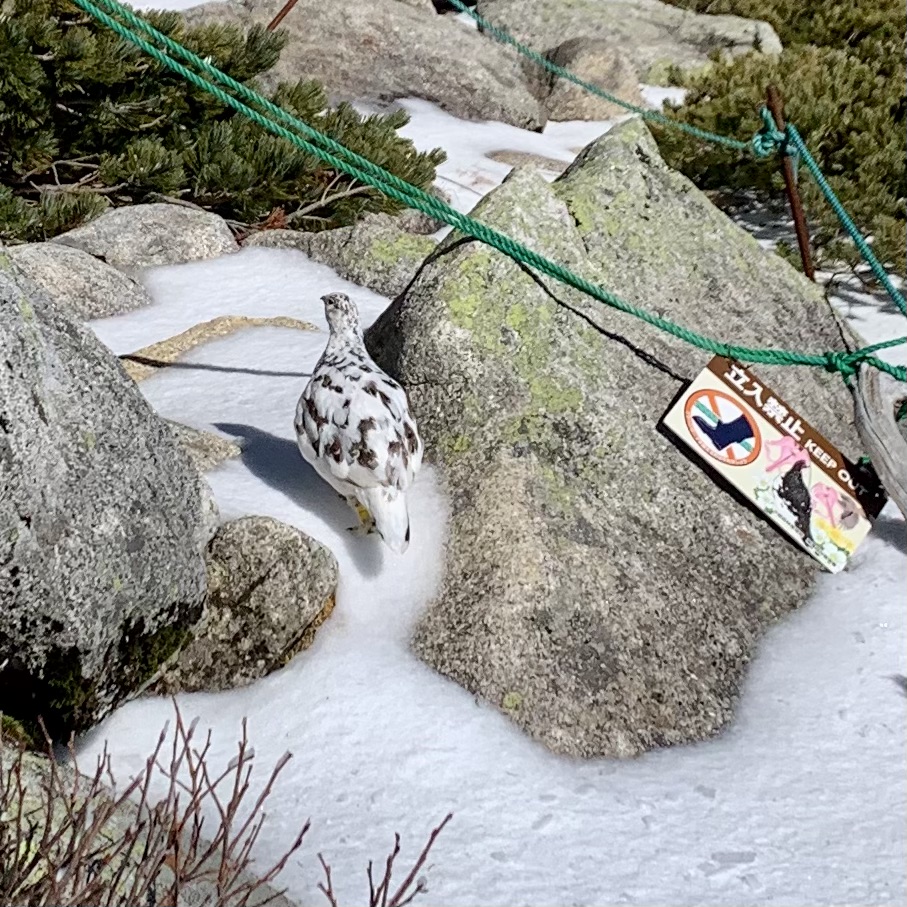
At first, I couldn't tell where it was. There, between the white snow and rocks, was a white ptarmigan. It was clearly different from the one I had seen the first time.
Most of their bodies are white, and from a distance, they blend into the snow. One of the characteristics of the ptarmigan is that in winter, almost their entire body changes to white feathers. This is not simply a matter of "changing into winter colors"; it functions as camouflage to help them survive in high-altitude areas.
In the summer, its mottled feathers blend in with the rocks and plants, while in the snowy season, its white feathers blend in with the snowy landscape.
As the seasons change, the ptarmigan's own body also gradually takes on the colors of the mountains.
Seeing ptarmigan in different forms during my two climbs of Mount Kiso-Komagatake made me realize that "the seasons are changing" not only through the scenery but also through the physical forms of living creatures.
Why have ptarmigan disappeared from the Central Alps?
I also heard from locals that "in the old days, ptarmigan were eaten by monkeys that came up the mountain to Mount Kiso-Komagatake, and that's how they disappeared."
In fact, Japanese macaques cannot be ignored in current ptarmigan conservation efforts. They have been observed preying on ptarmigan chicks in the Northern Alps, and in the Central Alps in 2020, it is believed that five chicks died after Japanese macaques approached a nest shortly after hatching. Currently, efforts are being made to drive away monkeys around Mount Kiso-Komagatake.
However, the exact reason why ptarmigan disappeared from the Central Alps after 1969 has not been identified as a single cause.
It's possible that multiple factors contributed to the disappearance, including predator invasion, changes in alpine vegetation, and increased human use of the mountains. The local story that the animals disappeared because of monkeys should be seen as one piece of evidence illustrating how people have remembered these changes in the mountain environment.
Finding ptarmigan will be part of the research.
When I spotted a ptarmigan on Mount Kiso-Komagatake, I didn't just take a picture and leave it at that. There was a system in place to record the location and time I saw the ptarmigan at mountain huts and provide that information to research teams.
This is a method that has actually been used in conservation projects in the Central Alps.
The Ministry of the Environment installed "rock ptarmigan sighting information collection cards" at Shirabidaira Station, Senjojiki Station, Hokensanso, and Chojosanso, among other locations, to collect information from hikers about sighting locations, dates and times, and leg band information. In fiscal year 2021, 95 records were received, of which 31 were adopted as reliable observation records as they included photographs and location confirmations. Some of these records were from areas that researchers cannot frequently survey, making them important data for confirming the survival of individuals and tracking the number of chicks.
In other words, hikers themselves can become the "eyes" of the field survey.
Currently, Nagano Prefecture operates a rock ptarmigan sighting information submission app called "Raipos," which allows users to contribute to conservation efforts by sending location information and photos. This system is a successor to the "rock ptarmigan posts" that were once installed in mountain lodges.
If you spot a ptarmigan, don't chase it; observe it quietly.
And from a safe distance,
Date, time, location, number of individuals, color of leg band (if any), and photograph.
Record it.
It's not just about "seeing a rare bird"; apparently, that discovery can lead to further conservation efforts.
From the alpine zone to the forest—I encountered a Japanese serow on the way back.
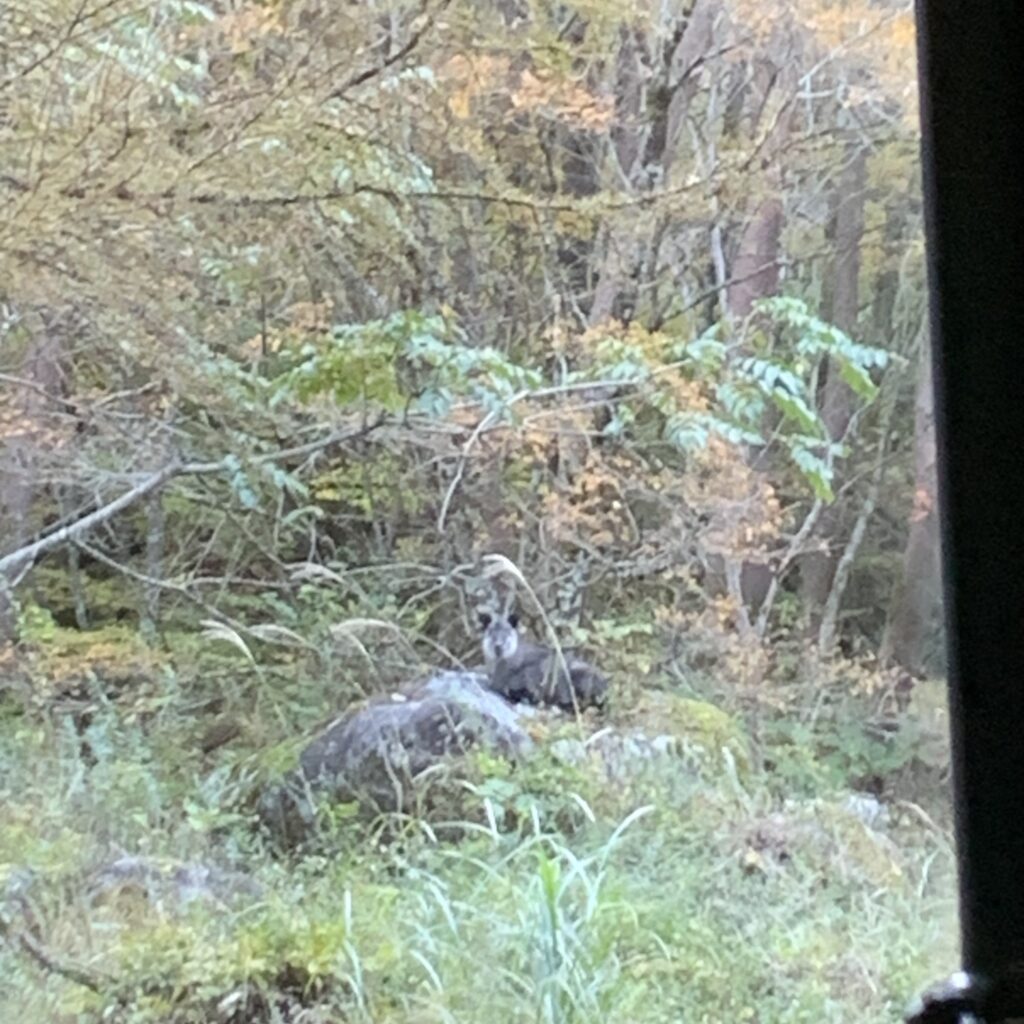
On my second mountain climb, I not only encountered ptarmigan, but also Japanese serows on the bus ride down the mountain.
It was a single animal standing in the autumn forest beyond the car window.
Although the name "kamoshika" (Japanese serow) might suggest it's a type of deer, it's actually a member of the Bovidae family. Its numbers were once reduced due to hunting, leading to conservation efforts, and in 1955 it was designated a special natural monument of Japan.
During this day, I saw ptarmigan in the high-altitude rocky and dwarf pine forest, and then a Japanese serow on my way back into the forest.
At Mount Kiso-Komagatake, you travel across a significant elevation difference using ropeways and buses. As a result, not only the scenery but also the habitats of plants and animals change rapidly.
Kōzenji Temple at the foot of the mountain—not just Hayataro, but an ancient temple of moss and cherry blossoms
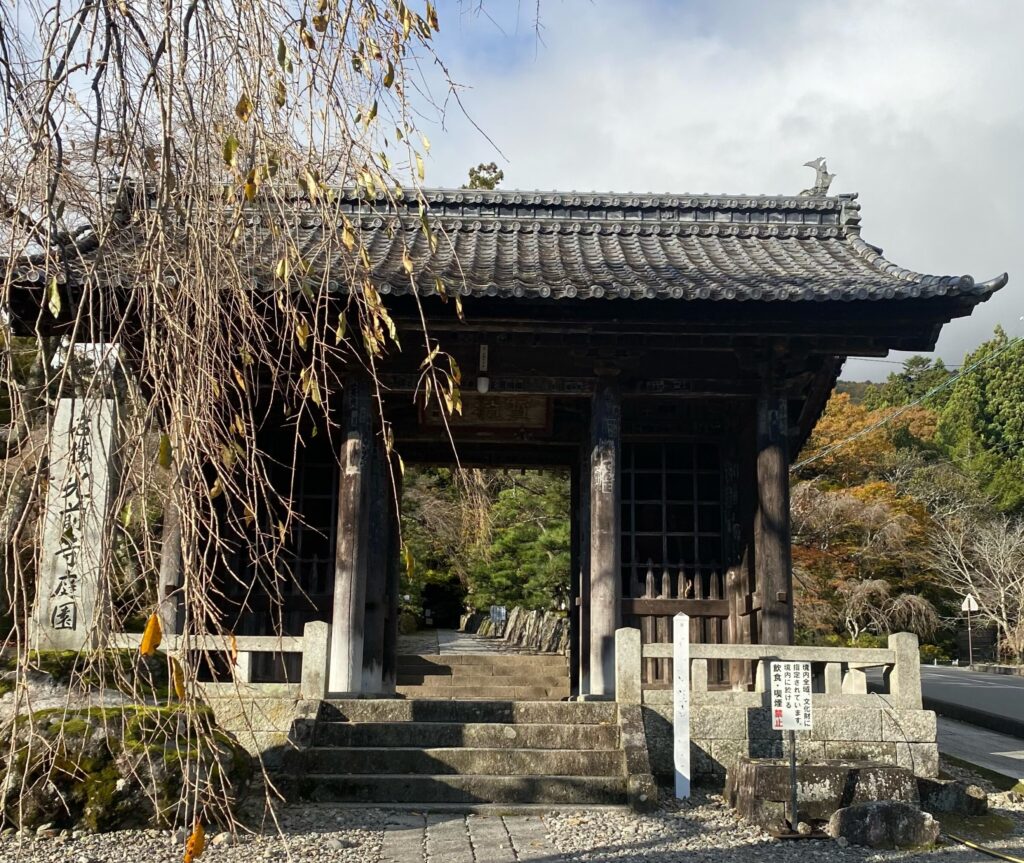
At the foot of Mount Kiso-Komagatake, in Komagane, lies Kōzenji Temple.
The first thing that caught my eye when I visited was the Niomon Gate, but Kōzenji Temple is not just known as "the temple of the legend of the spirit dog Hayatarō."
The entire temple grounds are designated as a national scenic spot under the name "Kōzenji Garden," and the entire area, from the Niomon Gate to the Sanmon Gate, the temple buildings leading to the main hall, the cedar avenue, the garden, and the surrounding woods, is preserved as a single landscape.
And one of the features that distinguishes Kōzenji Temple is its "luminous moss."
Bioluminescent moss grows naturally in the gaps of the stone walls along the approach to the temple and under the veranda of the main hall. As the name suggests, it might seem like a plant that emits light itself, but that's not the case. It appears to glow green because it reflects natural light that enters dark places.
Furthermore, in spring, Kōzenji Temple becomes a famous spot for weeping cherry blossoms.
The temple grounds boast approximately 70 weeping cherry trees, which bloom mainly around the Niomon Gate and the Great Lecture Hall. Near the Fudotaki Cherry Tree and the bell tower, there are ancient trees estimated to be around 200 years old, and these trees are illuminated at night during the blooming season.
Although I didn't visit during cherry blossom season, looking at the branches standing in front of the Niomon Gate, I can imagine how dramatically the impression of this place changes in the spring.
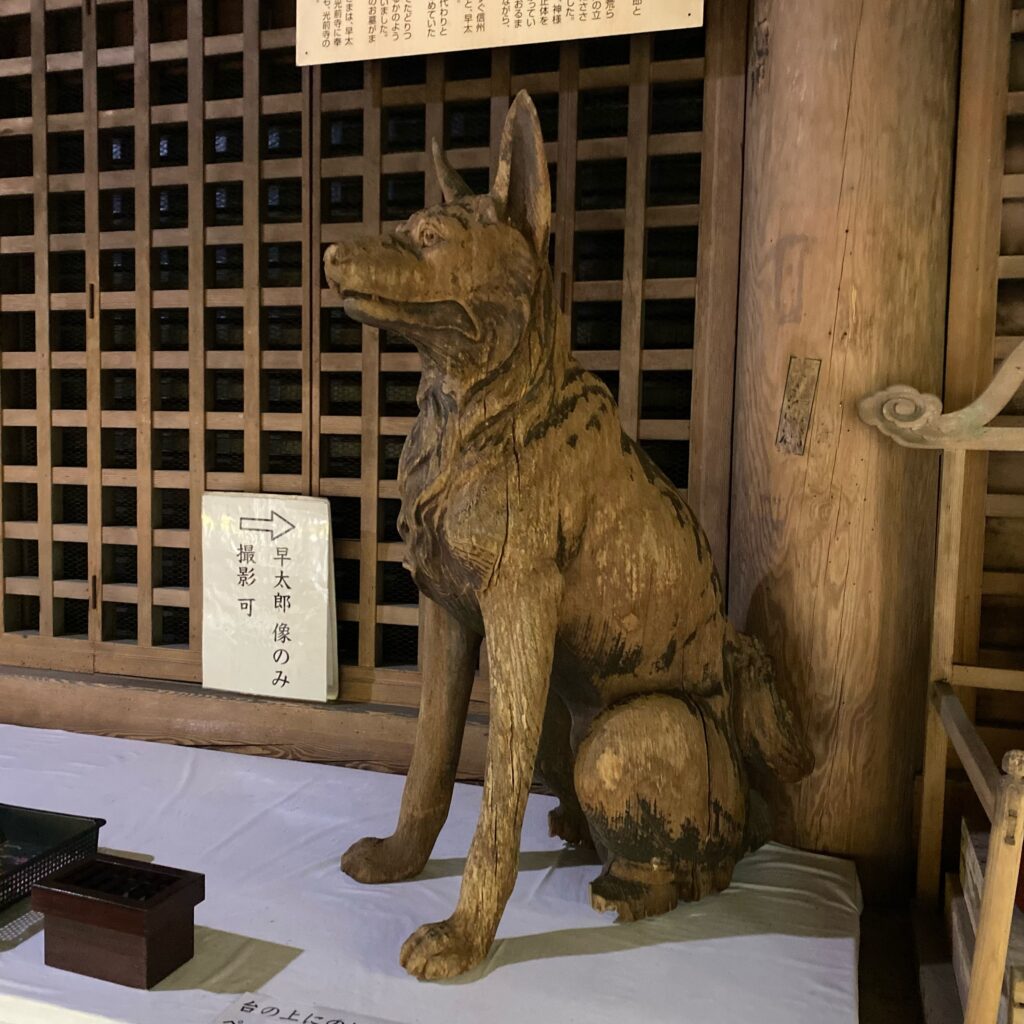
And another legend passed down at this temple is that of Hayataro.
According to legend, about 700 years ago, Hayataro, who was kept at Kōzenji Temple, was taken to Mitsuke in Enshū Province and defeated a monster that was demanding a human sacrifice. Temple tradition says that the monster was an old baboon. Hayataro was severely wounded in the battle and returned to Kōzenji Temple, where he is said to have passed away. His grave still stands next to the main hall today.
On Mount Kiso-Komagatake, you can spot ptarmigan living in a real alpine ecosystem, admire luminous moss at Kōzenji Temple at the foot of the mountain, see weeping cherry blossoms in bloom in spring, and encounter the story of Hayataro, an animal that people have been telling for nearly 700 years.
After descending the mountain, we went to Komagane for a katsudon (pork cutlet rice bowl) with sauce.
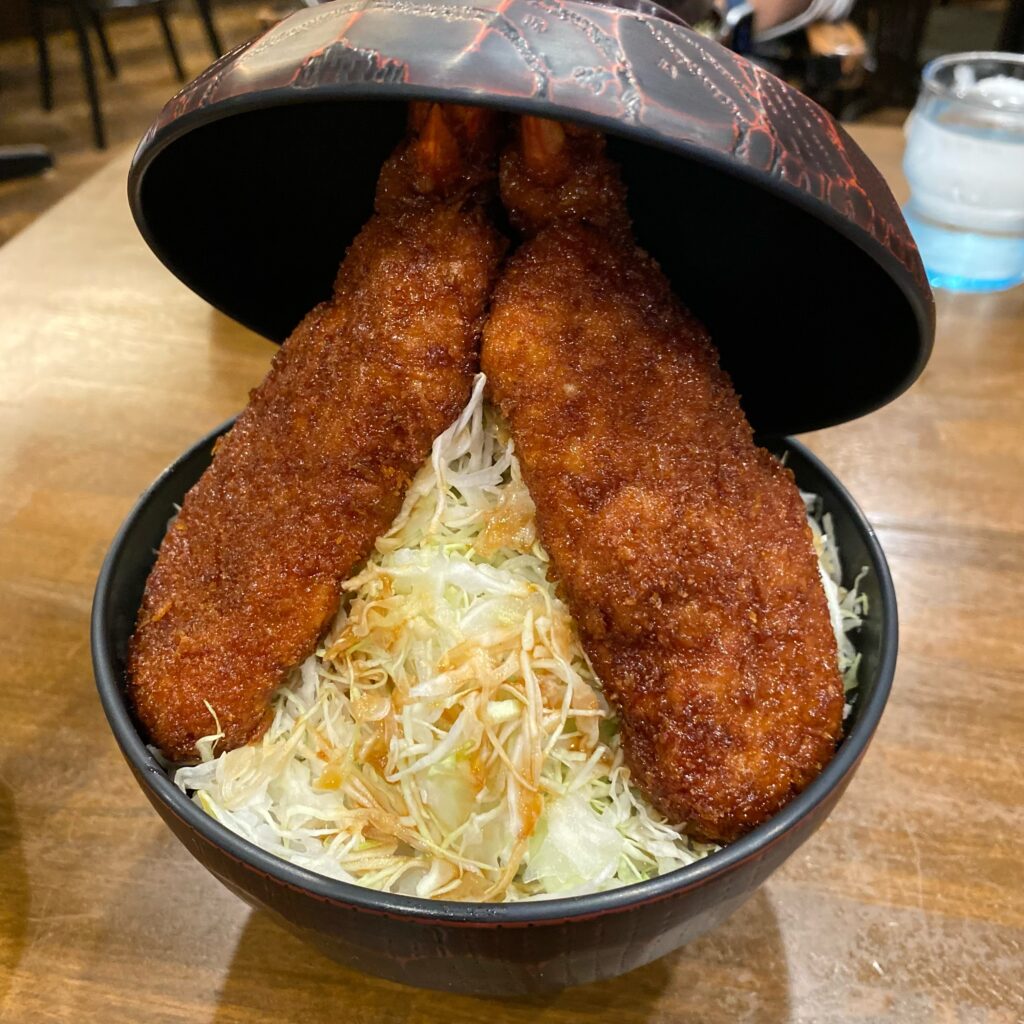
There are also things to look forward to after descending the mountain.
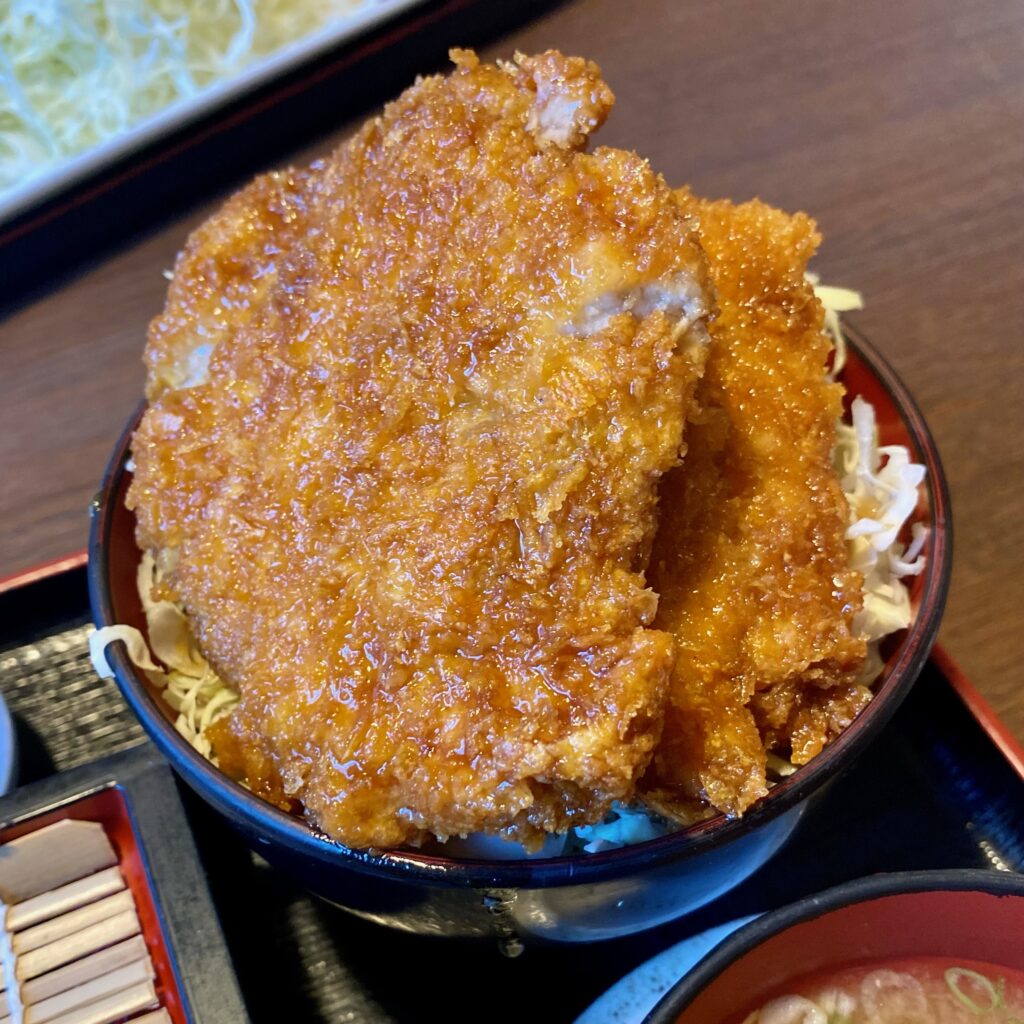
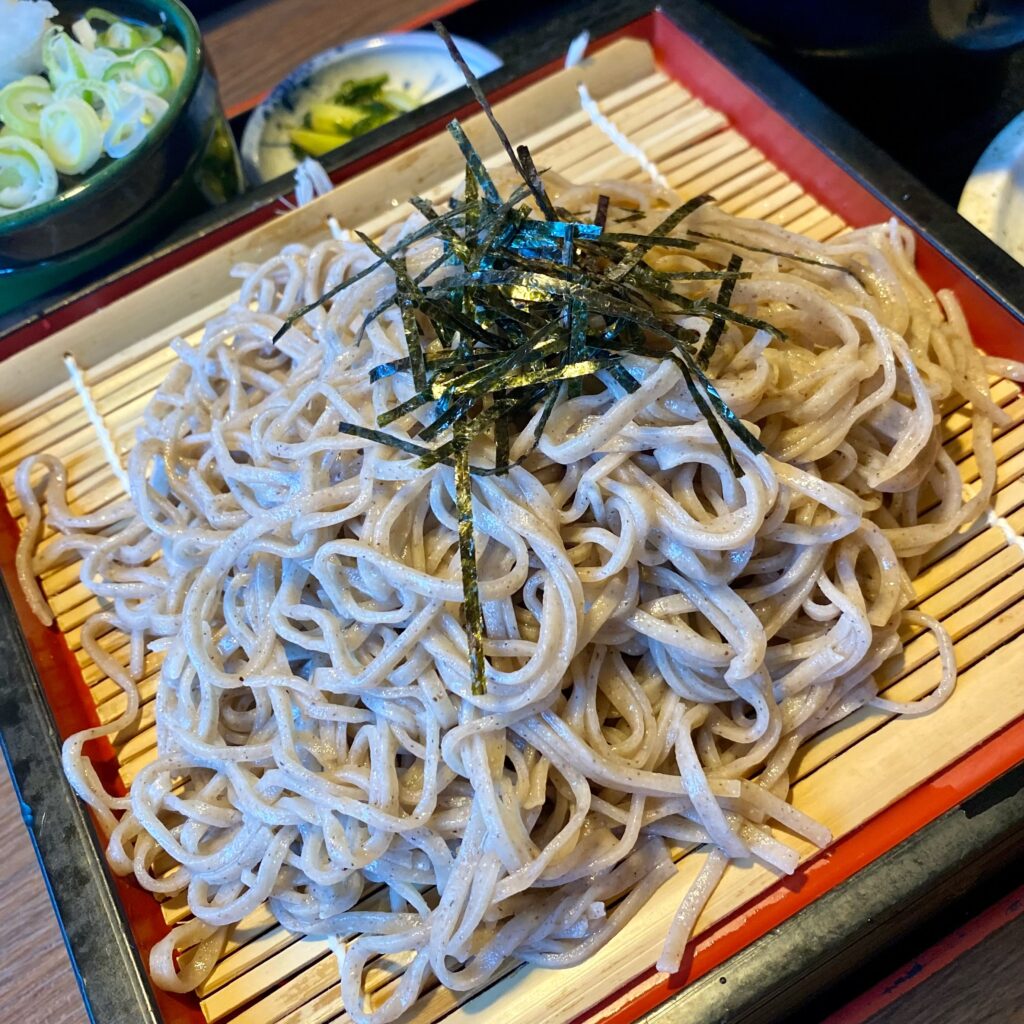
The first time wasGaroI ate a katsudon with sauce at " and then "Komakusa no YuThe second time isMeijiteiI went to [restaurant name] and ate katsudon (pork cutlet rice bowl) and soba noodles.
According to Nagano Prefecture, katsudon with sauce began to be served in Komagane City in the early Showa period. There is an anecdote that the owner of the cafe "Kiraku" at the time was inspired by the Western food culture that was beginning to spread, such as cutlets and omelets.
Shredded cabbage is placed on top of rice, and then a pork cutlet coated in sauce is placed on top of that. It has now become a representative food culture of Komagane.
Since the Meiji era, Western-style cuisine has evolved uniquely in local towns and villages, gradually becoming regional dishes over a long period of time. Even a single bowl of katsudon (pork cutlet rice bowl) offers a glimpse into Japan's modern food culture.
Someday, I'll make a ceramic piece of the ptarmigan I saw on Mount Kiso-Komagatake.
What left the strongest impression on me after the climb was the shape of the ptarmigan.
The first time I saw it, it was a mix of white and brown.
The second time I saw it, its white form seemed to blend into the snow.
I have photographs of it, but I would like to preserve it in another form someday. What I am currently thinking of is an incense box or incense holder with a ptarmigan motif. Rather than simply making a ceramic representation of the bird, I would like to start with the image I saw on Mount Kiso-Komagatake.
100 famous storesMeijitei Komagane Main Store

comment