- Starting the tea ceremony will change the way you see Kyoto.
- The tea ceremony had begun the previous night — ART MON ZEN KYOTO
- A Momoyama period Oribe ware placed in the guest room
- The Gion Festival is not just on July 17th.
- I went to Yasaka Shrine at 7 AM.
- From tea offered to the gods to tea consumed by people.
- Ichiriki-tei - A place where fiction changed the name of reality.
- In fact, "an-filled nama-yatsuhashi" (a type of mochi) also originated in the tea ceremony.
- Knowing this can make the same Kyoto look different.
Starting the tea ceremony will change the way you see Kyoto.
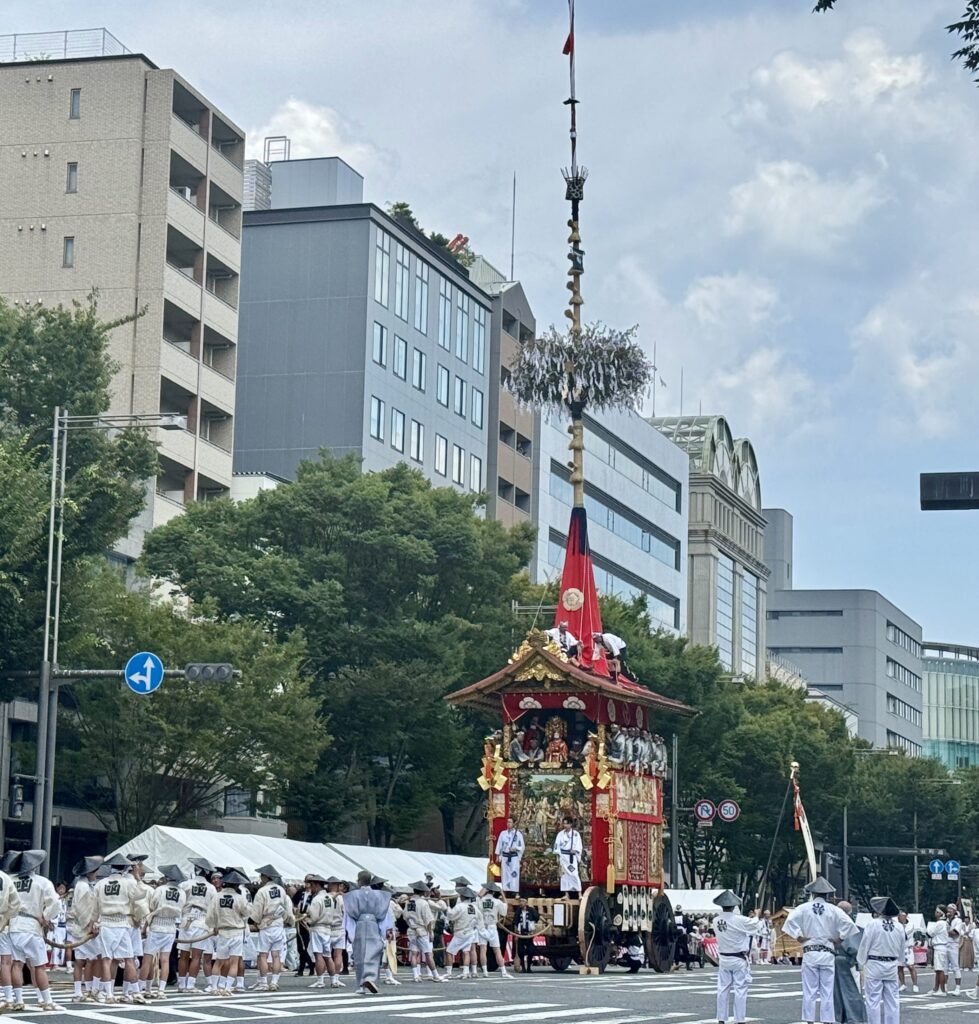
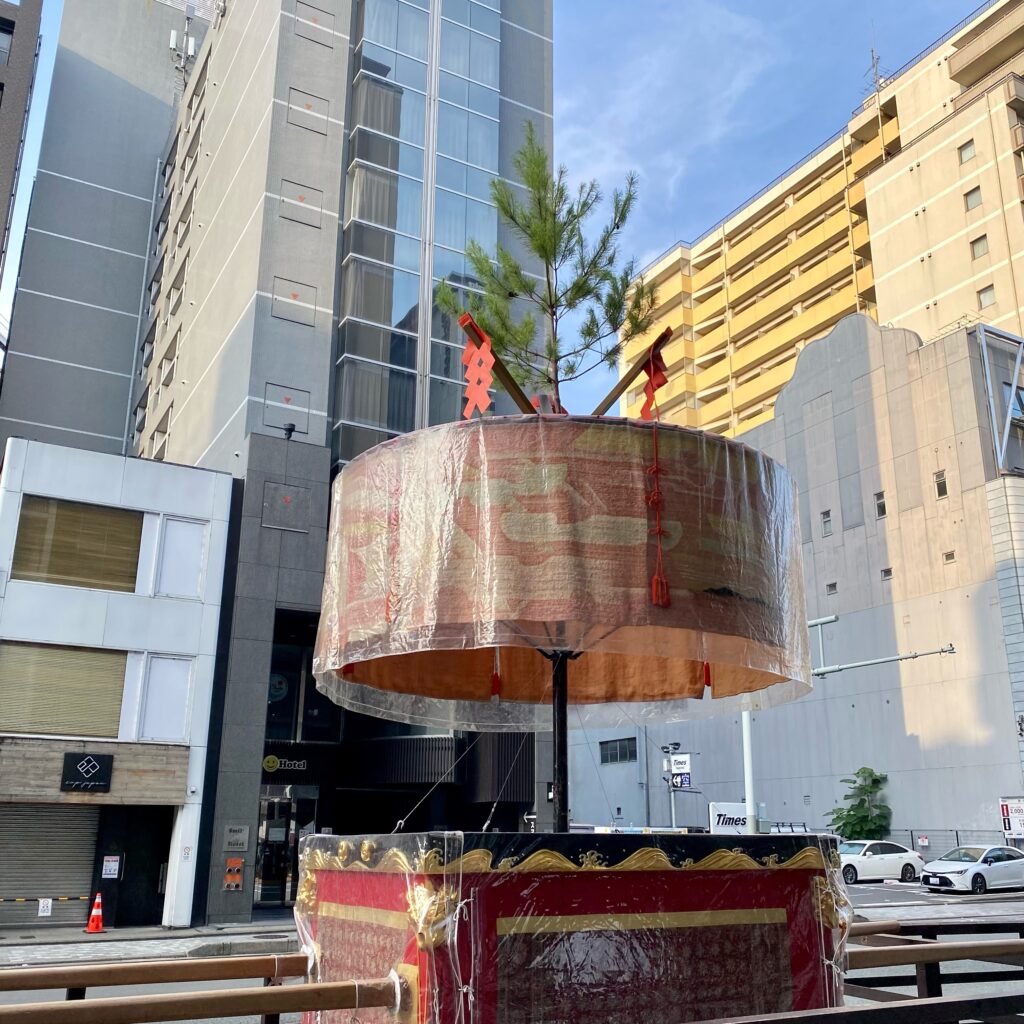
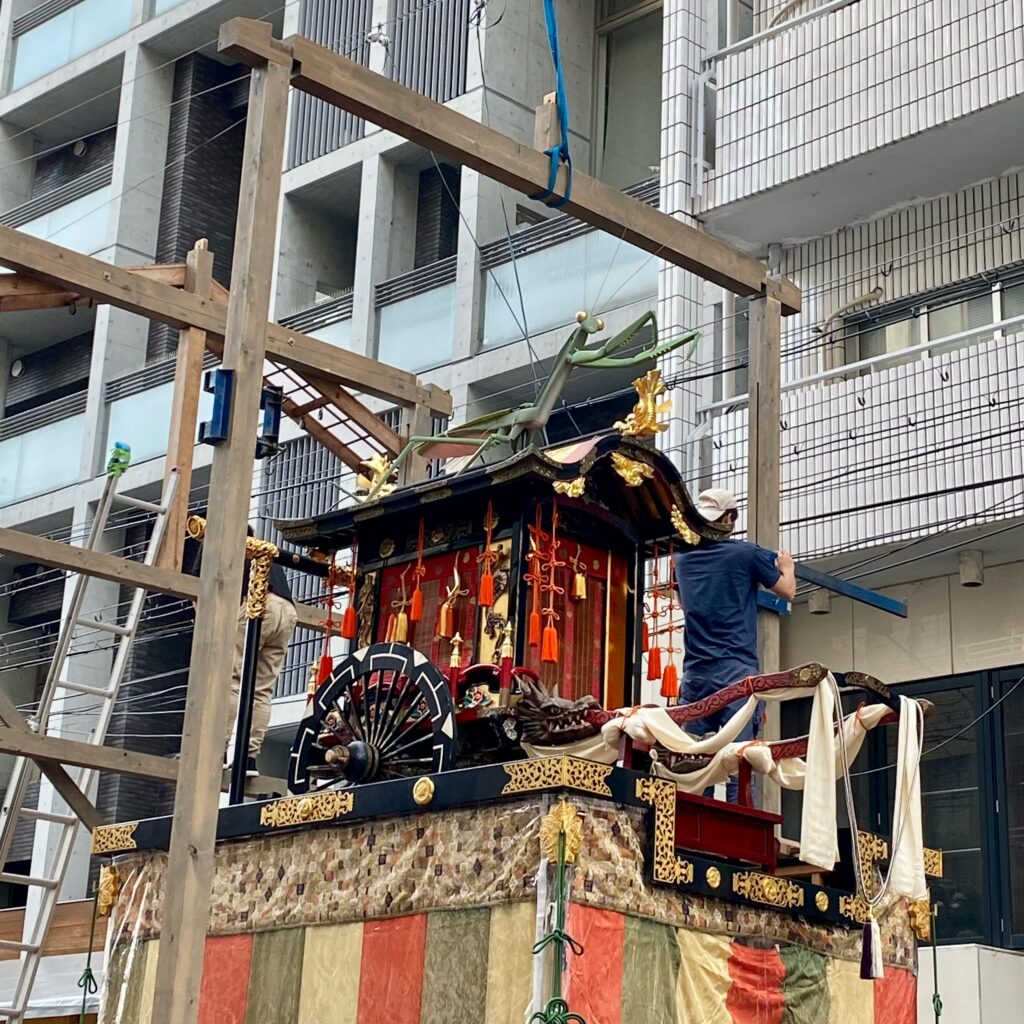
Giant floats. Lanterns illuminating the night streets. Gion music. And the Yamahoko procession, which begins on July 17th.
Previously, when I watched the Gion Festival, I focused primarily on those kinds of scenes. However, since I started practicing the tea ceremony, even when walking around the same city of Kyoto, what I notice has gradually changed.
In July 2026, I had the opportunity to witness a tea ceremony performed by the head of the Omotesenke school at Yasaka Shrine. Through the hotel where I stayed, Rokkakudo Temple and Toraya, the Yamahoko district I walked through the previous night, and the tea ceremony the following day, the Kyoto culture that I had previously viewed as separate entities became connected as a single thread through the art of tea.
The tea ceremony had begun the previous night — ART MON ZEN KYOTO
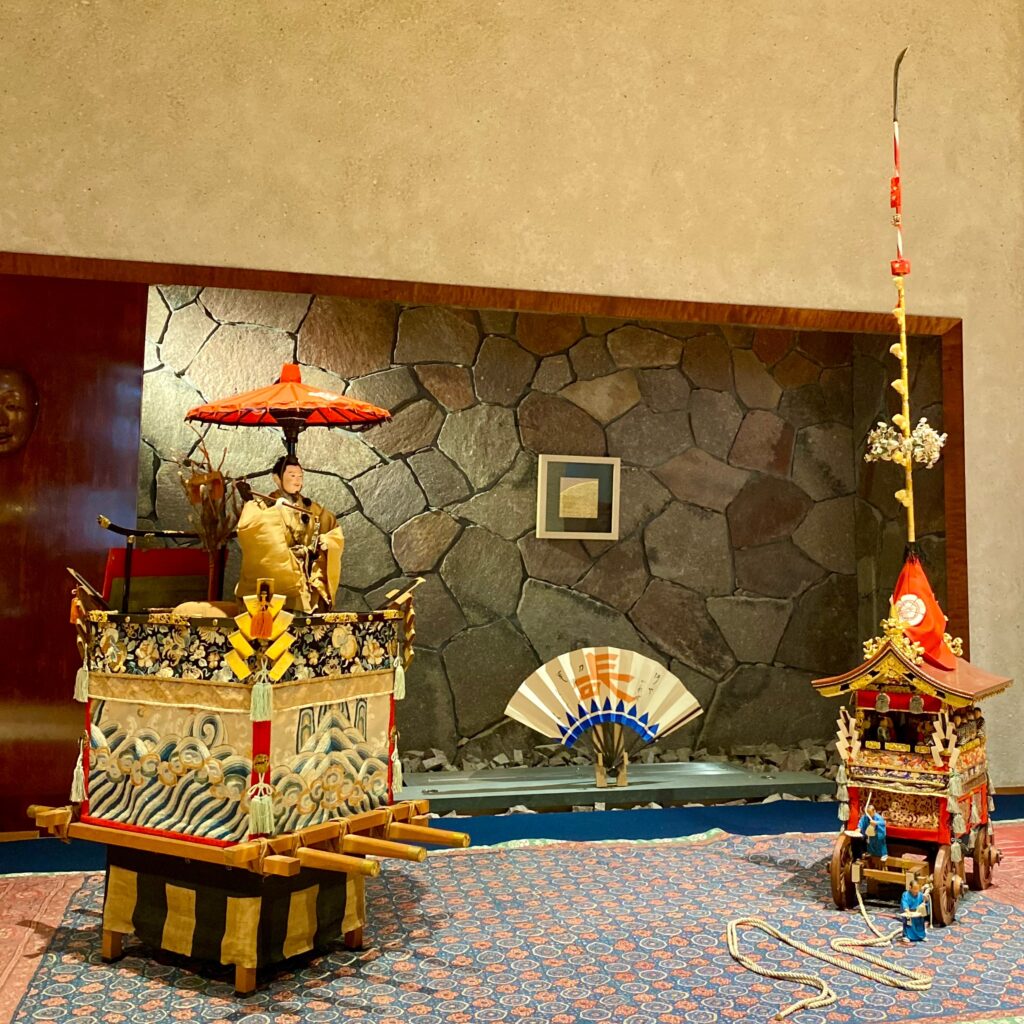
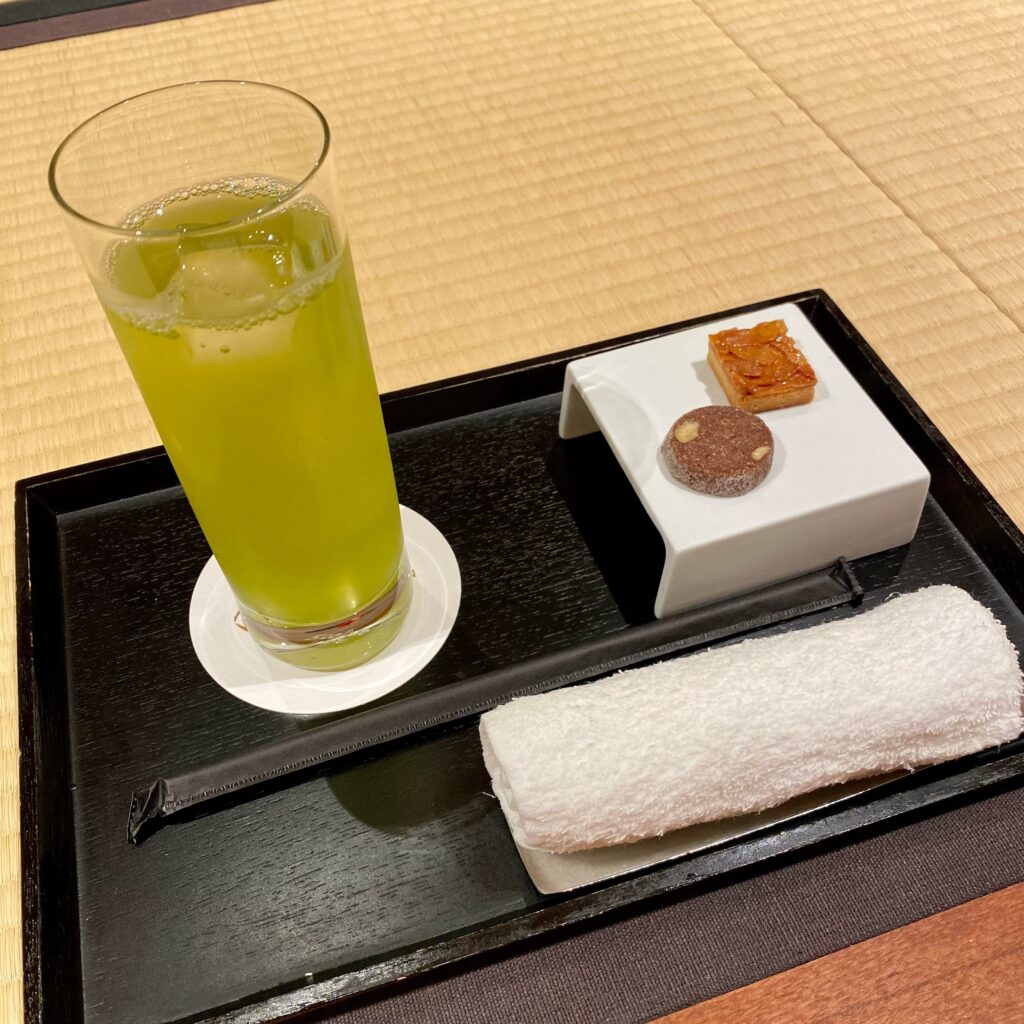
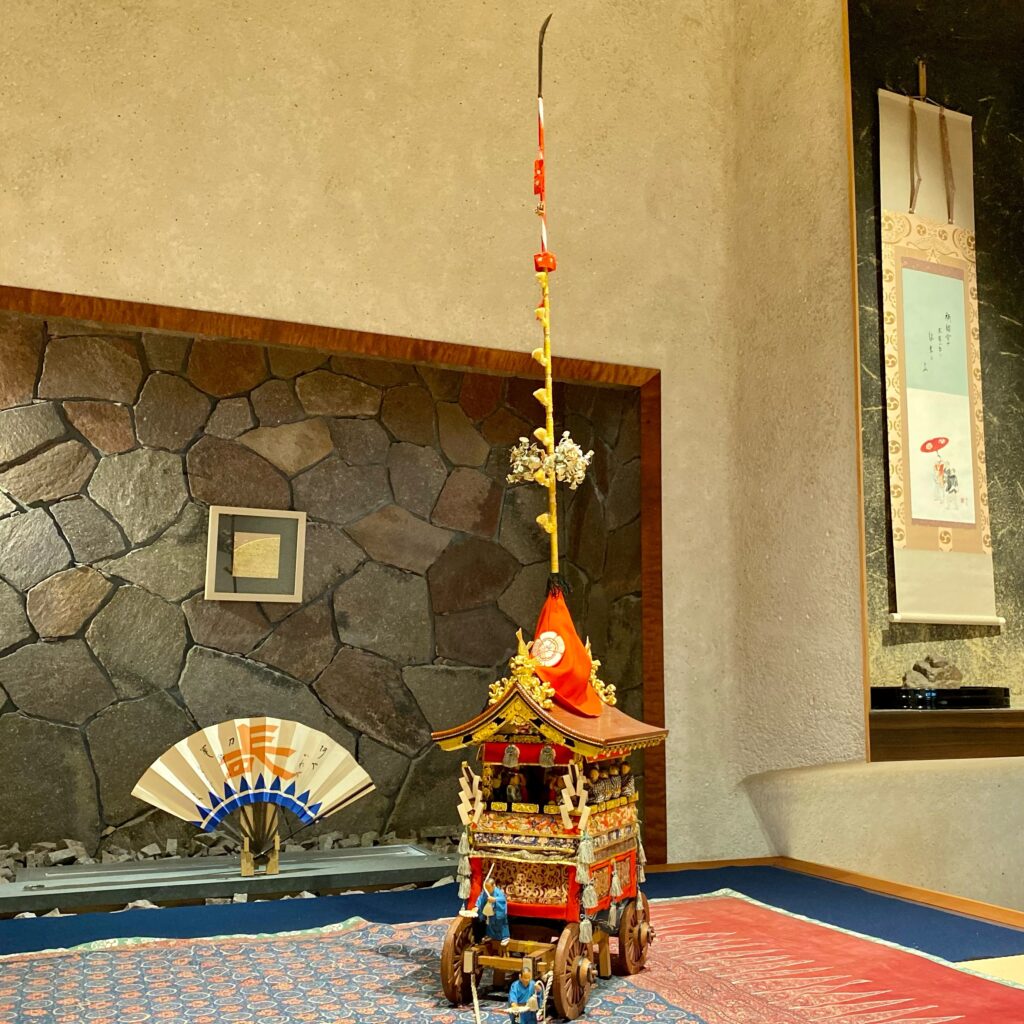
The hotel I stayed at this time was located in Gion-Komonzen.ART MON ZEN KYOTOThat was it.
This hotel is owned by an art and tea ceremony equipment dealer,Nakanishi MatsutoyokenIt is produced by [Name of producer]. The official website also describes it as having the concept of "staying in an art museum," and states that actual works of art are set in the guest rooms.
For me, there was a slight personal connection here. The previous year, when my tea ceremony teacher organized a tea ceremony retreat in Kyoto,Nakanishi MatsutoyokenBecause I was visiting Mr./Ms. "[Name]".
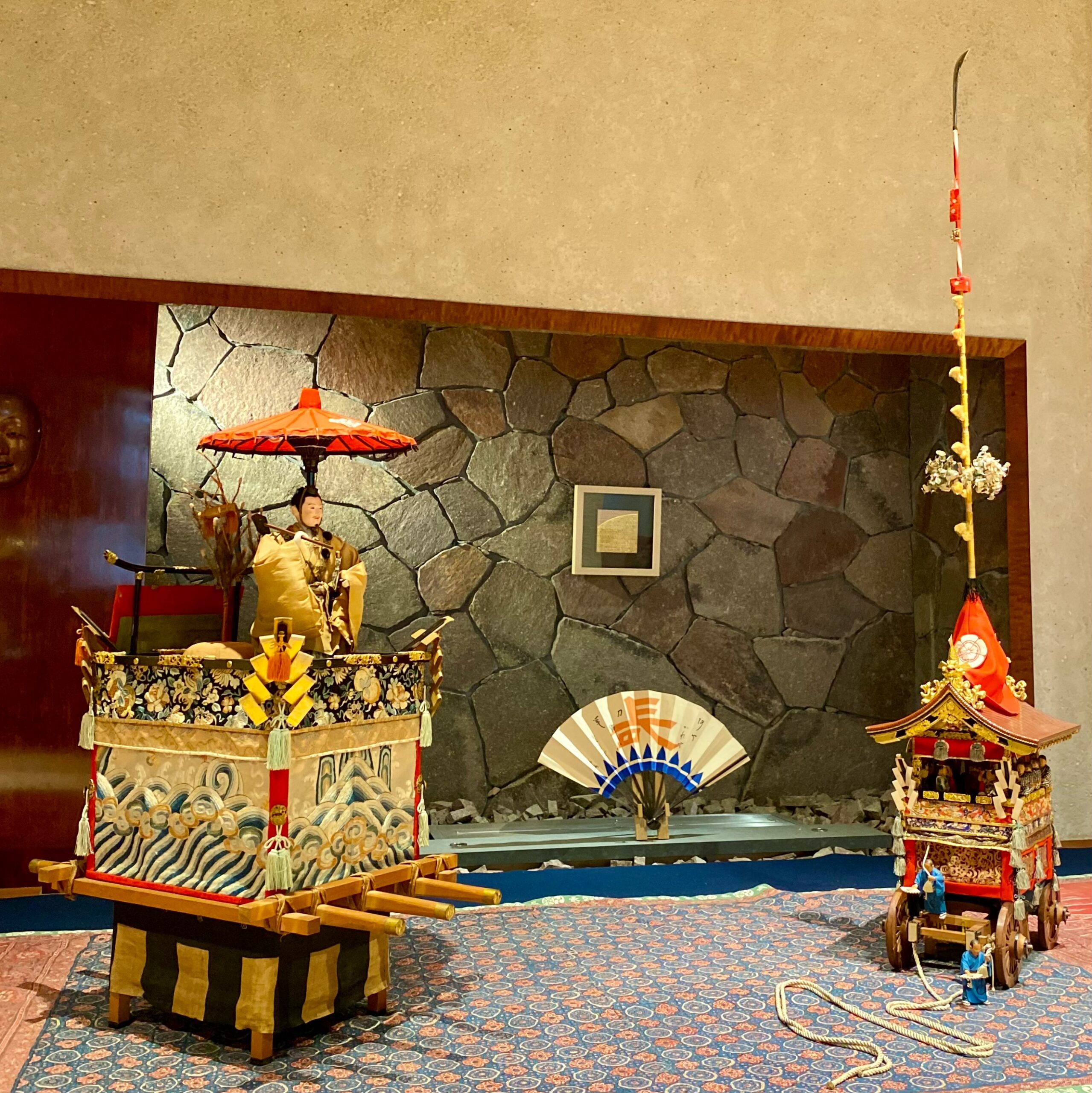
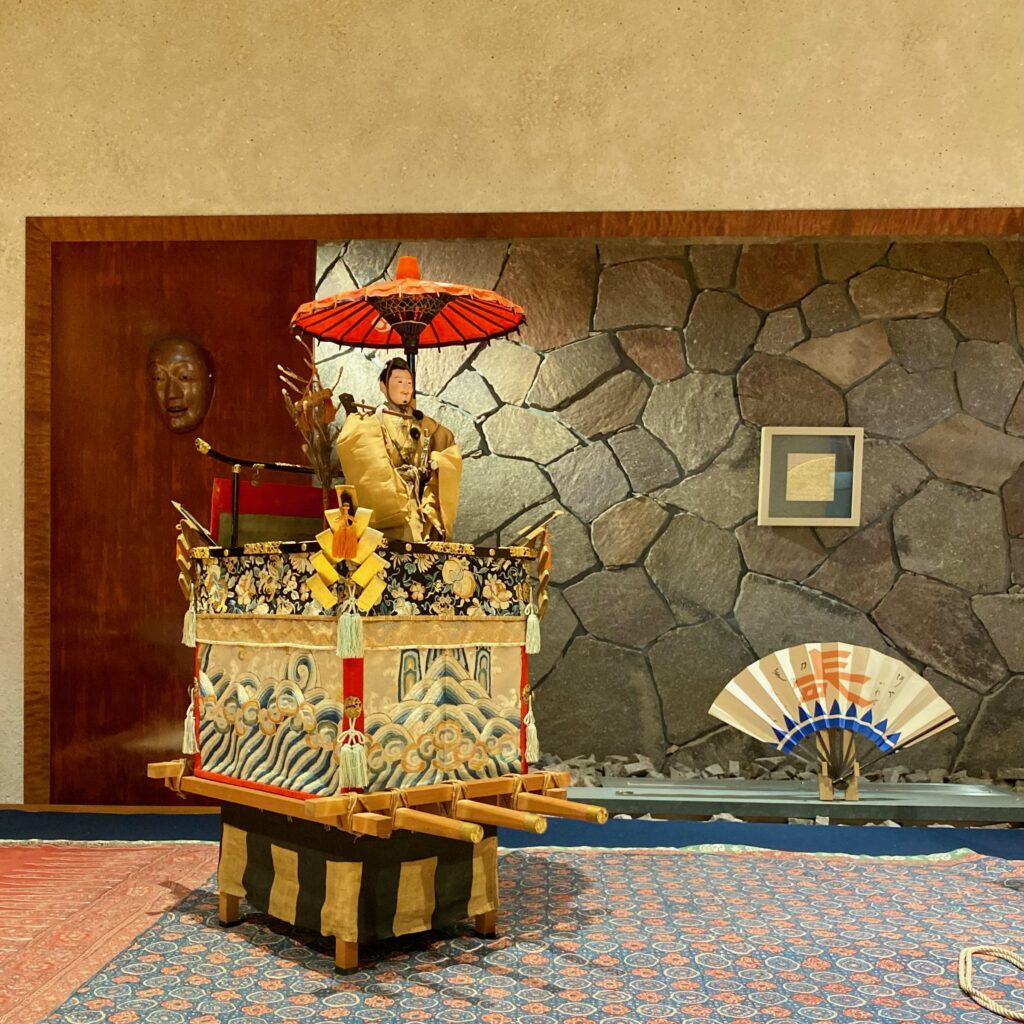
The following year, I stayed at a hotel owned by the same art dealer, this time specifically for the Gion Festival. Upon entering the lobby, I saw antique ornaments shaped like the floats used in the Gion Festival. I enjoyed a welcome drink while carefully admiring them.
Upon entering the guest room, I found a single Oribe tea bowl placed in a glass case.
A Momoyama period Oribe ware placed in the guest room
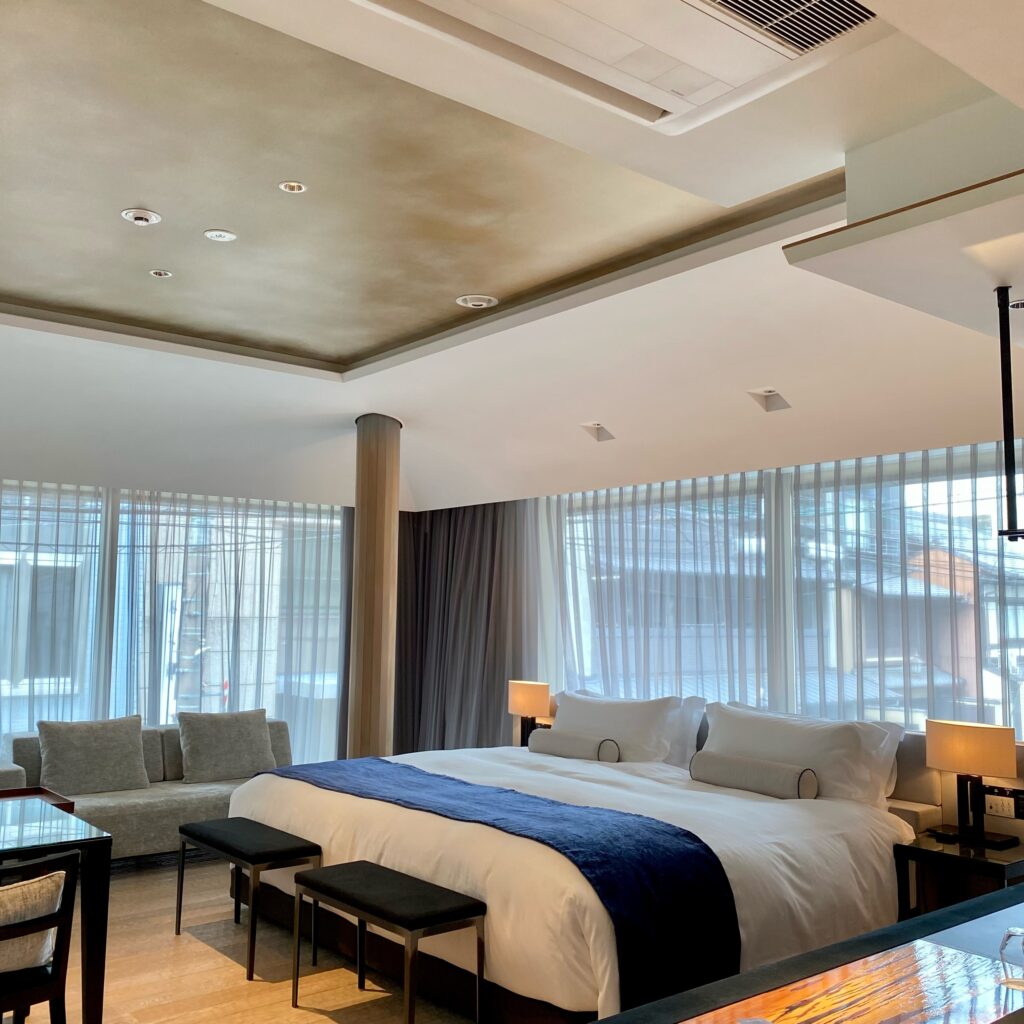
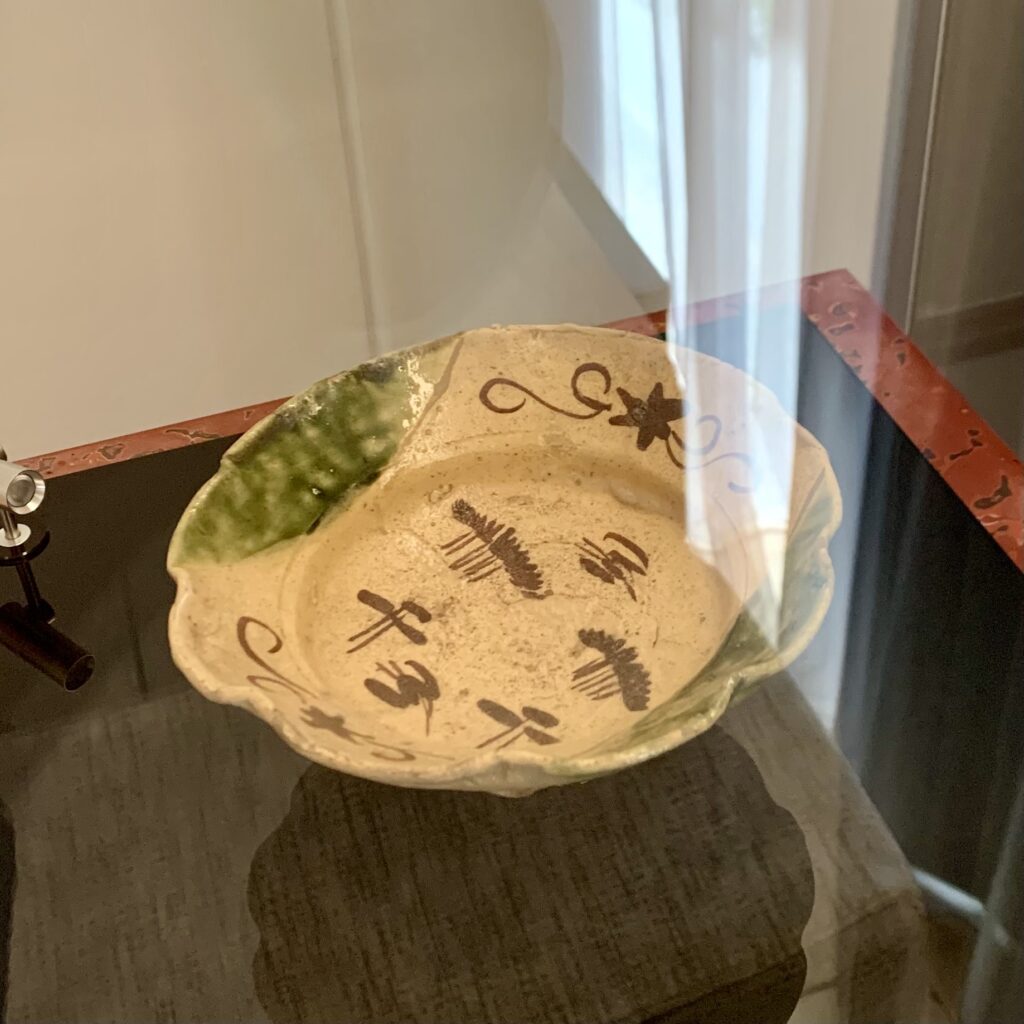
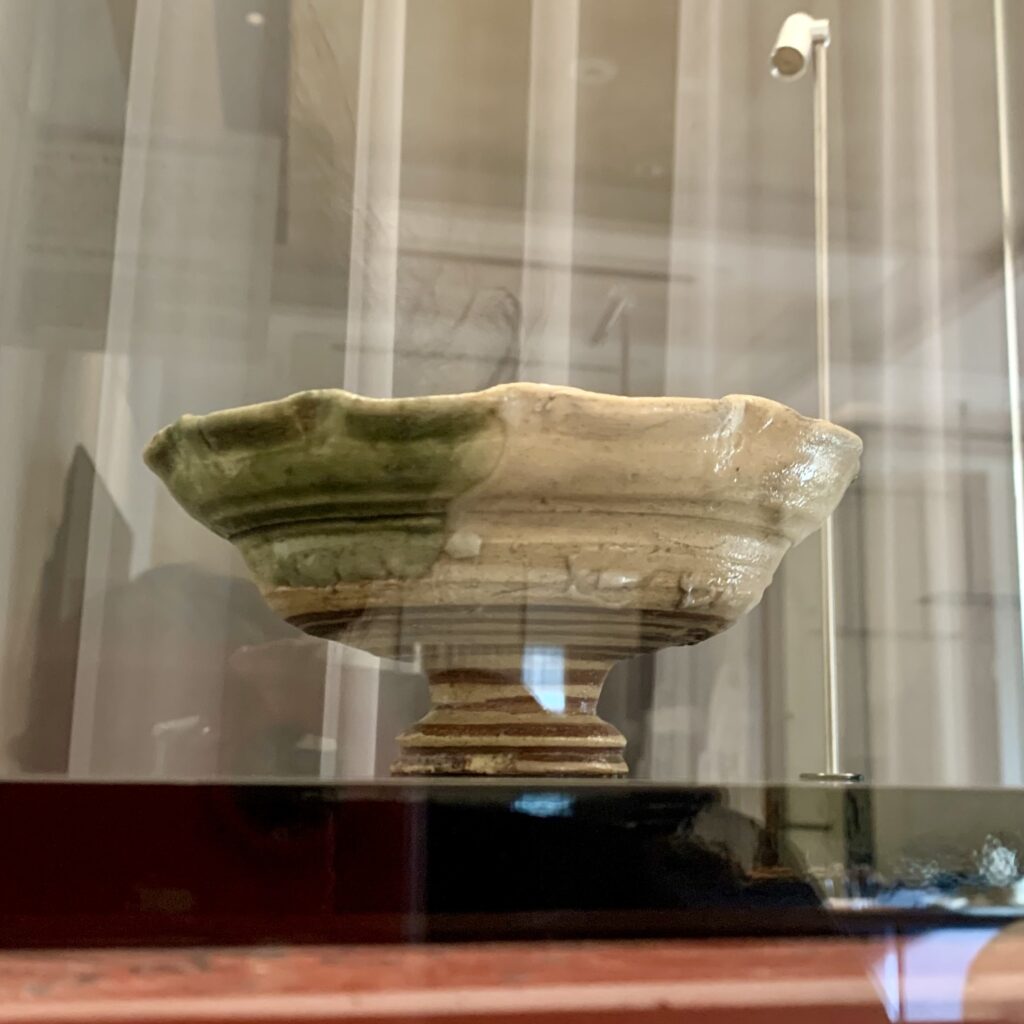
There was a teacup in the hotel room. If that were all, you might think it was just typical Kyoto decor. However, the teacup in question was an Oribe ware from the Momoyama period.
Looking at it through the glass case, the asymmetrical outline, the white clay body, the partially applied green glaze, and the iron-painted patterns are clearly visible. And above all, this is the first time I've seen an Oribe ware with such a high base.
Before I started practicing the tea ceremony, I might have simply dismissed it as "old pottery." And if I hadn't started pottery, I might not have even developed an interest in it. But now,
"How did they distort the shape?"
"Why is only this part glazed green?"
"Which side will be used as the front?"
"Where's the opening to drink from?"
And once you can make your own tea bowls, the number of questions you ask when appreciating them increases. Perhaps the joy of gaining knowledge lies in the fact that when you look at something, more questions arise than before.
「ART MON ZEN KYOTOHe also explained that the arrangement of the artworks was intended to create an experience "as if you were invited to a tea ceremony."
In the context of the tea ceremony, "arrangement" refers to combining items such as tea bowls, tea caddies, flower vases, hanging scrolls, and confectionery containers according to the season and theme of the day.
It's not about simply displaying expensive tools; it's about understanding why these tools are used today. We create a presentation that encompasses the relationships between these tools. I believe this approach is similar to that used in fashion shows and collection design.
Rokkakudo—Seeing the close relationship between flowers and tea as seen in "Hana Ikusa"
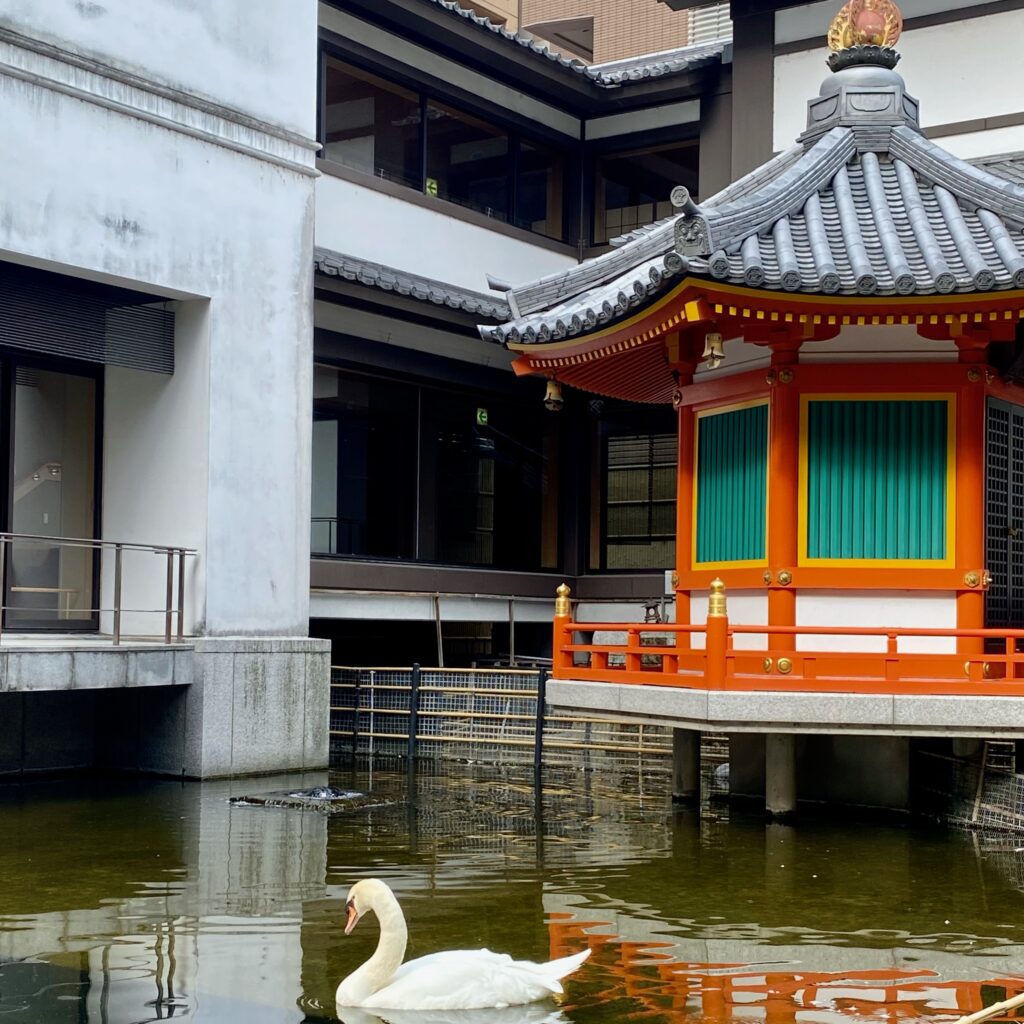
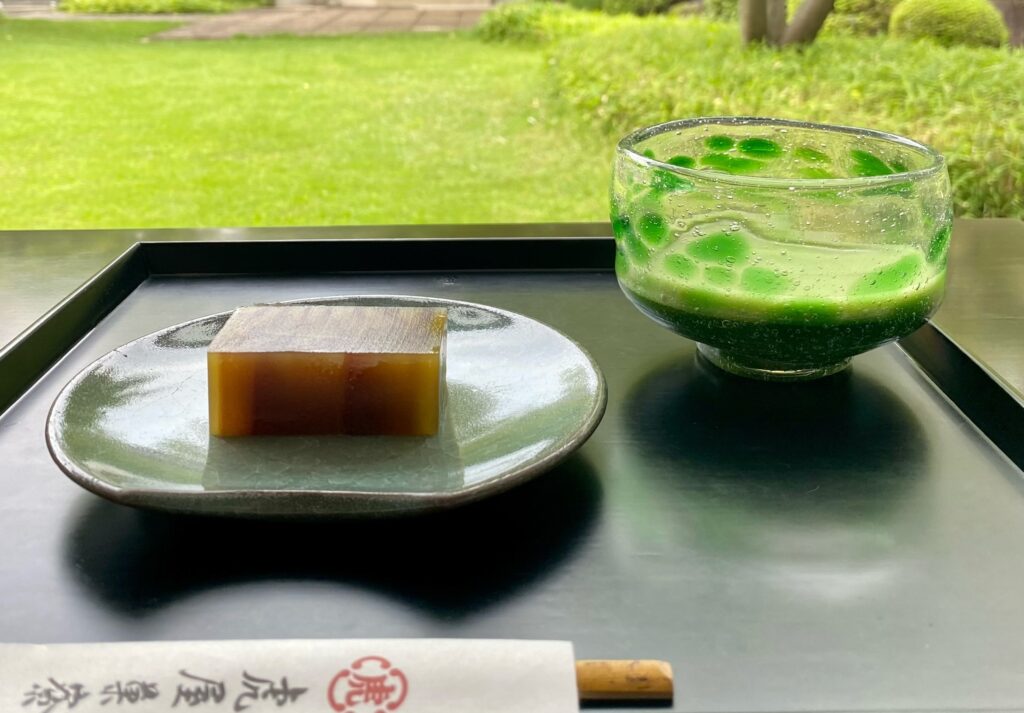
In the evening,RokkakudoWe headed to "[destination]".
The official name of Rokkakudo is Chōhōji Temple. It is a place deeply connected to the Ikenobo school of flower arrangement and is an indispensable site when considering the history of Japanese ikebana.
This reminded me of the movie 'Flower Battle(2017).
The protagonist, played by Mansai Nomura, is the first Ikenobo Senko, a real-life figure from the Sengoku period. He was a flower arrangement monk associated with Rokkakudo Temple and was known as a master of the Rikka style of flower arrangement. In the film, Senko confronts Toyotomi Hideyoshi's power not with a sword, but with "flowers."
Of course, since it's a movie, it can't be viewed as historical fact itself.
What makes this work interesting, however, is that it portrays the culture of the Azuchi-Momoyama period not just through warlords and battles,Flowers, tea, garden, vessels, aesthetic senseIt's a place where they show you things.
When Japanese history is organized through movies,Flower Battle"of"Rikyu』『Honkakubo ImonI placed it under the same "Azuchi-Momoyama Culture" section as the previous entry.
Just as Sen no Rikyu shaped his aesthetic sensibilities through tea, Ikenobo Senko creates space through flowers. Although the things they express are different, there is a common sensibility between them.
Beyond the Western aesthetic of bilateral symmetry, it's about deliberately disrupting balance, leaving empty space, and finding beauty in imperfections like the bends of branches or the distortions of a vessel.
When you study tea bowls, gardens, flowers, and architecture as separate genres, you might overlook this, but when you walk around Kyoto, you realize that they all originated from the same aesthetic sensibility.
Unfortunately, the time for serving matcha at Rokkakudo had passed, so I made a hurried trip to Toraya Kyoto Ichijo store (the article about Toraya is...).Here)。
Then, in the evening, I had dinner with my tea ceremony friends, and afterwards, I walked around and saw the floats of the Gion Festival.
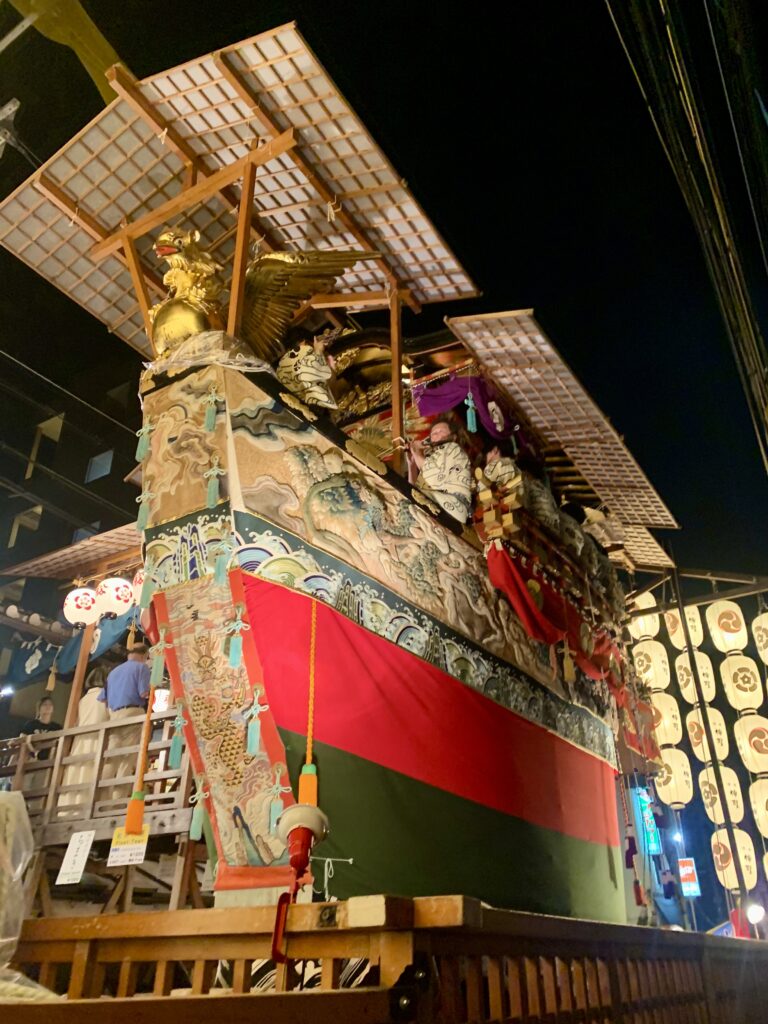
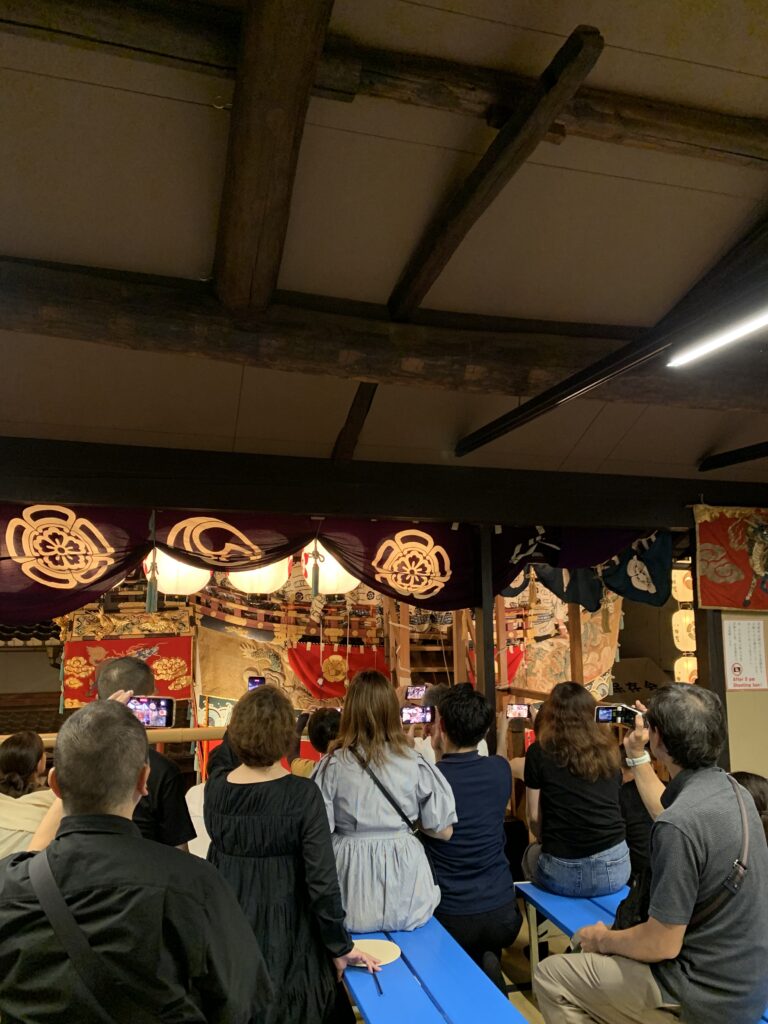
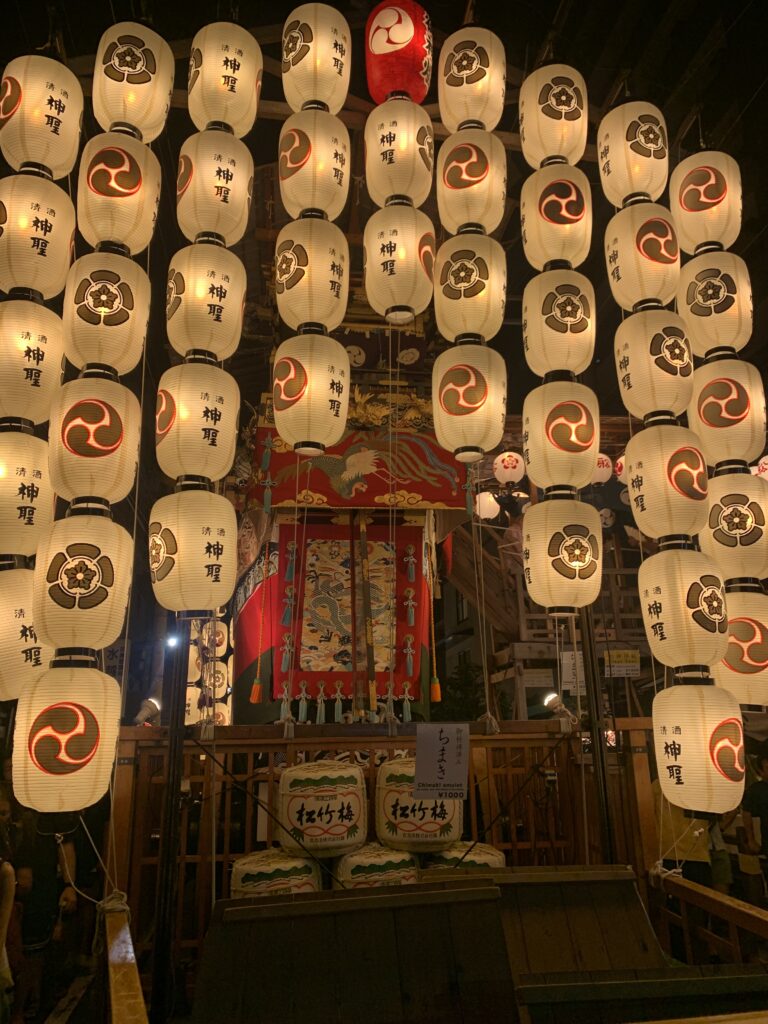
The Gion Festival is not just on July 17th.
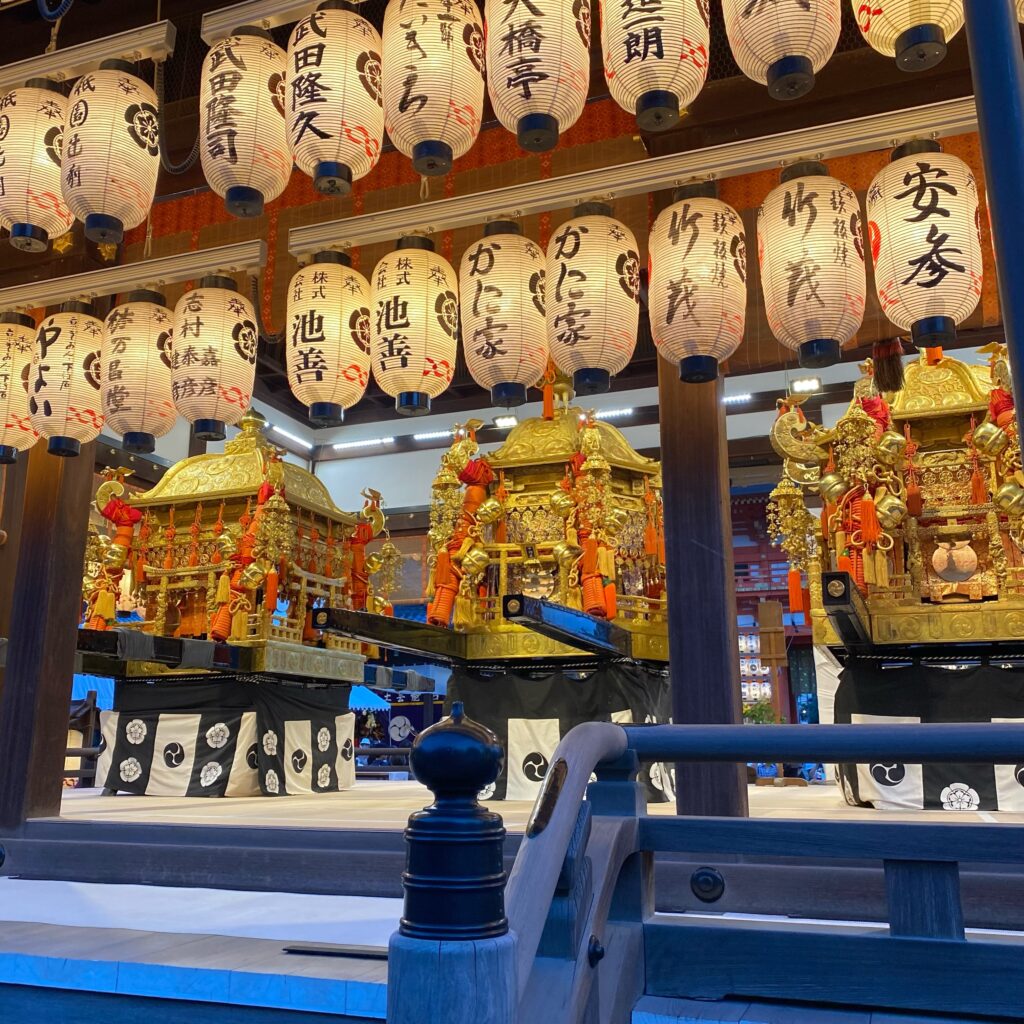
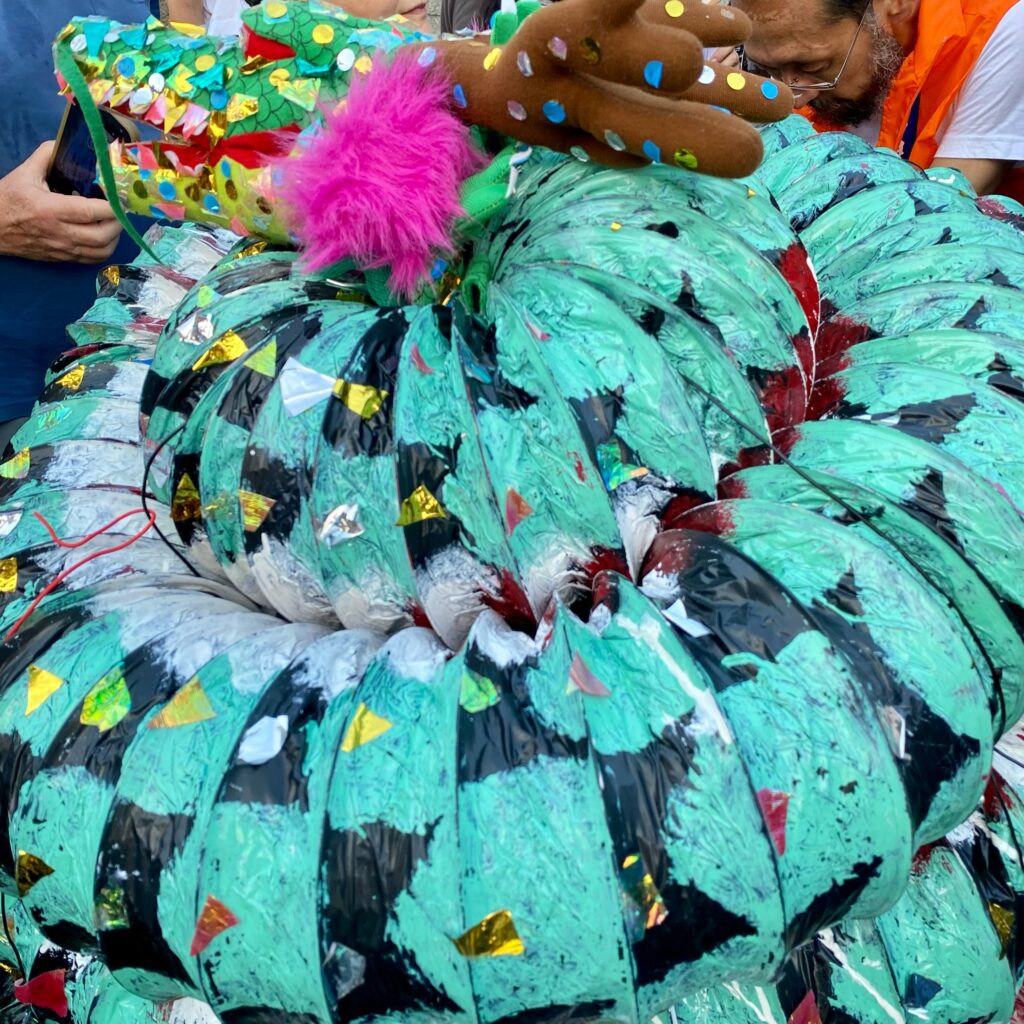
The Gion Festival is not just a one-day event with the "procession of floats on July 17th," but rather a festival of Yasaka Shrine that lasts for a month, from the "Kippuiri" ceremony on July 1st to the "Ekijinja Natsukoshisai" festival on July 31st.
The Yamahoko procession is a very prominent event, but it's only a part of the whole festival. The tea ceremony I participated in is also part of that month-long event.
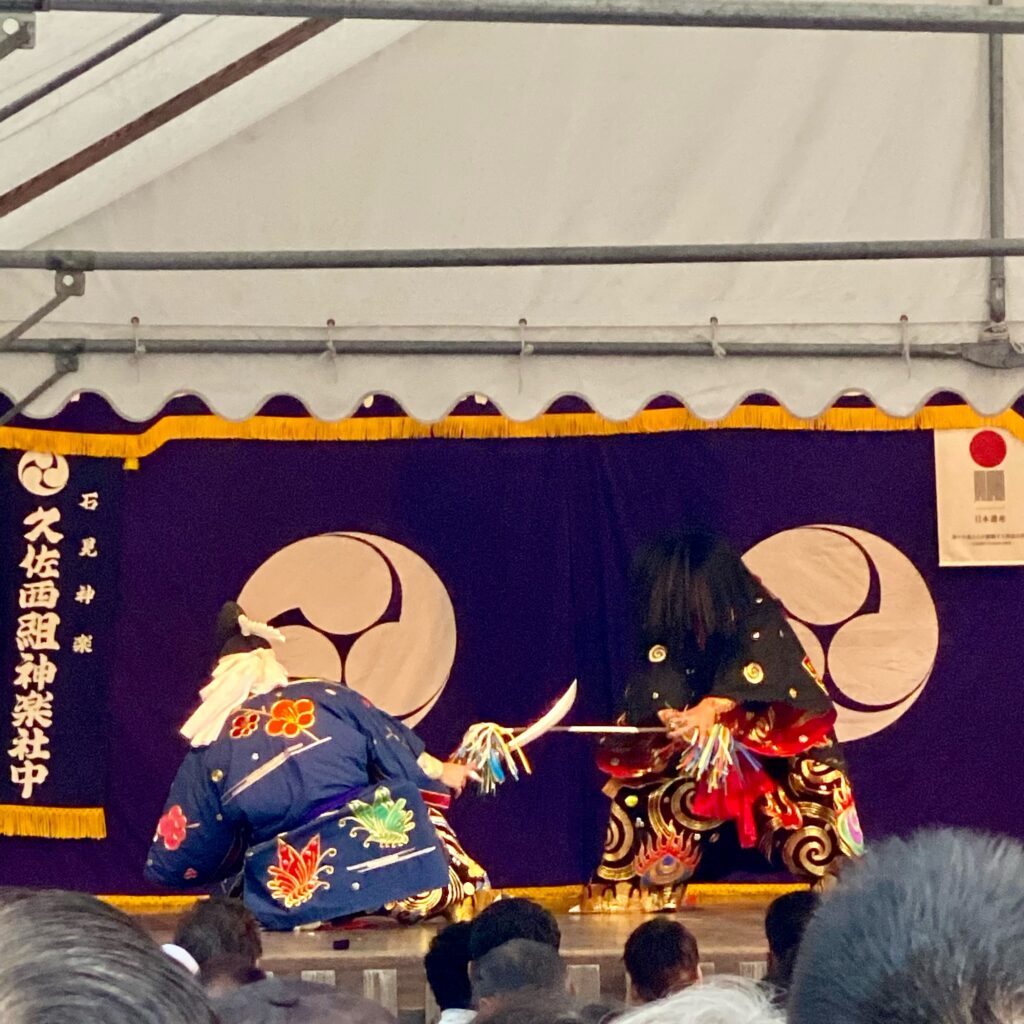
Just knowing this has greatly broadened my understanding of the meaning of the word "Gion Matsuri." Moreover, on the evening of July 16th, the same day as the tea ceremony, at Yasaka Shrine,Iwami Kagura" is also offered as a dedication. It reminded me of the Iwami Kagura I saw previously in Yunotsu, Shimane Prefecture.
I went to Yasaka Shrine at 7 AM.
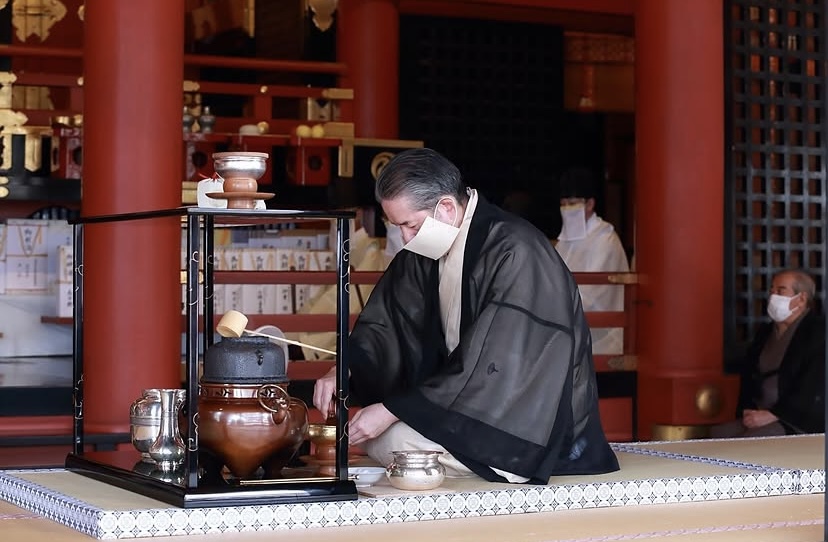
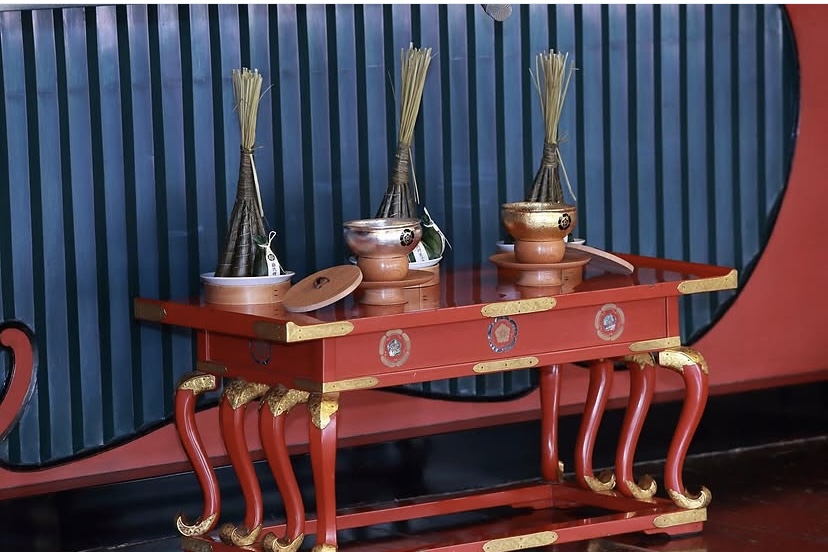
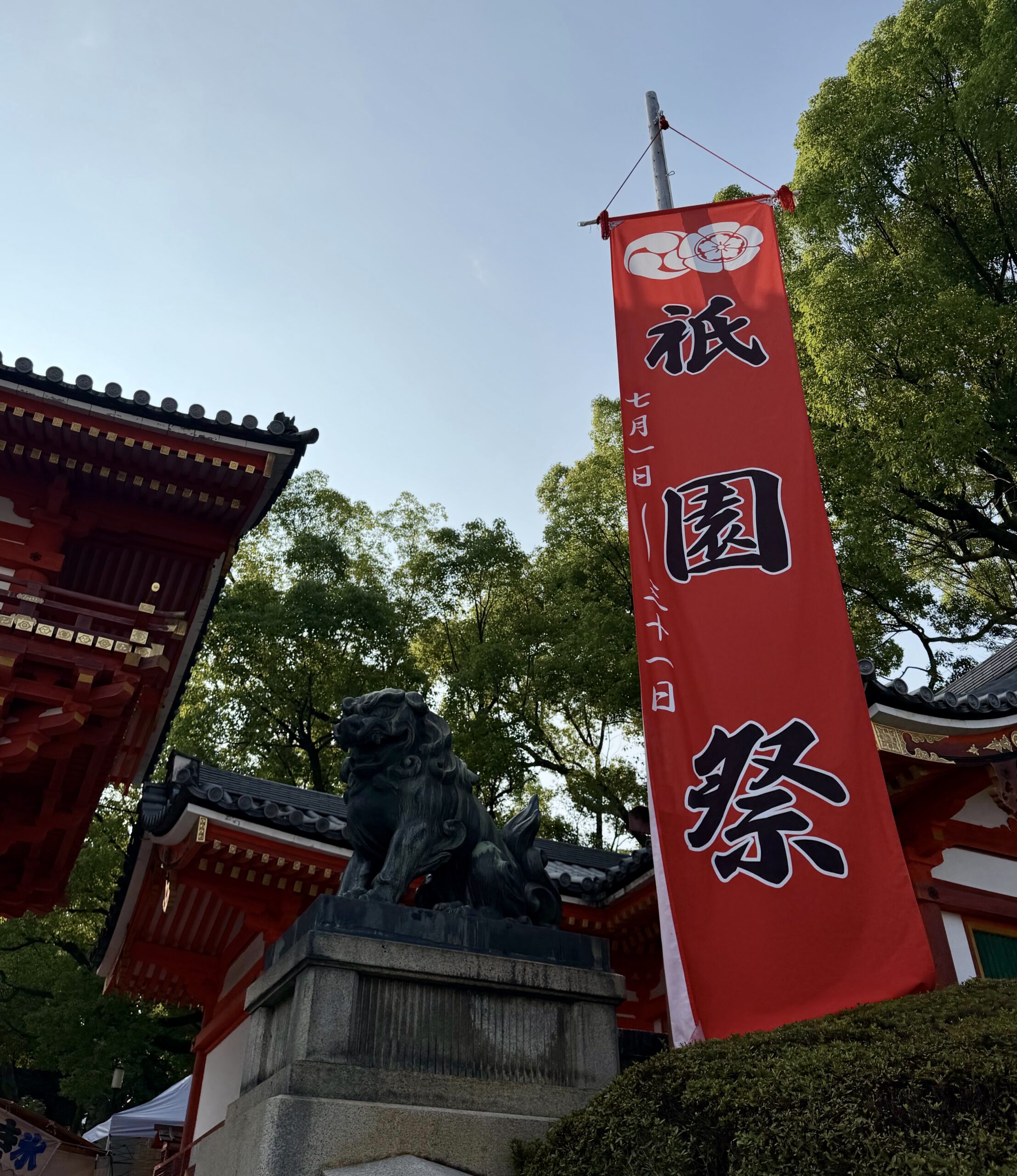
On the day of the tea ceremony, I headed to Yasaka Shrine early in the morning. Although it was scheduled to start at 9:00 AM, I waited in line from around 7:00 AM.
The Omotesenke school of tea ceremony has been passed down through generations of heads of the family, continuing the tradition of the tea ceremony from Sen no Rikyu. To witness the head of the family's tea ceremony firsthand during the grand event of the Gion Festival was a special opportunity, but once the ceremony began, I found myself thinking about the crucial differences between it and my usual practice.
This means that there are no human guests to drink the tea that has been prepared. This tea is offered to the gods. In a normal tea ceremony, the host prepares the tea, the guest receives it, and drinks it. However, in a tea offering ceremony, the gods are at the other end of that relationship.
I realized the breadth of tea ceremony culture, noting that there is tea served to entertain guests, and also tea offered to gods and Buddhas.
From tea offered to the gods to tea consumed by people.
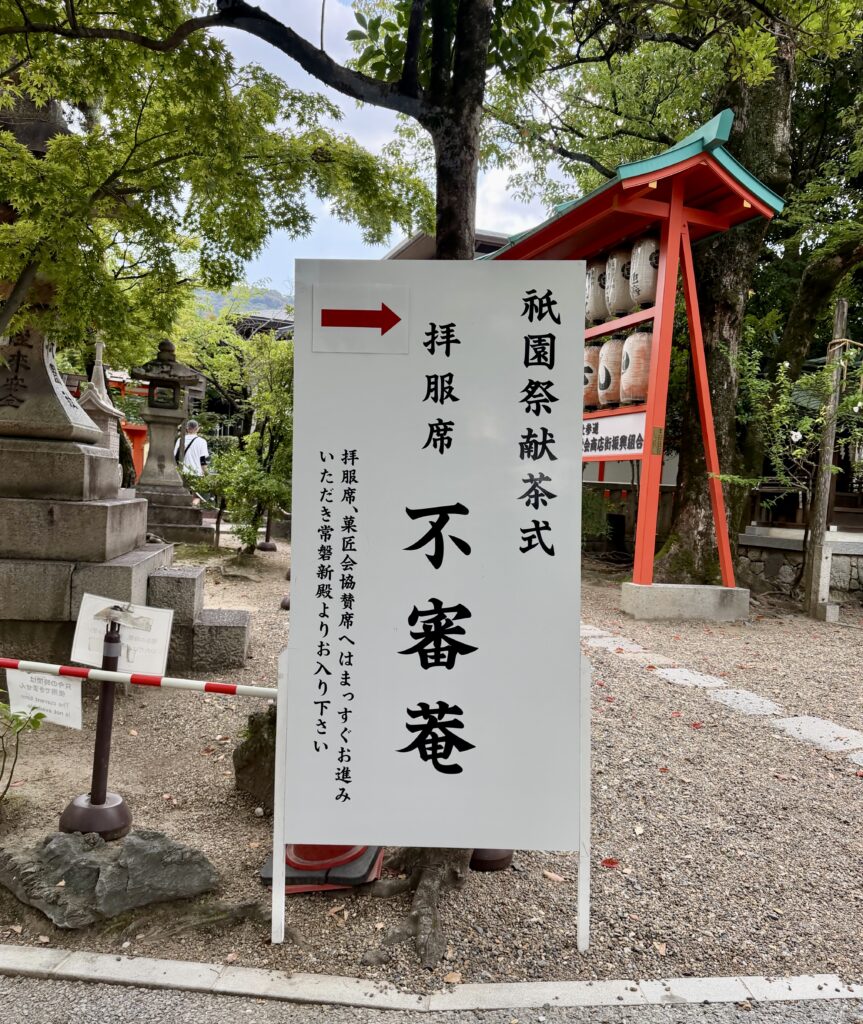
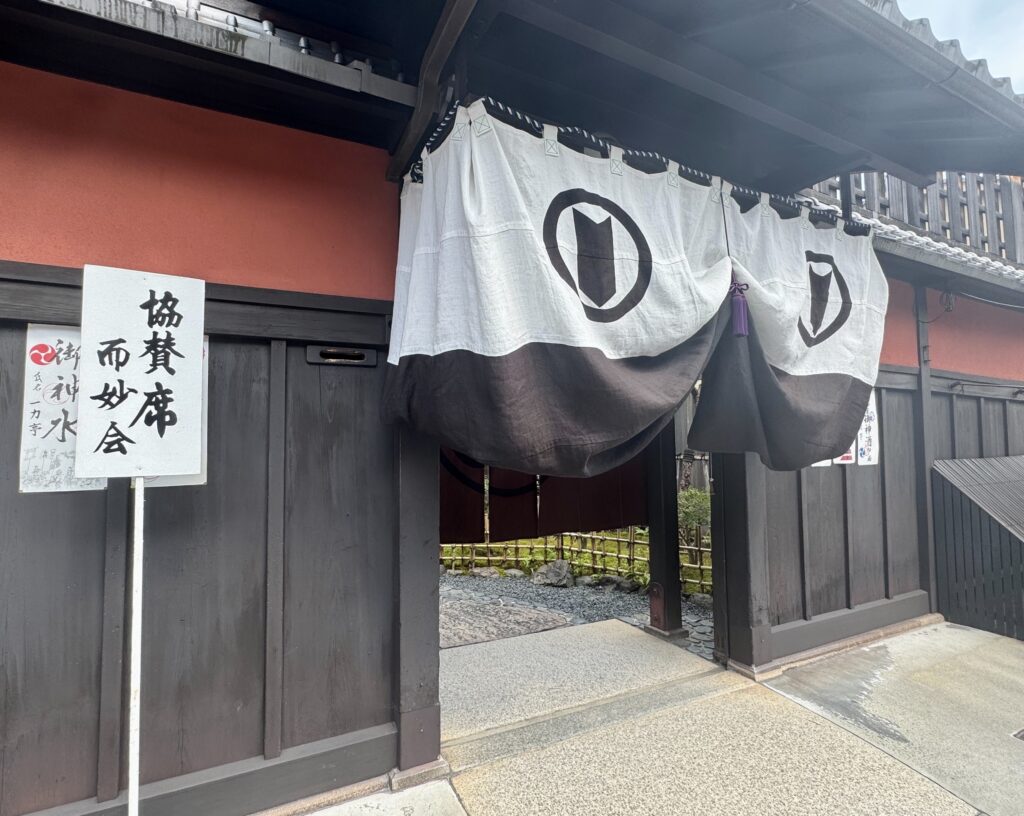
After the tea ceremony concludes, the attendees proceed to the seating areas where they will be served tea. In 2026, in addition to the designated seating area at Tokiwa Shinden, supplementary seating areas were set up in Tokiwa-den, Nakamura-ro, the Kanji Museum, and other locations, as well as sponsored seating areas in Man-tei and other venues.
In the main shrine in the morning,Offering tea to the gods.
At the subsequent tea ceremony,People drink tea.
I found it interesting that I experienced these two things consecutively on the same day.
And then, an unexpected reunion occurred at that tea ceremony. The previous night, the item displayed in the hotel lobby wasYamabushi MountainHowever, this time it was displayed inside the tea ceremony room. The day before, I had seen it as "an old Yamabushi float ornament that had been placed there in conjunction with the Gion Festival."
However, the moment it is placed in a tea ceremony room, its role changes. It is no longer an exhibit to explain Yamabushiyama itself, but rather to serve the guests of that day.
"It's the season for the Gion Festival now."
This is part of the arrangement that conveys this message. The same object can have a different meaning depending on where it is placed. In a tea ceremony, objects are not appreciated in isolation; rather, hanging scrolls, flowers, tea bowls, sweets, and utensils are all related according to the season and theme.
Ichiriki-tei - A place where fiction changed the name of reality.
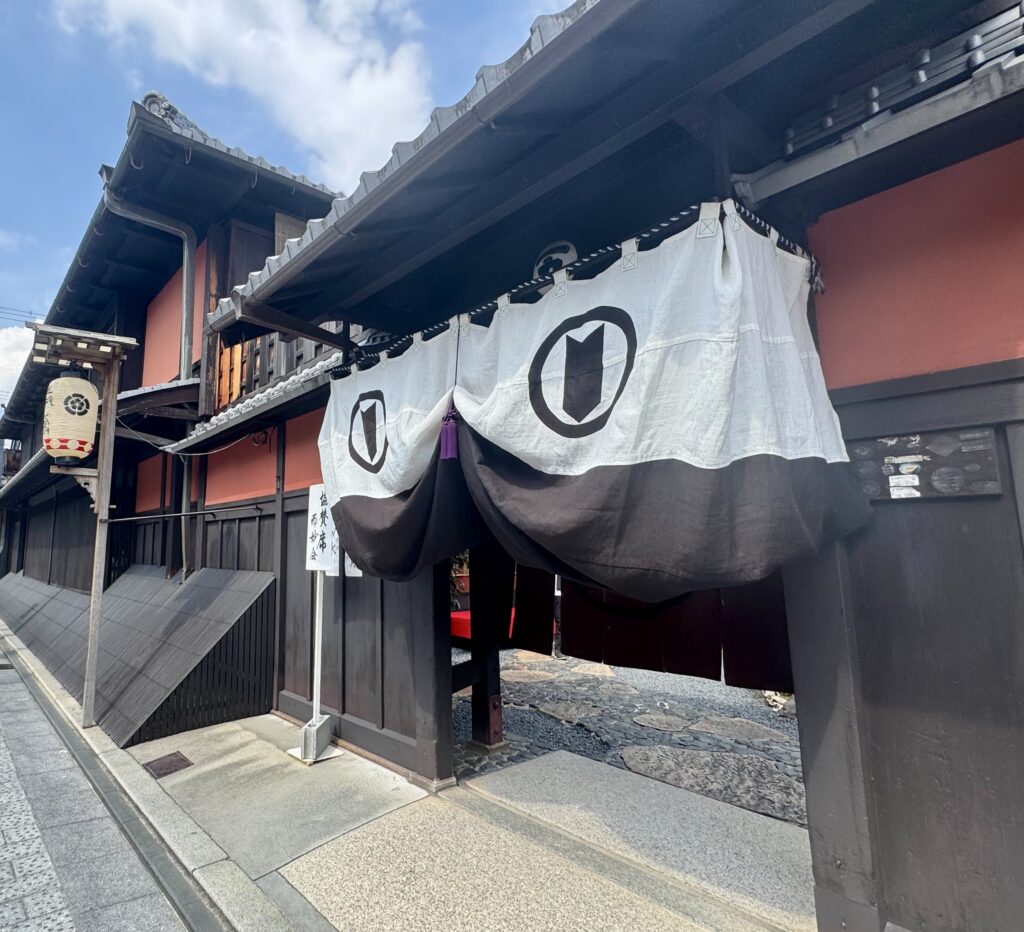
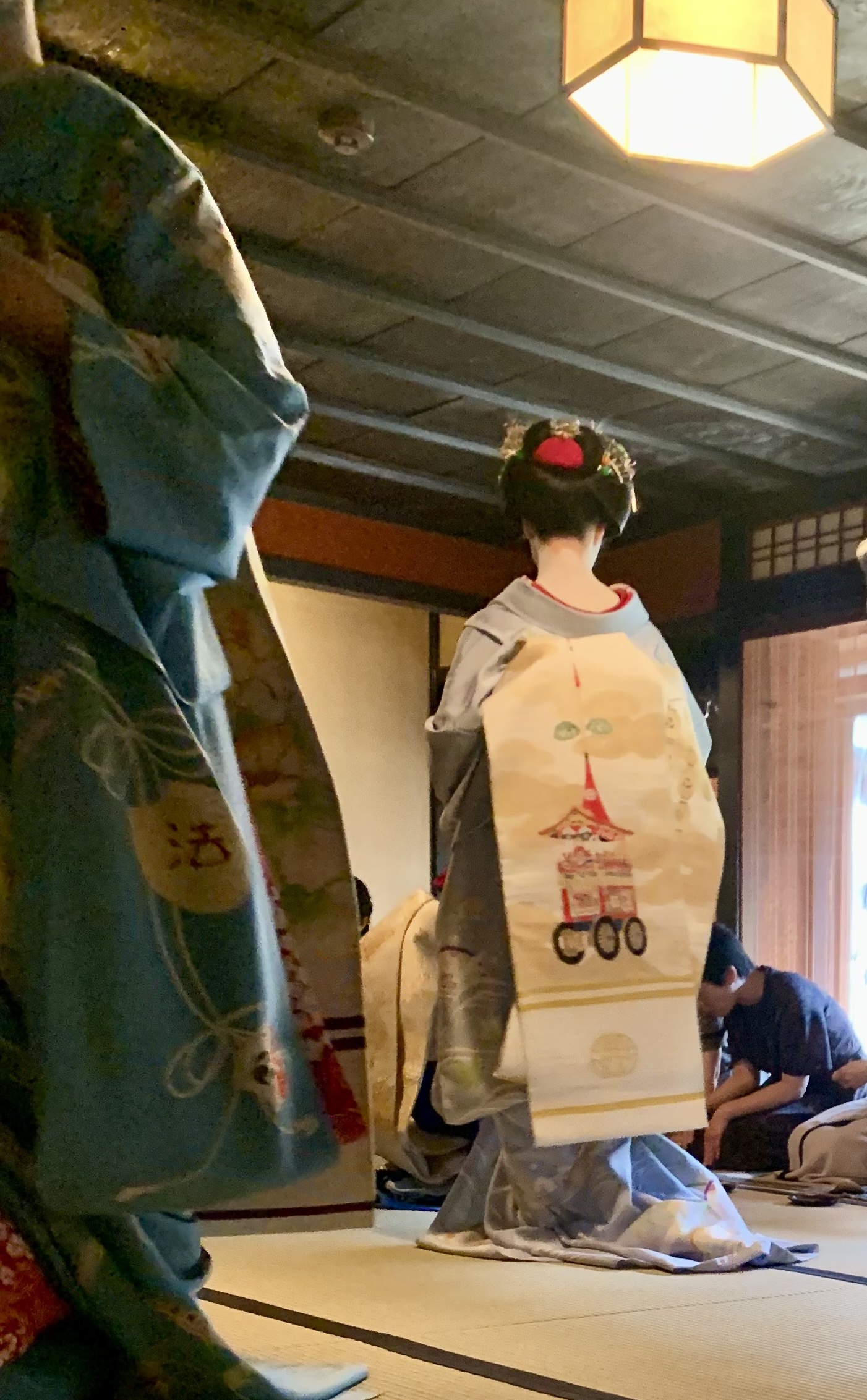
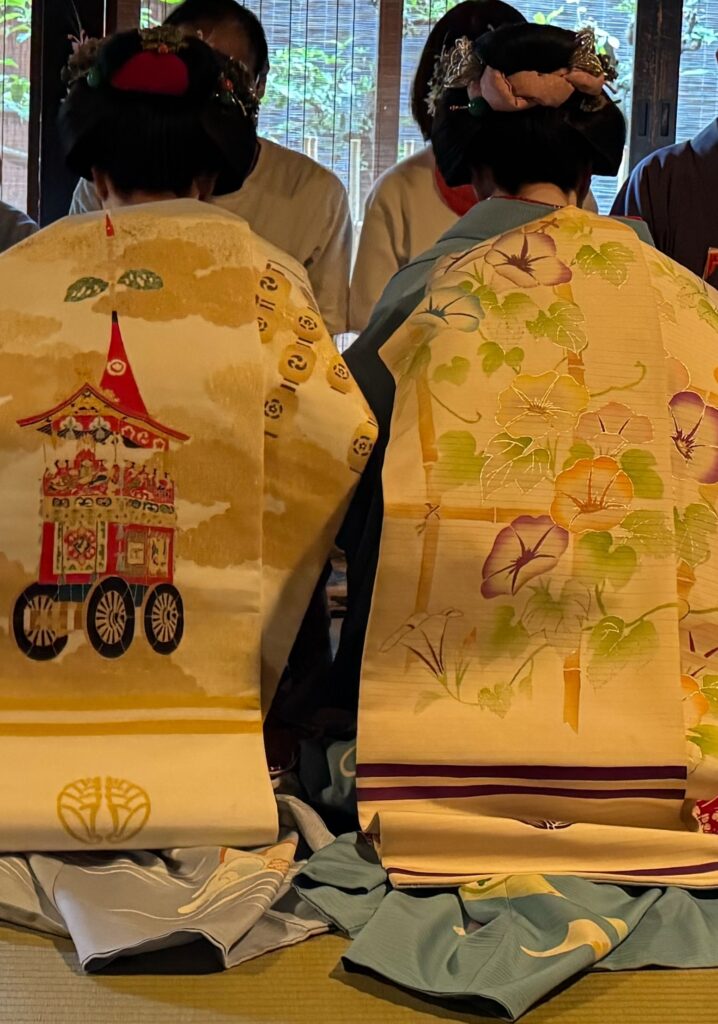
I also participated in the tea ceremony at "Ichiriki-tei," where sponsored seats were provided.
Ichiriki-tei is a representative "ochaya" of Gion. The ochaya referred to here is not a teahouse where you drink matcha or sencha. It is a place in Kyoto's geisha district that hosts banquets where geiko and maiko are invited to entertain guests. Its role is slightly different from that of a ryotei (traditional Japanese restaurant) where the chefs themselves serve the food.
At this tea ceremony, a geisha served the tea, which in itself was a truly Kyoto-like experience. However, as I researched Ichiriki-tei, I realized that this place cannot be simply described as a "formal teahouse in Gion."
Fiction changed the store's name.
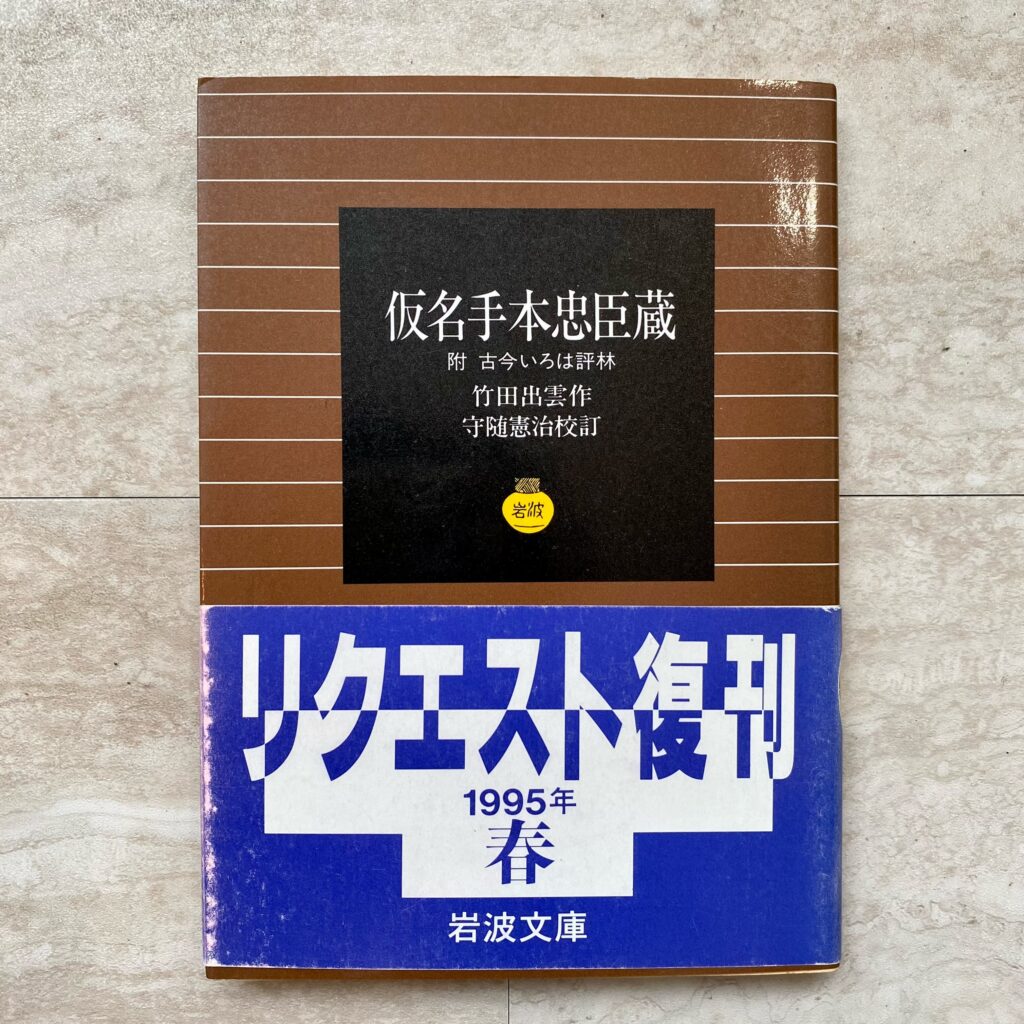
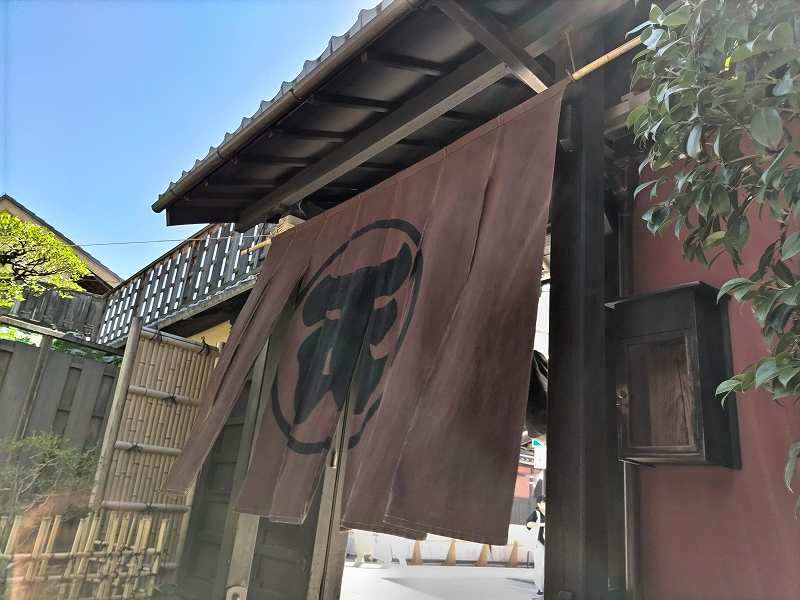
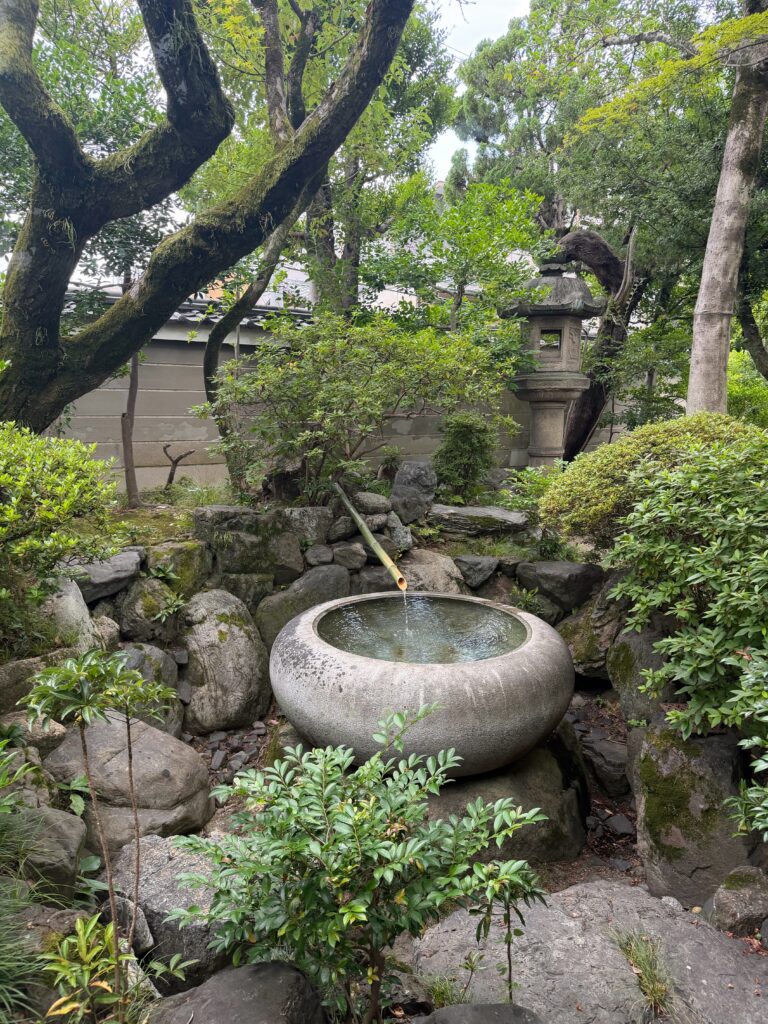
Ichiriki-tei's original name was "Mantei".
However, the first performance in 1748 wasKanadehon ChushinguraThe seventh act of the play features the "Gion Ichiriki Teahouse." It is said that as the play became more widely known, the actual shop also came to be called "Ichiriki."
Real-life incident → Theater → Real-life store name
This is what happened – a reverse flow.
"Chushingura" is not just one story.
What's even more interesting is that the story we imagine when we hear "Chushingura" wasn't originally in the same form.
When I previously organized Japanese history using movies, I made the following note:Kanadehon ChushinguraIn ', stories of love and human relationships played a large role. In contrast to modern films 'ChushinguraIn this work, the act of revenge itself is emphasized, and the raid comes to the forefront as the climax.
And the modern film 'The Final Settlement! ChushinguraIn this work, the same incident is re-examined from yet another angle. Rather than grand narratives of loyalty and revenge, it focuses on the practical question of "how much money was actually needed to carry out the raid?" The costs of gathering people, travel expenses to Edo, preparation of weapons, and the daily living expenses of the ronin. By changing the perspective, the same incident becomes an entirely different story.
The Ako Incident (1702)
→『Kanadehon Chushingura' an 18th-century play
→ Movie 'ChushinguraA modern heroic tale (1958)
→Movie 'The Final Settlement! ChushinguraA modern reinterpretation by (2019)
"Chushingura" has been reinterpreted for over 300 years. And within that story, Ichiriki-tei has remained a special place.
Ichiriki-tei itself is a building with a long history. According to the Kyoto City government, it is said to have been founded during the Genroku era, and the current building was rebuilt in 1870 (Meiji 3) after the Great Fire of Gion. It is said that there were once three teahouses in Gion that were permitted to have red walls, but Ichiriki-tei is said to be the only one of them that still exists.
The very human side of Soseki
Ichiriki-tei is also intertwined with memories of modern literature.
In April 1907, Natsume Soseki, who was staying in Kyoto, went to Ichiriki-tei after watching the Miyako Odori with Takahama Kyoshi. After returning to Tokyo, Soseki wrote to Kyoshi in a letter, jokingly expressing his dissatisfaction that "the Soseki at Ichiriki never came out" after reading Kyoshi's account of their Kyoto trip. It is speculated that he wanted Kyoshi to write more humorously about his comical and glamorous experiences surrounded by geishas.
『heart"or"after thatThis is a more human side of Soseki, different from the image one might have of him from "[...]." This stay in Kyoto was later influenced by "[...]Beautiful flowerThis also leads to '...'.
Time overlapping in one place
Oishi Kuranosuke, a historical figureKanadehon ChushinguraThe memories of "Chushingura" have been updated by plays and films, and the memories of modern literature that Soseki visited. History, theater, film, literature, geisha districts, and the tea ceremony.
So many different moments overlap in a single room. And the more knowledge you acquire, the more you begin to see how they are connected in that one place.
The tea ceremony at Ichiriki-tei felt like a symbolic experience of the theme of my stay in Kyoto: "Knowing things changes how you see the same Kyoto."
In fact, "an-filled nama-yatsuhashi" (a type of mochi) also originated in the tea ceremony.
There's an even more interesting story about the relationship between Ichiriki-tei and the Omotesenke school. Currently, it's a well-known Kyoto souvenir.Anko-filled raw YatsuhashiIts original form was apparently created in 1960 as a confectionary for the Omotesenke tea ceremony held at Ichiriki-tei during the Gion Festival.
Originally, it was made by wrapping sweet bean paste in nama-yatsuhashi (a type of mochi) and was called "Kamizake Mochi." Later, the shape and other aspects were changed, leading to the product we know today.
New confections are created, and sometimes they eventually become representative souvenirs of Kyoto. In other words, tradition is not just about preserving old things unchanged, but also about new things emerging from old culture.
From the tea ceremonies of the Gion Festival to the sweets commonly found even at Kyoto Station today, culture is connected to modern daily life in unexpected ways.
Knowing this can make the same Kyoto look different.
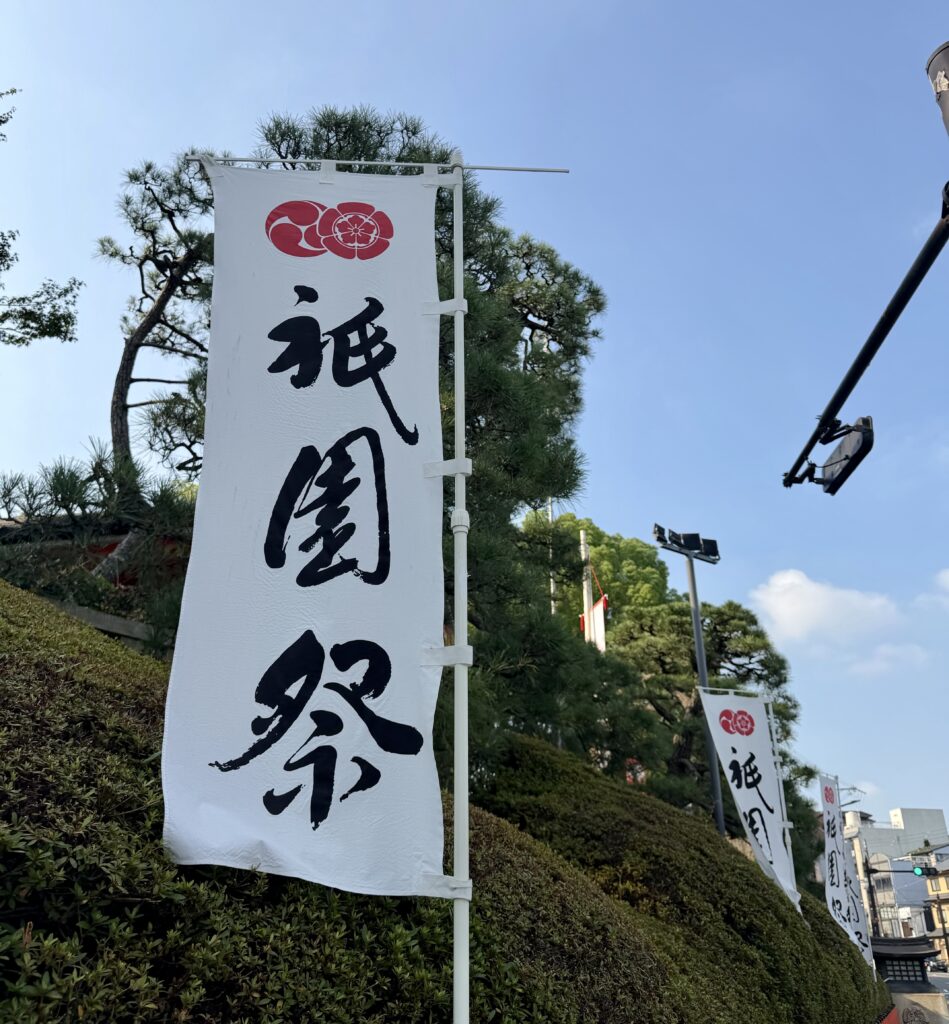
Looking back on my stay in Kyoto, I feel that it wasn't so much a trip to see something special, but rather a journey where I saw things that were already there in a different light through the lens of the tea ceremony.
The Oribe ware placed in the hotel room became not merely "old pottery," but a bowl imbued with the traces of the maker's hand and questions. The Yamabushiyama in the lobby became part of the seasonal arrangement at the tea ceremony the following day. In the Ichiriki-tei's tatami room, from the Ako Incident...Kanadehon ChushinguraFrom the film to Soseki, over 300 years of time have intersected. The confectionary, which originated from a sponsored seat at the Gion Festival, is now a popular souvenir that everyone picks up at Kyoto Station.
Tea offered to the gods and tea consumed by people. Things that remain unchanged and things that are newly born from them. I felt that the tea ceremony is a culture that has continued while embracing both of these.
The same object can take on different meanings depending on where it's placed and the viewer's knowledge. I believe this applies not only to the arrangement of items in a tea ceremony, but also to the creation of clothing and tableware. How do we pick up memories of past cultures and reposition them within the current context? What I saw in Kyoto this time directly relates to the questions I have about my own creative work.
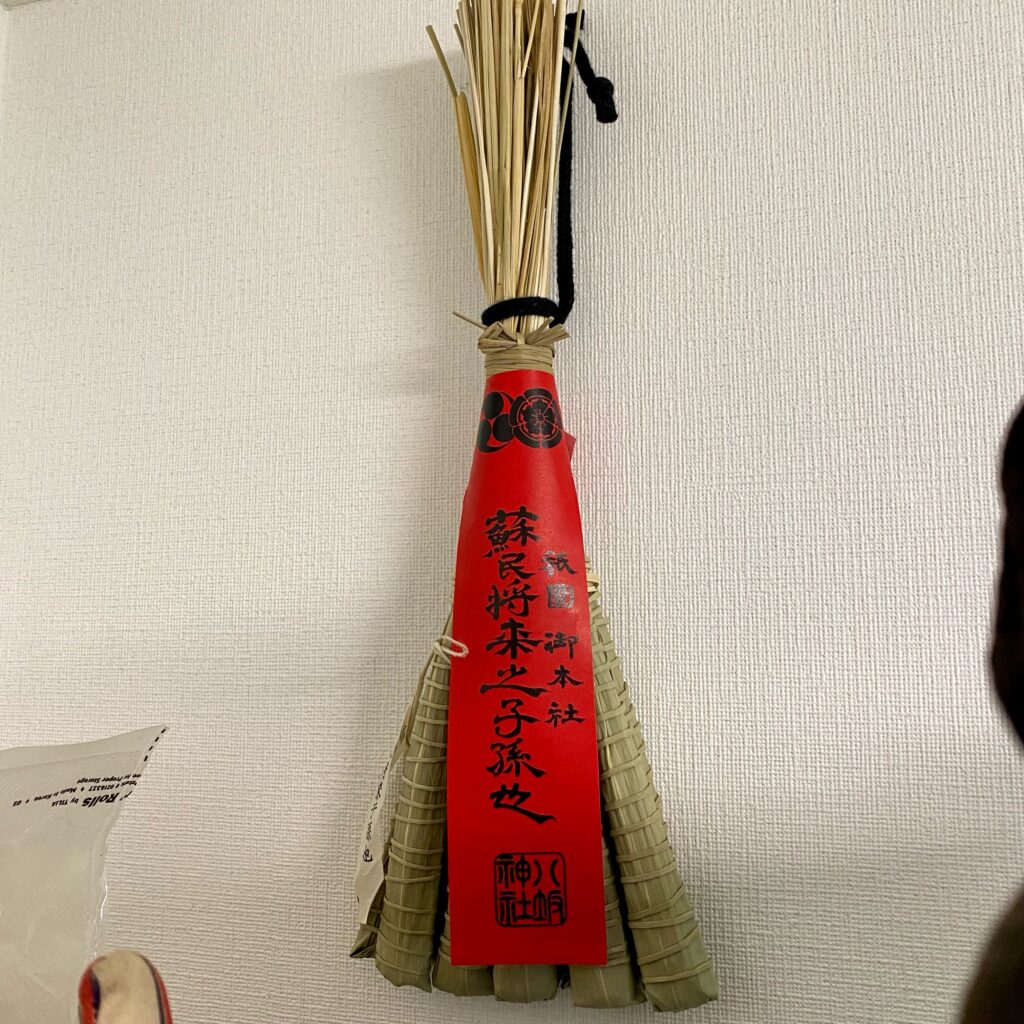
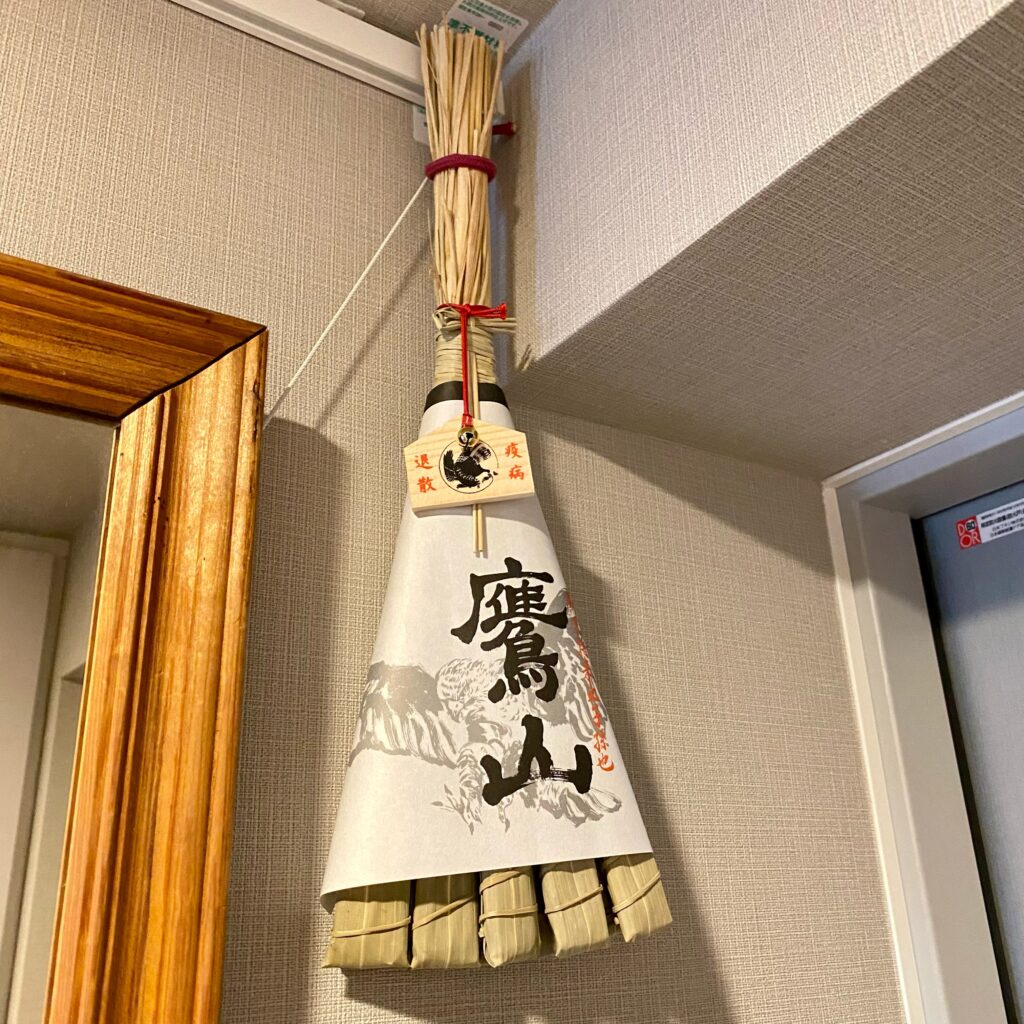
I currently have two Kyoto-style chimaki (rice dumplings wrapped in bamboo leaves) in Tokyo. One that I received at Yasaka Shrine, inscribed with "We are descendants of Somin Shorai," is at my office in Harajuku, and the other that I later received from my tea ceremony teacher, inscribed with "Protection from Epidemics," is at my home.
After learning that the Gion Festival is a month-long celebration and that it is rooted in the belief in warding off disease, these chimaki (rice dumplings wrapped in bamboo leaves) take on a different meaning than mere amulets. In particular, the chimaki I received from my teacher seems to embody the two years I've spent connecting with Kyoto through the tea ceremony.
By gaining knowledge, we can see more and ask more questions. Perhaps next year's Gion Festival will reveal a different side of Kyoto.
The movie "Gion Matsuri" that I haven't seen yet.
As I reflect on my recent stay in Kyoto, there's one movie I absolutely want to see.
This is the 1968 film "Gion Matsuri" (Gion Festival).
Set in Kyoto after the Ōnin War, the film depicts the townspeople's efforts to revive the Gion Festival, and stars Kinnosuke Nakamura, Shima Iwashita, and Toshiro Mifune.
However, this movie is not easily available for streaming or on DVD these days.
The film was screened at the Kyoto Museum of Culture during the Gion Festival, and also had a special screening at the National Film Archive in September 2026.
I haven't seen the movie myself yet. That's why I feel like this article isn't quite finished yet. If you watch this movie after actually walking through the Gion Festival, watching the tea ceremony, going inside the floats, and taking home some chimaki (rice dumplings wrapped in bamboo leaves), you'll see things in a completely different light.
Experience it first, then watch the movie. Watch the movie, then visit the location again.
Having learned about history through movies, I believe that watching the film "Gion Matsuri" next will be the continuation of this Kyoto experience.
comment