With a book in hand, I head to Kyoto, the birthplace of Toraya.
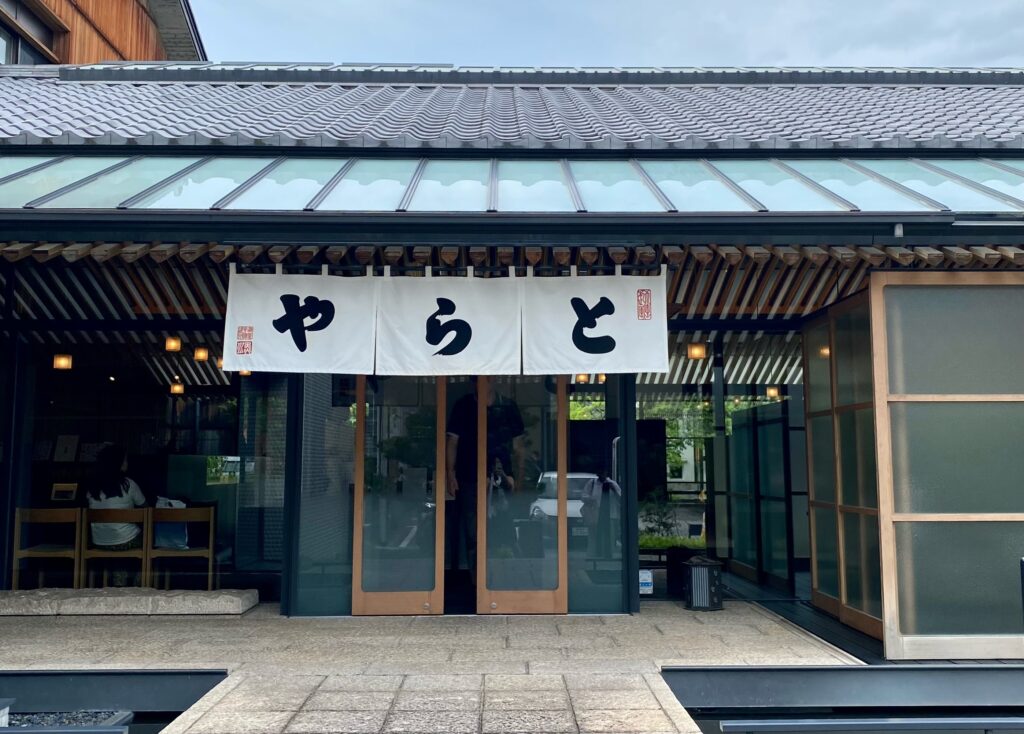
I stopped by Toraya Karyo Kyoto Ichijo Store, located near the Kyoto Imperial Palace, and enjoyed yokan (sweet bean jelly) and tea while admiring the garden after passing through the white noren (curtain). Although Akasaka in Tokyo is now considered the de facto main store, the story of Toraya's origins comes up many times in tea ceremony lessons.
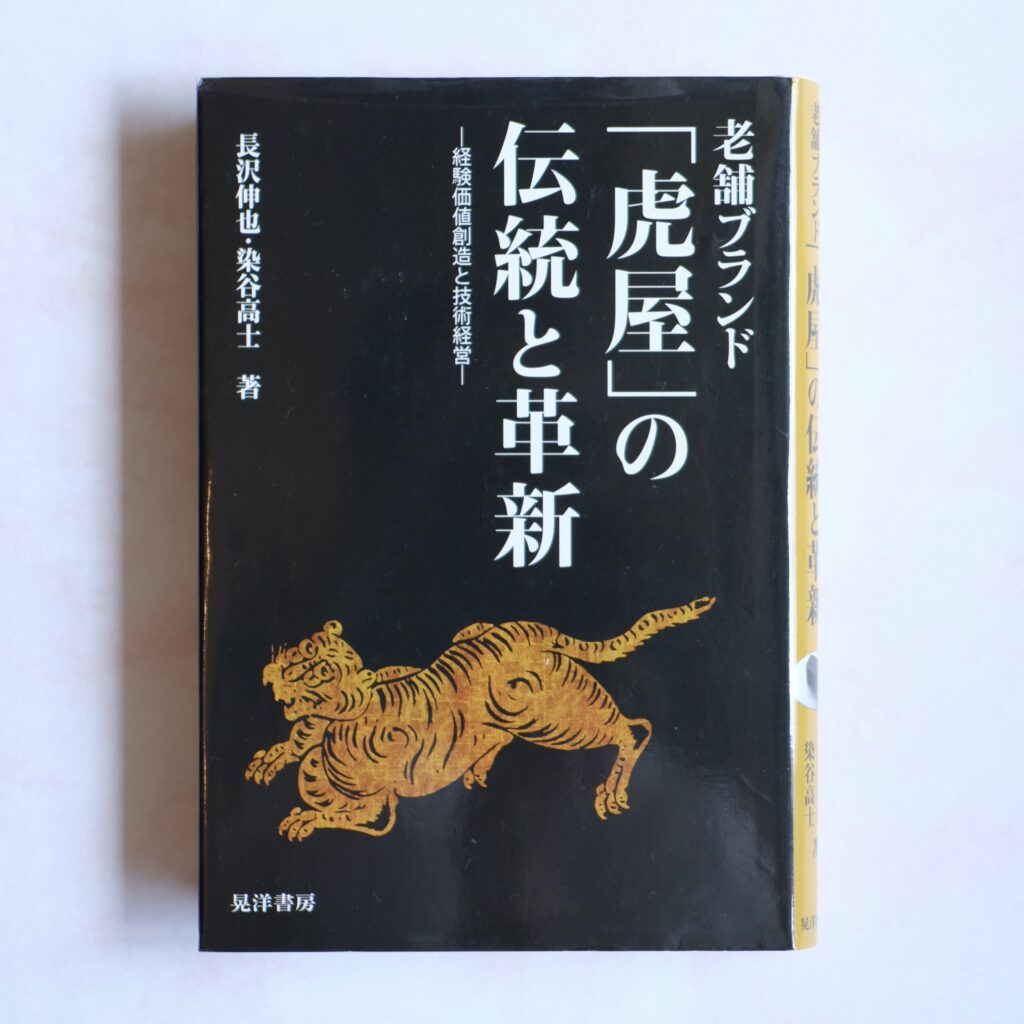
The book I reread this time is "Tradition and Innovation of the Long-Established Brand 'Toraya' - Creation of Experiential Value and Technology Management" by Shinya Nagasawa and Takashi Someya.
This book analyzes more than just the deliciousness of yokan (sweet bean jelly); it reveals the value that Toraya, which has maintained its reputation for five centuries since its founding in the late Muromachi period, has delivered to its customers through its products, stores, customer service, and cultural activities.
- Toraya sells more than just yokan.
- 1. Sensory Experiential Value – Japanese Confectionery to be Enjoyed with the Five Senses
- 2. Emotional experiential value—evoking seasons and memories
- 3. Intellectual experiential value – the more you know, the deeper the appreciation becomes.
- 4. Behavioral Experiential Value – Incorporating Japanese Confectionery into Daily Life
- 5. Relational experiential value—connecting people and cultures
- Experience the value written in books at the Kyoto Ichijo store.
- What people involved in manufacturing can learn from Toraya
- Tradition is not about not changing things.
Toraya sells more than just yokan.
A key perspective in this book is "experiential marketing."
We consider the entire experience—from learning about, choosing, purchasing, tasting, giving as a gift, and creating lasting memories—as valuable, not just the functions and quality of the product itself.
Taking Toraya's yokan (sweet bean jelly) as an example, its value is not solely determined by its "sweet and delicious" taste.
The anticipation you feel when you see the storefront, the moment you open the packaging, the season you imagine from the name of the confectionery, and even the time you give it to the recipient as a gift—all of these become part of a brand experience.
This book examines experiential value by dividing it into the following five categories.
1. Sensory Experiential Value – Japanese Confectionery to be Enjoyed with the Five Senses
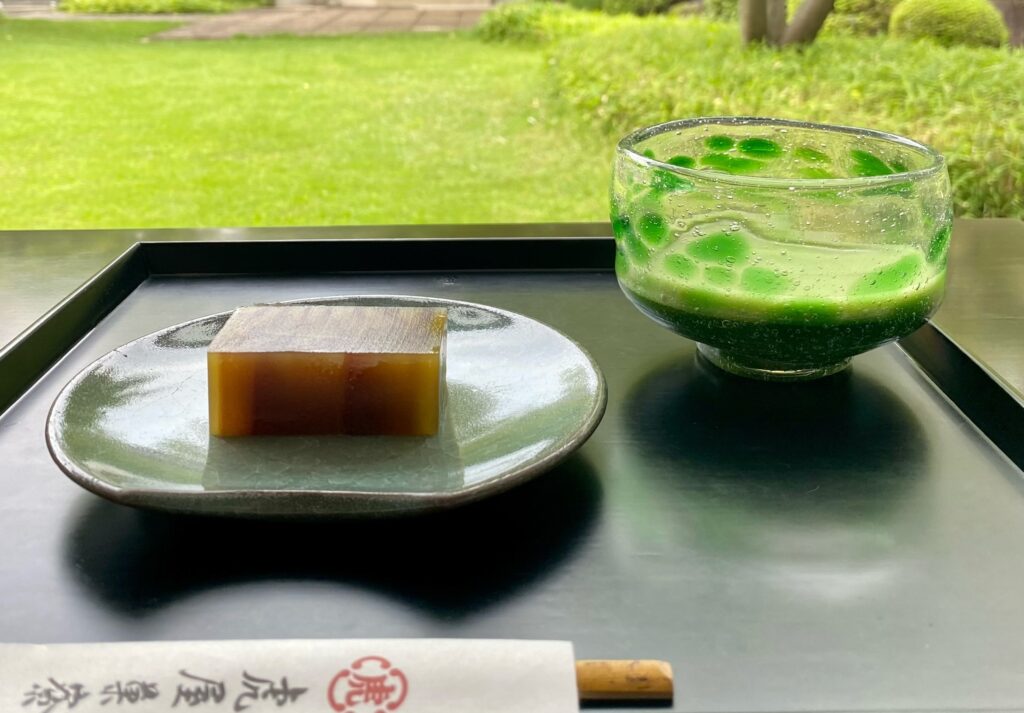
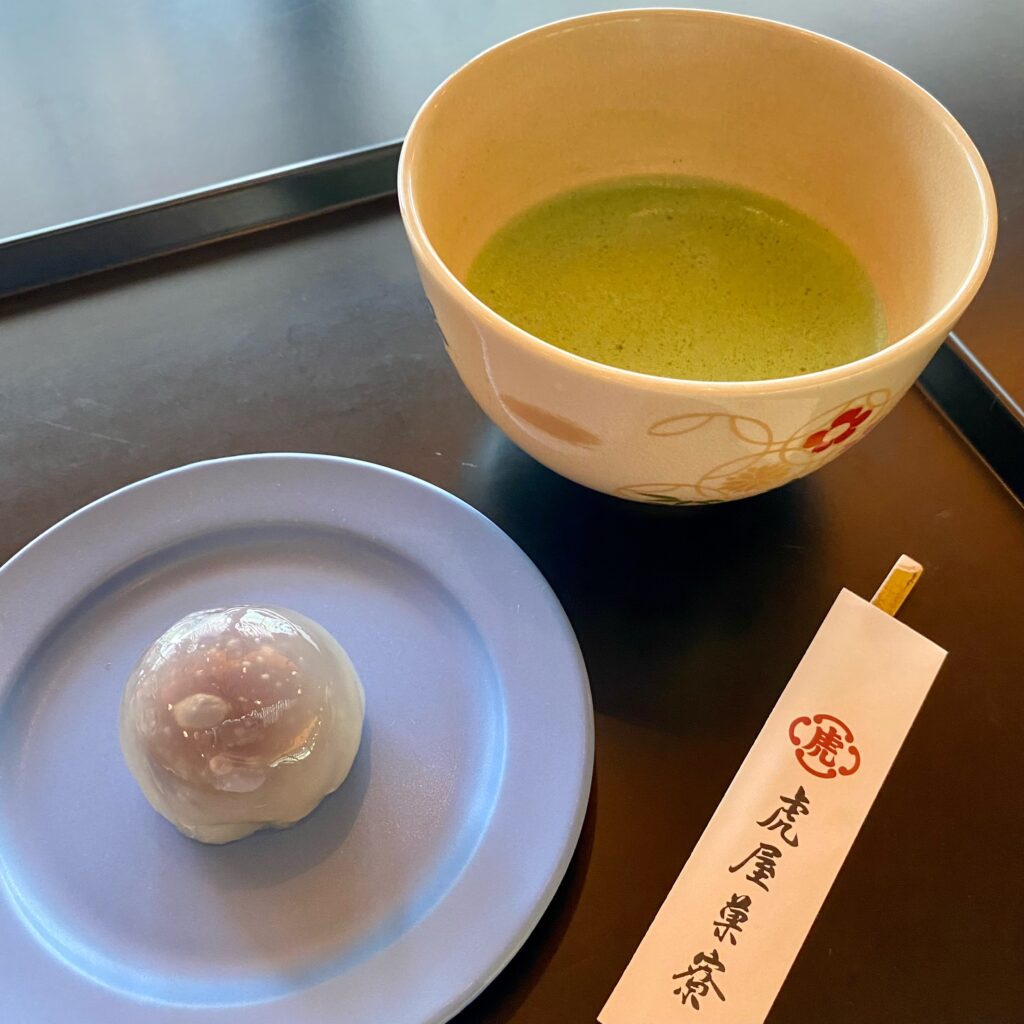
Japanese confectionery is often described as a "comprehensive art form that engages all five senses."
- Visuals—shapes and colors that evoke nature and the seasons.
- Hearing—the sound of the confectionery's name, and the stories that unfold from it.
- The sense of smell—the subtle fragrance inherent in the materials.
- Taste—the sweetness and flavor that spreads in your mouth
- Touch—the feeling of inserting a toothpick or the texture on the tongue.
The store's architecture, the shop curtain, the garden, the tableware, and the packaging are all part of this sensory experience.
It's not just the product itself, but the entire environment surrounding it that's designed, which is why it leaves a lasting impression even after you've eaten it.
2. Emotional experiential value—evoking seasons and memories
Japanese confectionery expresses the nature and seasons of Japan in small forms.
Cherry blossoms, young leaves, the rainy season, the moon, autumn leaves, snow.
Beyond just the taste itself, the appearance and name of the sweets evoke memories of the past and feelings associated with the seasons.
Furthermore, Japanese sweets serve not only as something to be enjoyed by oneself, but also as a way to entertain others, express gratitude, and celebrate milestones.
The comfort and joy that arise from confectionery are also part of the value that Toraya provides.
3. Intellectual experiential value – the more you know, the deeper the appreciation becomes.
Toraya has a long history and a wealth of stories to tell, including the skills of its craftsmen, knowledge of raw materials, the origins of its confections, and its connection to the imperial court.
Understanding the background can change how you perceive that particular slice of food.
This book also treats the knowledge possessed by artisans and sales staff, as well as the mechanisms for conveying the cultural background to customers, as elements that support brand value.
What's important here is Toraya Bunko.
Toraya Bunko is a confectionery archive established in 1973 with the aim of preserving and creating Japanese confectionery culture. It collects and preserves confectionery sample books, ancient documents, and other materials, and promotes Japanese confectionery culture through exhibitions, publications, and lectures.
I have a booklet from a lecture series organized by Toraya Bunko.
Toraya preserves more than just old sweets and manufacturing methods. They also preserve the history, language, designs, events, and even the memories of people surrounding Japanese confectionery as cultural resources.
This activity itself is considered to be generating intellectual and experiential value.
"Miki-machi shelf," a tea ceremony utensil born from a confectionery box.
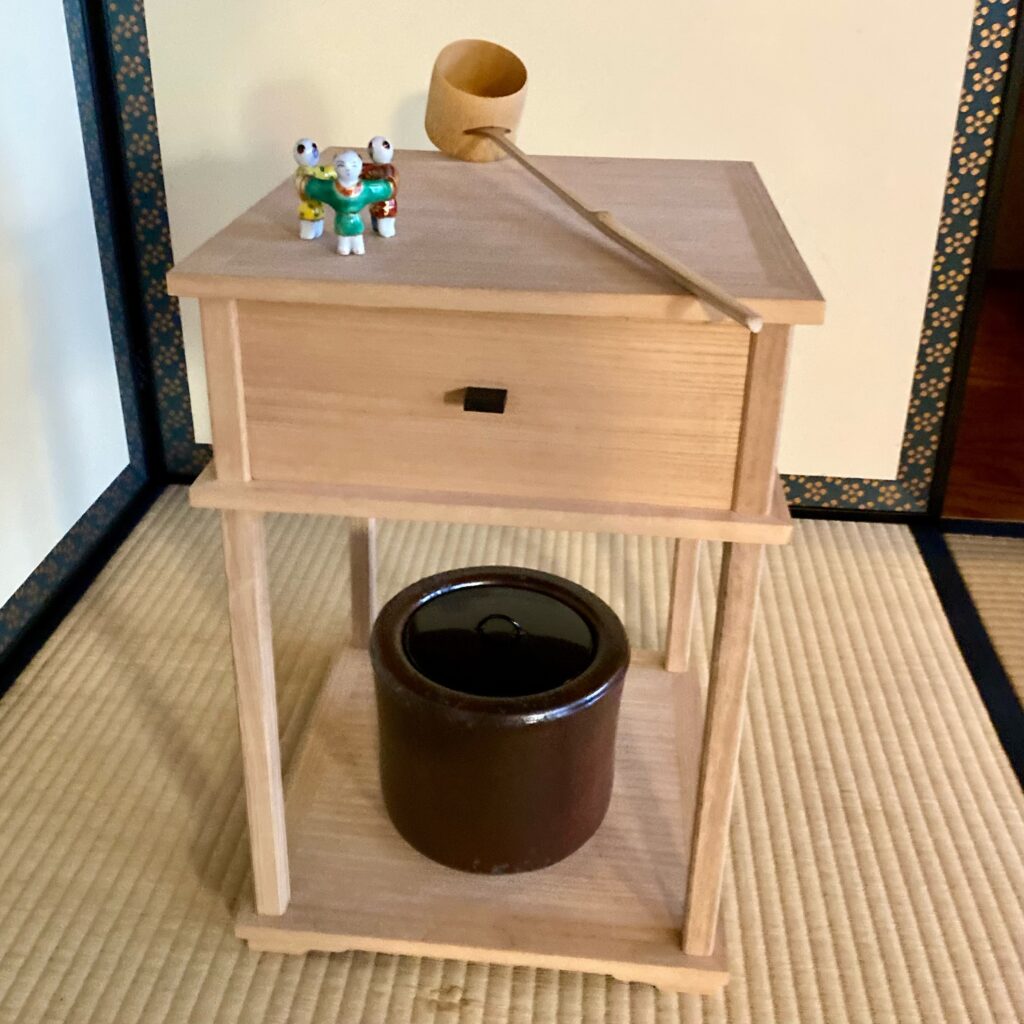

Thinking about Toraya reminds me of the "Mikimachi-dana" (a type of tea ceremony shelf) that I used in my Omotesenke tea ceremony lessons.
The Mikimachi shelf is a small shelf said to have been favored by Koshin Sosa, the fourth head of the Omotesenke school of tea ceremony. Its most distinctive feature is the drawer located in the center.
This drawer contains an interesting story about the origins of the sweets.
It is said that when Kōshin was serving the Kishū Tokugawa family, he was fond of a cedar box of sweets that the lord had given him, and ordered his retainers to make use of the box as a drawer, and had a shelf built inside. It is also said that the box contained yokan (sweet bean jelly).
It is said that the original drawers were made from repurposed candy boxes, which is why they retained a slightly uneven, rustic charm.
Instead of simply enjoying the sweets that were given as a gift, the box itself is not thrown away but repurposed and transformed into a tea ceremony utensil. This demonstrates the creativity of the tea ceremony, which reinterprets the use of objects and gives them new value.
Confectionery connects people, its box becomes a tool, and its origins are passed down through generations, even into training sessions hundreds of years later. This anecdote resonates with the book's concept of "experiential value," which considers the value of a product to encompass not only the moment of tasting it, but also subsequent actions and memories.
4. Behavioral Experiential Value – Incorporating Japanese Confectionery into Daily Life
Buying Japanese sweets, enjoying them with tea, using them for seasonal events, giving them as gifts to someone.
Toraya's products also influence customers' behavior and lifestyles.
Choosing Japanese sweets is also a way of incorporating Japanese seasons and culture into your daily life.
As products become an integral part of people's lives, the relationship between customers and brands extends beyond a single purchase.
5. Relational experiential value—connecting people and cultures
Japanese sweets, often used as gifts or for entertaining guests, serve to connect people and strengthen relationships.
At the same time, choosing products from Toraya, a company with a long history, is an act that allows you to feel connected to Japanese culture, local areas, and seasons.
Sales centered around directly managed stores, cultural exhibitions and lectures, and conversations with knowledgeable sales staff—these interactions with customers build relationships that go beyond mere buying and selling.
Experience the value written in books at the Kyoto Ichijo store.
Toraya was founded in Kyoto during the late Muromachi period and has served the Imperial Court since the reign of Emperor Go-Yōzei.
It is known that the shop was located on the site where the current Kyoto Ichijo store stands, at least as early as 1628.
At Toraya Karyo Kyoto Ichijo Store, which I visited, you can enjoy sweets while gazing at the garden, which changes its appearance with the seasons, and the storehouse that has remained since the Edo period.
The current building was designed by architect Hiroshi Naito. While retaining traditional elements such as the roof, noren (traditional Japanese curtains), and the textures of wood and stone, the garden and modern space are connected through large glass surfaces.
Toraya's "tradition and innovation" is evident in how they preserve the core of their traditions while transforming them into a form that modern people can comfortably enjoy.
I believe the time I spent enjoying yokan (sweet bean jelly) while gazing at the garden was an experience where the five experiential values described in this book came together.
Beyond the taste, the greenery of the garden, the feel of the tableware, the tranquil atmosphere, and even the historical context of enjoying sweets near the Kyoto Imperial Palace all became part of the memory.
What people involved in manufacturing can learn from Toraya
This book will be useful not only for business owners and marketers, but also for anyone who creates things, such as clothing, ceramics, crafts, and art.
Creating excellent products is a fundamental requirement.
However, there are many points of contact before a work or product reaches the customer's hands.
- Where do you learn about the work?
- Where will it be shown?
- Who will give the explanation?
- What kind of packaging will it be in when I take it home?
- How do you feel when you open it?
- What kind of memories remain after using it?
- Is there a story behind it that makes you want to tell someone about it?
At Toraya, we not only uphold carefully selected materials and the skills of our craftsmen, but we also build upon everything from our stores and customer service to our packaging and cultural activities, creating a single, cohesive experience.
Quality generates trust, and that trust is passed down to the next generation.
That's where you'll find the reasons why established brands have lasted so long.
Tradition is not about not changing things.
What we can learn from the Toraya case is that tradition and innovation are not mutually exclusive.
We must identify the materials, techniques, and spirit that should be preserved, and adapt our stores and communication methods to the modern age in a way that does not compromise their essence. If we do nothing, tradition will become a thing of the past.
Conversely, if you completely change everything, you lose the memories that the brand has built up over time.
What will we protect, and what will we change?
The fact that they have repeatedly made such decisions is probably what makes the Toraya brand so strong.
Toraya Karyo, which I visited in Kyoto during the Gion Festival, was a place where I could truly experience the experiential marketing I had read about in books, through taste, architecture, garden, tableware, and history.
From the simple act of eating yokan (sweet bean jelly), we can connect to Japanese culture and memories of the fifth century.
I believe that what Toraya creates is not just confectionery, but also the time and experience surrounding that confectionery.

comment