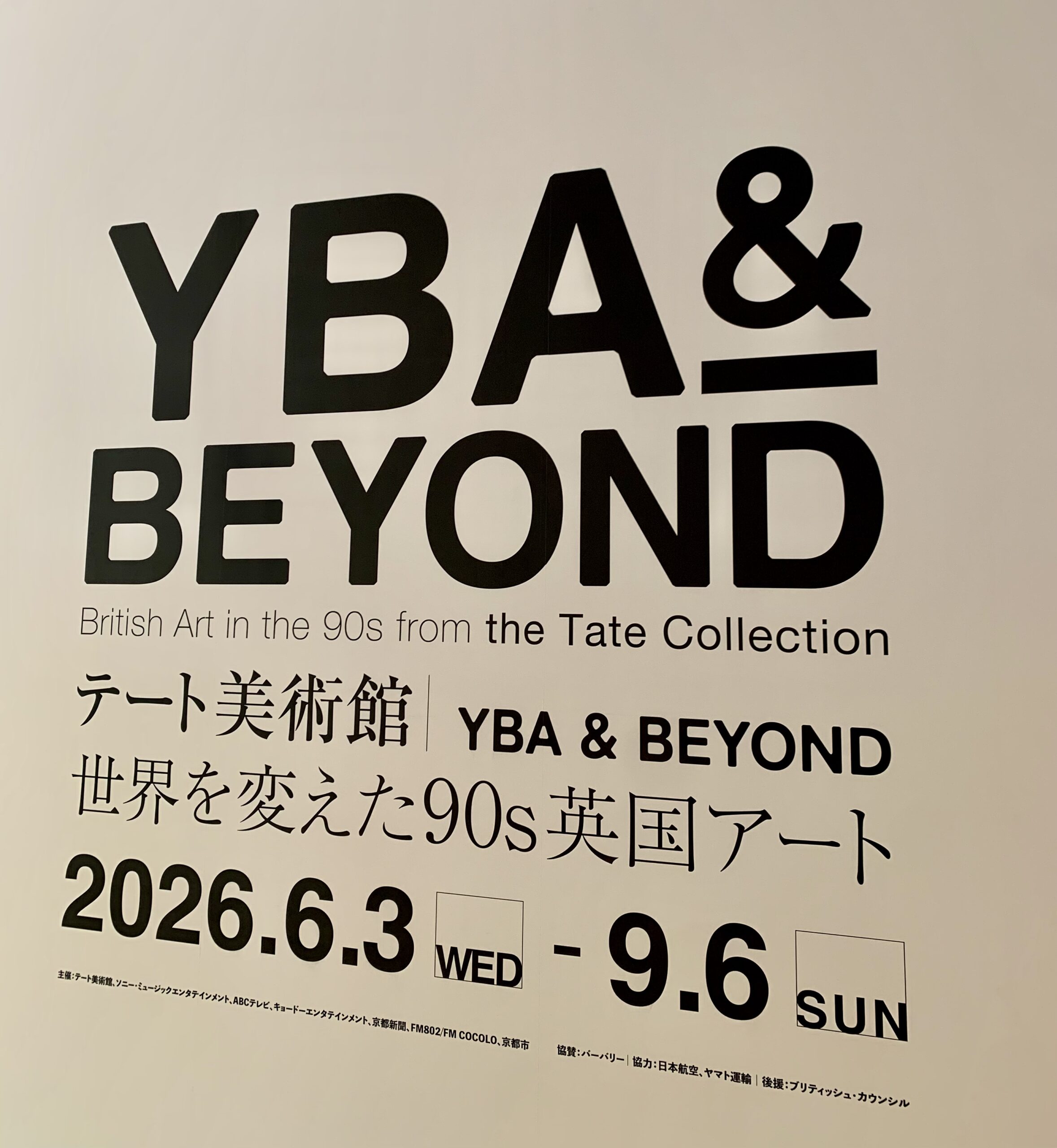
- Read about art, cities, music, and fashion in "YBA & BEYOND"
- From Francis Bacon to Britpop
- YBA began in 1988, "outside the museum."
- The very definition of "Britishness" was in turmoil.
- Declining cities simultaneously become places of new creation.
- Art, music, and fashion were all happening in the same place.
- Julian Opie and the image of a "pop star"
- The youth of the 1990s as depicted in "Trainspotting"
- The Prehistory Revealed in "24 Hour Party People"
- The body was both personal and political.
- The violence shown by a small doll
- The "home" also becomes a place that reflects society.
- Family, race, and housing as depicted in "Secrets and Lies"
- Grayson Perry | Capturing society within ceramics
- Is something that is "nothing special" really nothing special?
- Damien Hirst | Cigarettes, ashtrays, lighters
- Cornelia Parker | Blows up a shed
- When you place the film and art side by side, 1990s Britain becomes three-dimensional.
Read about art, cities, music, and fashion in "YBA & BEYOND"
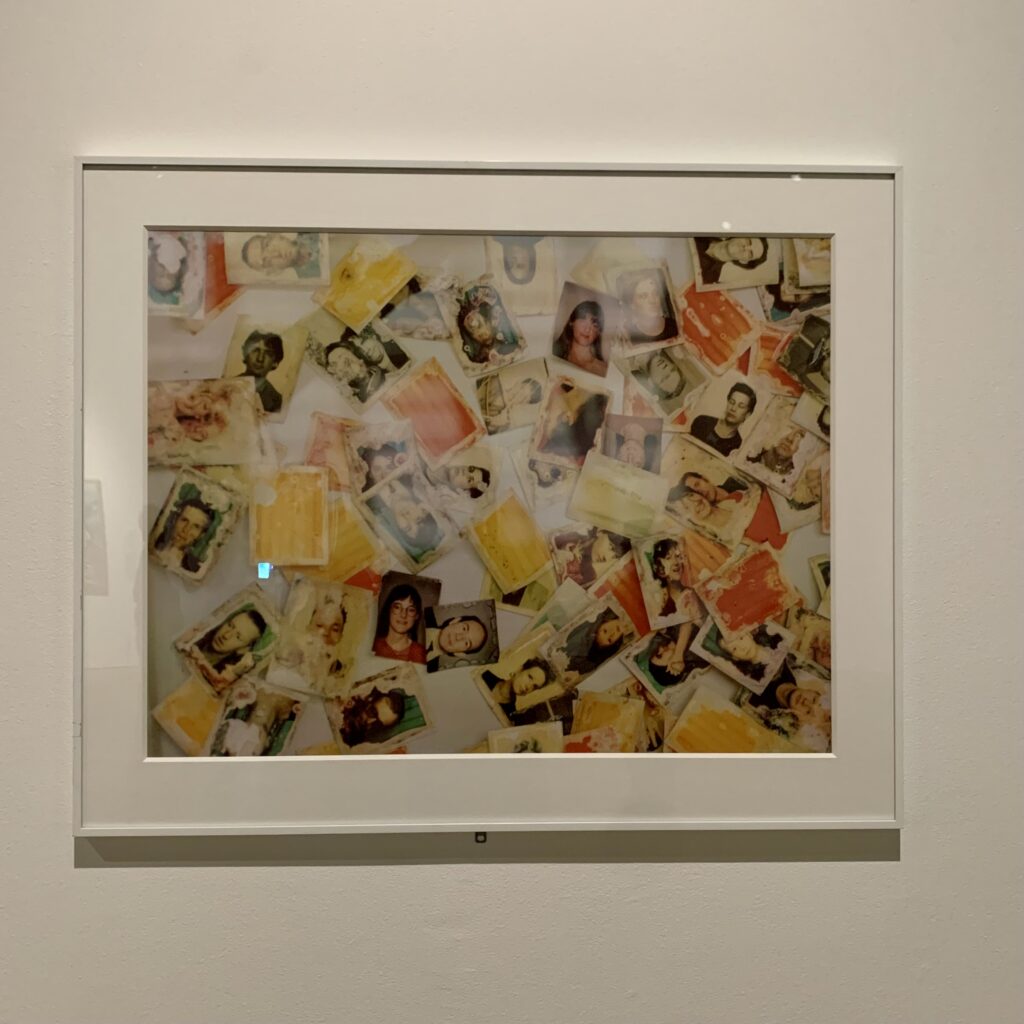
A print created in 1997 titled "Broken English August '91".
Damien Hirst, Tracey Emin, Sarah Lucas, Julian Opie.
Looking back at British contemporary art in the 1990s, a succession of artists emerged who would later leave their mark on art history. Some of them were known as the "Young British Artists," or YBA for short.
So why did so many new expressions emerge from Britain at the same time?
The "Tate Museum – YBA & BEYOND: 90s British Art That Changed the World" exhibition, held at the National Art Center, Tokyo and the Kyocera Museum of Art, Kyoto, is not simply an exhibition showcasing YBA alone.
This exhibition, featuring over 50 artists and approximately 90 works, primarily from the Tate's collection, showcases how British art and culture changed from the late 1980s to the early 2000s.
Society after the Thatcher administration.
A city whose industrial structure was undergoing transformation.
Britpop and rave.
``iD'', ``The Face'', ``Dazed & Confused''.
Fashion, advertising, clubs, magazines.
Medicine and HIV/AIDS.
Family and gender.
And then there are the things that have been discarded in the city and everyday items that people use.
To understand YBA, it's necessary to first look at the context of "Britain in the 1990s" rather than just looking at the works themselves.
And the following films record that era from a different perspective.
『brass!』。
And now, going back in time a bit, we move from Manchester's music culture to the 90s.
When you place art and film side by side, the contours of British society in which the Young Baccalaureate (YBA) emerged become quite concrete.
From Francis Bacon to Britpop
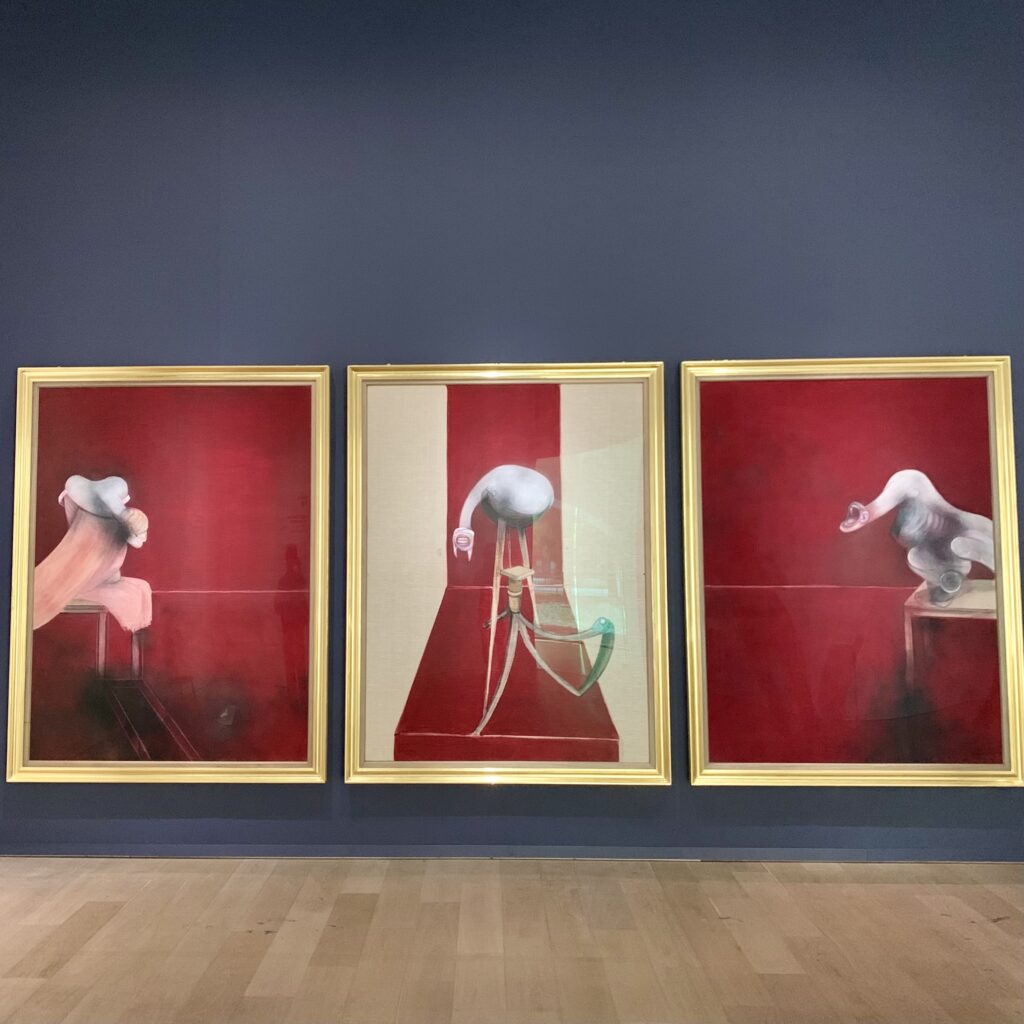
Description: A triptych exhibited in the prologue "From Francis Bacon to Britpop" of "YBA & BEYOND." Created in 1988, the same year YBA debuted.
The title of the exhibition's opening chapter is "From Francis Bacon to Britpop."
The first thing that made a strong impression upon entering was Francis Bacon's "Second Version of the 1944 Triptych," which was created in 1988.
Coincidentally, Damien Hirst also conceived "Freeze" in the same year, 1988.
Bacon dealt with themes such as the human body, anxiety, violence, loneliness, and death.
Meanwhile, YBA, which emerged a few years later, also incorporated very familiar and raw issues into its works, such as medicine, the body, sexuality, death, everyday products, and urban life.
Although their methods of expression are vastly different, starting this exhibition with Bacon reveals that "1990s British art did not suddenly appear out of nowhere."
While inheriting the anxieties and bodily sensations of British art from a previous generation, its methods of expression, venues, and materials underwent significant changes.
From Bacon to Hurst.
And then it moved from art to music, magazines, fashion, and Britpop.
YBA began in 1988, "outside the museum."
The starting point of YBA is often cited as the group exhibition "Freeze," held in 1988. It was organized by Damien Hirst, who was studying at Goldsmiths, University of London at the time.
The venue was an abandoned warehouse in East London.
This already reveals an important attitude that will be crucial when considering the future of YBA.
"If there's no place to exhibit, we'll create a space ourselves."
Instead of waiting to be discovered by someone, we plan, find a venue, and present our work ourselves.
YBA not only created new "works," but also considered how to present them, who to show them to, and where to use exhibition spaces.
They even changed the very systems surrounding art.
The very definition of "Britishness" was in turmoil.
However, viewing the YBA solely as a success story of young artists misses a crucial element: the rapidly changing British society that was at the heart of it all.
Under the Thatcher government, the introduction of market economics and a transformation of the industrial structure led to increased unemployment, widening regional disparities, and rapid urban development. Furthermore, the rise of multicultural societies driven by immigration.
The very question, "Who is a Brit?" had changed.
In 1989, "The Other Story" was held at the Hayward Gallery in London.
There, artists with roots in Africa, the Caribbean, South Asia, and other regions, who had previously been relegated to the fringes of British art history, were brought into the spotlight.
In other words, what was happening in British art around the time of the Young Artists' Awards wasn't just the emergence of new star artists.
"What is British art?"
"Who are the British?"
"Whose experiences are expressed as art?"
The very premise was about to change.
Declining cities simultaneously become places of new creation.
By the early 1990s, industries that once supported cities in Britain, such as coal mining, steelmaking, and shipbuilding, were declining in prominence. Cities in economic recession were left with empty shops, warehouses, abandoned factories, and unfinished buildings. By any reasonable standard, this was a landscape of urban decline.
However, this also opened up new possibilities for young artists.
Outside of their original intended use, inexpensive, spacious boxes can be used as production spaces or exhibition venues. The fact that "Freeze" was held in a warehouse cannot be separated from these urban circumstances.
The DIY spirit seen in British art of the 1990s looks like a cool culture in retrospect. However, its starting point was also based on the very practical principle of "if you don't have money or space, use what you have."
The disappearing coal mining town depicted in "Brass!"
The 1996 film 'brass!"is.
The story is set in a coal mining town in Yorkshire, northern England. It depicts the town facing the threat of its coal mines closing and the brass band that has been active there for many years.
Losing your job isn't just about losing your salary. You also lose the relationships you built around your workplace, the pride you have in your community, your family's livelihood, and the culture that has been passed down through generations.
"Brassed Off!" is an excellent film for considering coal mine closures, unemployment, and industrial policies after the Thatcher government.
From YBA's perspective, disused urban spaces become "new exhibition venues."
However, the same change in space also meant the loss of a livelihood for the people who worked there.
I think it's important to consider these two things simultaneously.
Unemployment and the Body as Seen in "The Full Monty"
The following year, 1997, the film 'The Full MontyThis film is also symbolic of post-industrial Britain.
The story is set in Sheffield, a city that prospered from its steel industry. Men who have lost their jobs plan a one-night-only male strip show to earn money for living expenses and childcare. The economic problem of unemployment spills over into issues of self-esteem, family, masculinity, and the body.
The film shows football uniforms paired with jackets, providing a visual glimpse into the lives of the working class at the time. Football was the greatest form of entertainment for the working class.
The fact that the theme of "the body" comes up here is also an interesting point.
As we will see later, the body is an extremely important theme in art around YBA. Huge problems such as economic policy and social structure ultimately manifest themselves in the bodies and lives of individuals.
Art and film document this in different ways.
Art, music, and fashion were all happening in the same place.
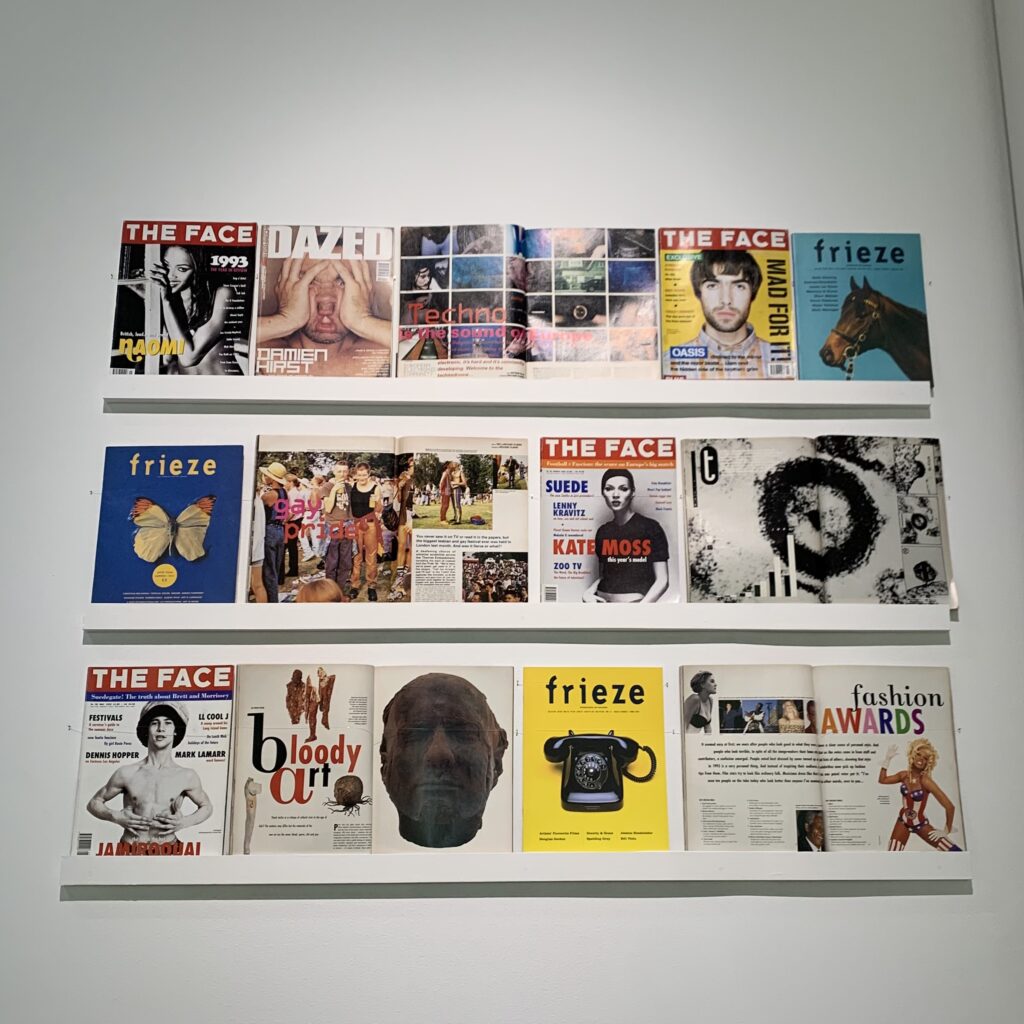
Personally, what I found particularly interesting in this exhibition was Chapter 3, "Sharing That Moment: Music, Subculture, and Fashion."
In 1990s Britain, it wasn't just art that was changing independently.
Britpop. Raves. Clubs. Advertisements. Photography. Fashion. Magazines.
They were moving at a fairly close distance. Among the photos I took this time, the one that best illustrates this era is when albums like "The Face," "Dazed," and "Frieze" were lined up on an entire wall of the shop.
Naomi Campbell, Kate Moss, Oasis, Damien Hirst.
Art, music, modeling, and fashion were all treated within the same media environment. Things that would likely be categorized as separate genres today were connected within the same "youth culture" in 1990s Britain.
Magazines like 'iD', 'The Face', and 'Dazed & Confused' created a new image of youth, while designers like Vivienne Westwood, Alexander McQueen, and John Galliano redefined the image of British culture through fashion.
Having studied fashion in London myself, I found this part particularly interesting. Instead of just looking at McQueen from the perspective of fashion history, it places him alongside Hearst, Emin, Tillmans, Opie, magazines, clubs, and music.
It becomes clear that they weren't each starting revolutions in separate worlds. They lived in the same city, read the same magazines, listened to the same music, went to the same clubs, and observed each other's work. That environment itself may have shaped 1990s British culture.
Julian Opie and the image of a "pop star"
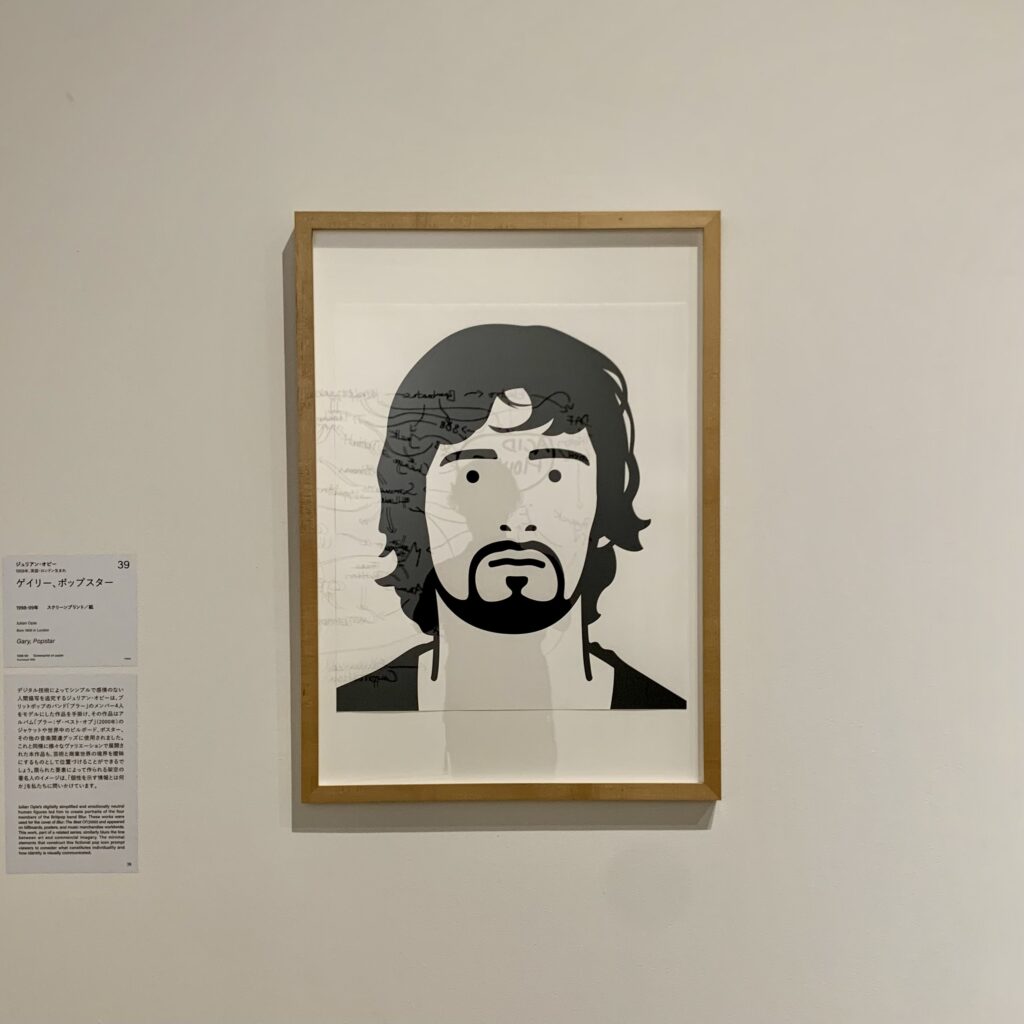
Description: A portrait by Julian Opie that reduces facial features to simple lines and shapes. A work that shows the convergence of contemporary art and pop culture in 1990s Britain.
Julian Opie's "Gary, Pop Star," which I photographed, is also one of the works that symbolizes this era. It was created in 1998–99.
The faces of the characters are extremely simplified, consisting only of minimal information such as outline, hair, eyebrows, eyes, and beard. Despite the omission of details, the characters are surprisingly memorable.
The boundary between "works of art" and "pop culture images" is quite blurred. I think this blurring of boundaries is very important when looking at British art of the 1990s.
The youth of the 1990s as depicted in "Trainspotting"
The film that most directly connects to this chapter on "music, subculture, and fashion" is the 1996 film 'Trainspotting"is.
The story is set in Scotland. The protagonist, Renton, and his friends spend their days surrounded by heroin, alcohol, football, and music. What we see is a portrayal of young people who have deviated from the societal expectation of "working hard, starting a family, and becoming wealthy."
It's clear that the Chemical Generation and rave culture are depicted, and that drugs and club music play a significant role in the background.
The opening line of the film, "Choose Life," symbolizes the life choices offered by consumer society and the young people who have fallen behind or intentionally rejected them.
On the other hand, the artists of YBA also tried to step outside the existing art system and create their own space. Of course, these two actions cannot be considered the same.
However, this sense of distancing oneself from existing institutions and values and creating one's own place and community is something that is common to British culture in the 1990s.
The Prehistory Revealed in "24 Hour Party People"
Looking at it from a little before that, the movie '24 Hour Party People' is also indispensable.
The film depicts Manchester in the late 1970s and early 1990s.
Joy Division. New Order. Factory Records. And the club "Hacienda". From post-punk to Madchester and raves. The important thing is that they created their own labels and clubs, made flyers, and attracted people.
That DIY spirit is remarkably similar to that of "Freeze," where Hirst and his team created their own exhibition space.
Rather than thinking of art, music, and fashion as separate genres,
"How did young people create their own space in Britain during this era?"
Thinking this way will make it easier to understand 90s culture as a whole.
The body was both personal and political.
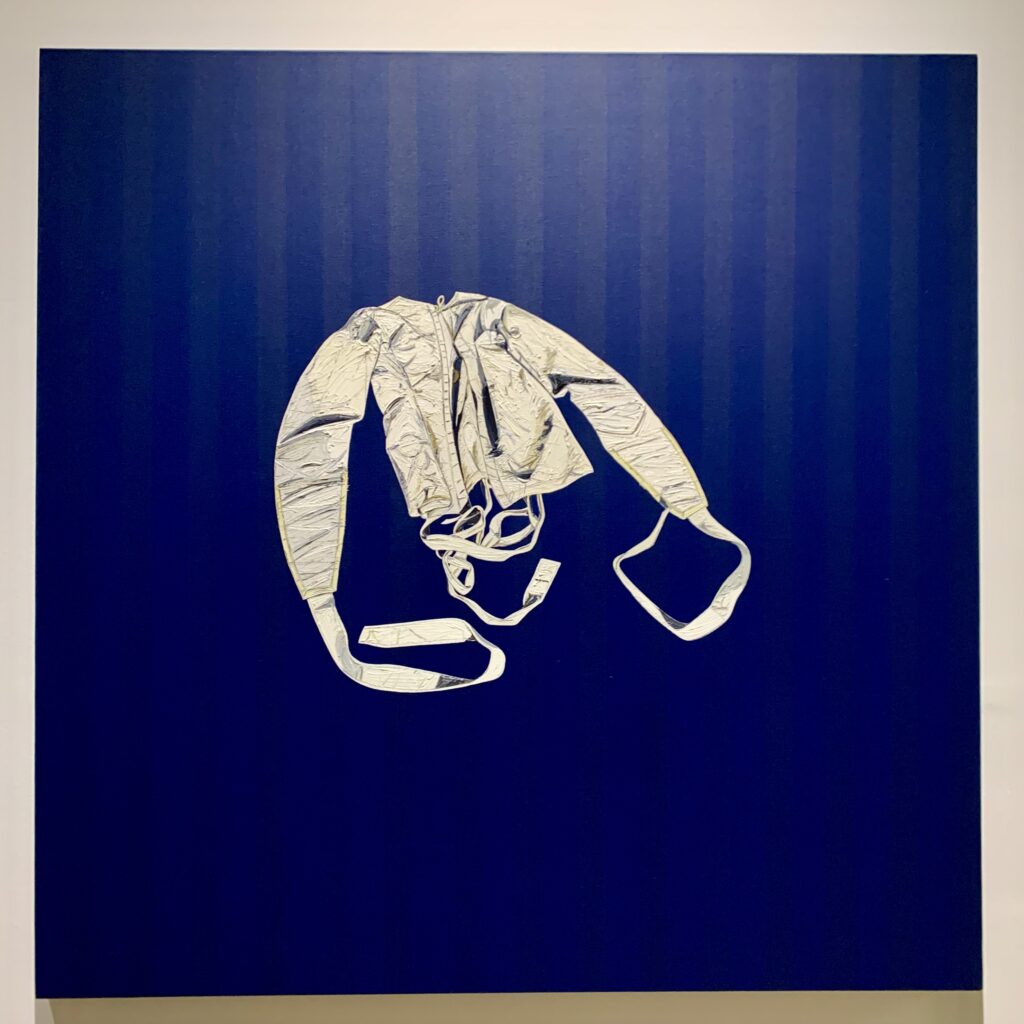
In Chapter 4, "Modern Medicine," the perspective shifts from cities and subcultures to the human body.
The HIV/AIDS crisis that swept society, particularly in the 1980s and 90s, transformed the human body from merely a motif in art into a space for considering "how society treats human beings."
Regarding HIV/AIDS, not only the disease itself, but also the stigma created by fear, prejudice, and discrimination were major problems.
The artists bring not only the eerie and painful aspects of the body, but also the lives, joys, humor, anger, and resistance of queer people into their work.
This is where the movie "Trainspotting" comes into play again. In the film, the body injecting heroin is repeatedly shown, and one of the friends becomes infected with HIV and dies from AIDS.
Ultimately, societal problems manifest themselves in the human body.
YBA前後の美術と90年代英国映画は、その身体を避けずに見せました。
The violence shown by a small doll
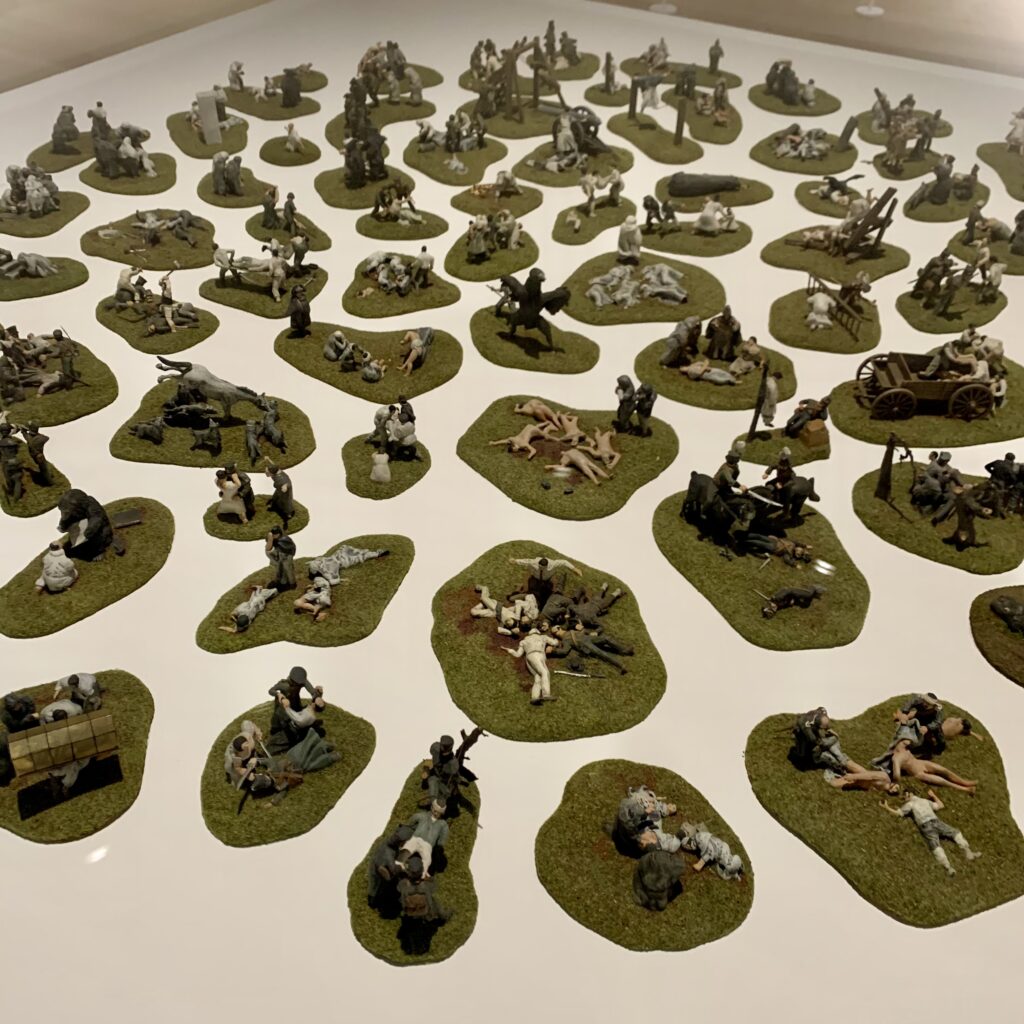
説明: 小型フィギュアによって拷問、死、暴力を大量に展開するチャップマン兄弟の作品。模型の小ささと描かれる残酷さの落差が強烈な印象を残す。
今回の写真の中で、無数の小さなフィギュアが並ぶ作品も強烈でした。
個人的に大好きなアーティストであるディノス&ジェイク・チャップマンの《戦争の惨禍》。制作は1993年です。
一つひとつは模型のように小さい。しかし近づくと、拷問、殺害、死体、暴力といった場面が大量に展開されています。「小さいからかわいい」という感覚と、描かれている内容の残酷さが衝突しています。美術館で大きな歴史画を見るのとは全く違う方法で、人間が繰り返してきた暴力を見せる作品です。
90年代英国美術が扱った「身体」は、決して美しい身体だけではありません。身体を見れば、その社会が何を恐れ、何を抑圧し、何を欲望しているのかが見えてくる。
The "home" also becomes a place that reflects society.
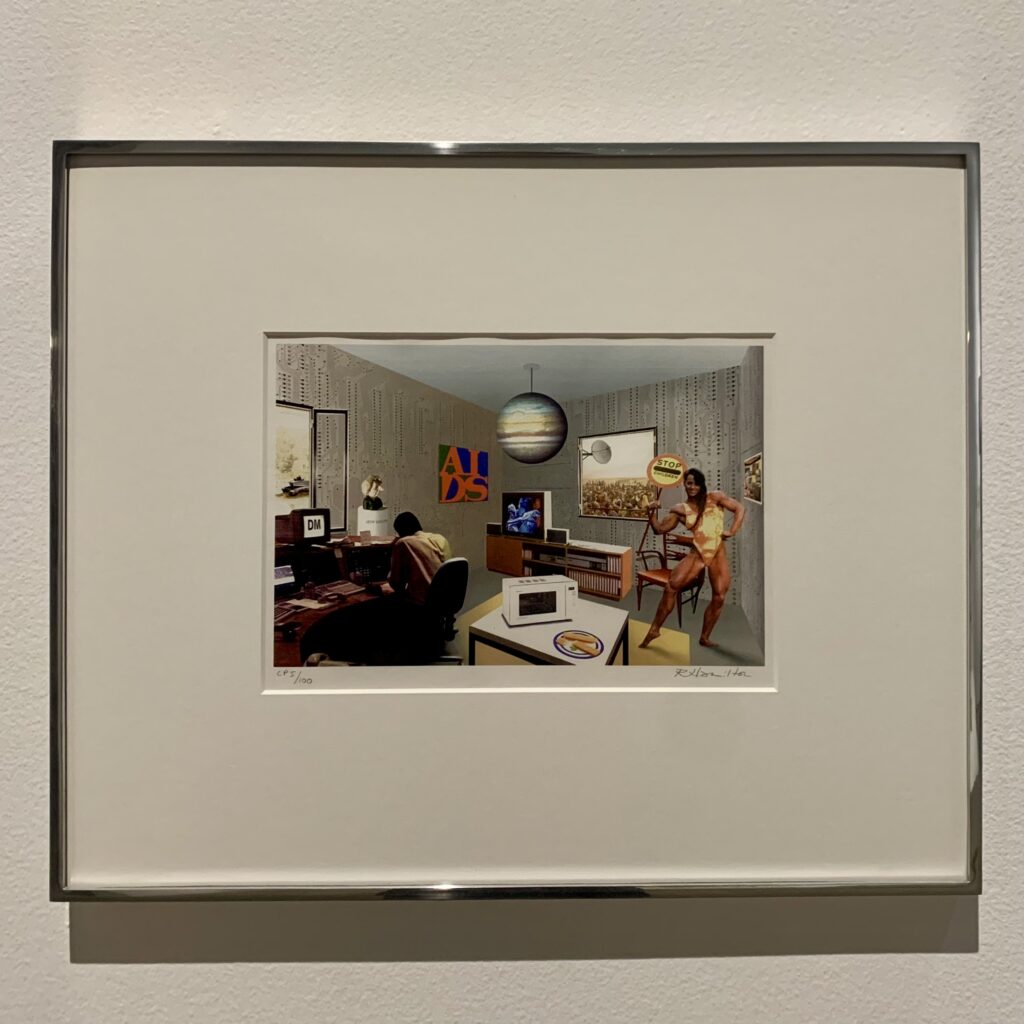
説明: 家庭空間へ広告、大衆文化、消費社会のイメージを持ち込んだリチャード・ハミルトンの作品。「家という個人的空間」の章に展示。
第5章では、「家という個人的空間」が扱われます。一見すると、家は政治や経済から最も遠い場所に思えます。
しかし実際には逆です。社会の価値観は、最も個人的な空間にまで入り込んでいます。
Family, race, and housing as depicted in "Secrets and Lies"
この章と並べて見たい映画が、マイク・リー監督の映画『Secrets and Lies"is.
1996年公開。舞台はロンドン郊外。
シングルマザーのシンシアと娘のロクサーヌ。シンシアの弟モーリスとその妻。そして、シンシアが16歳の時に産み、養子に出していた黒人女性ホーテンス。
一つの家族を中心に、人種、出産、家族、階級、住宅、経済格差といった問題が重なっていきます。一軒家を所有するモーリスと賃貸住宅に住むシンシアの違いを、英国社会の経済格差を見る要素として記録しています。
「家」は単なる背景ではありません。誰がどんな家に住めるかというだけで、その人物の階級や人生の選択肢が見えてきます。
YBA周辺の作家たちが家具、生活用品、寝室、家族写真などを作品へ持ち込んだことも、こうした社会背景と並べると違って見えます。
最も個人的な場所だからこそ、社会の価値観が露出しています。
Grayson Perry | Capturing society within ceramics
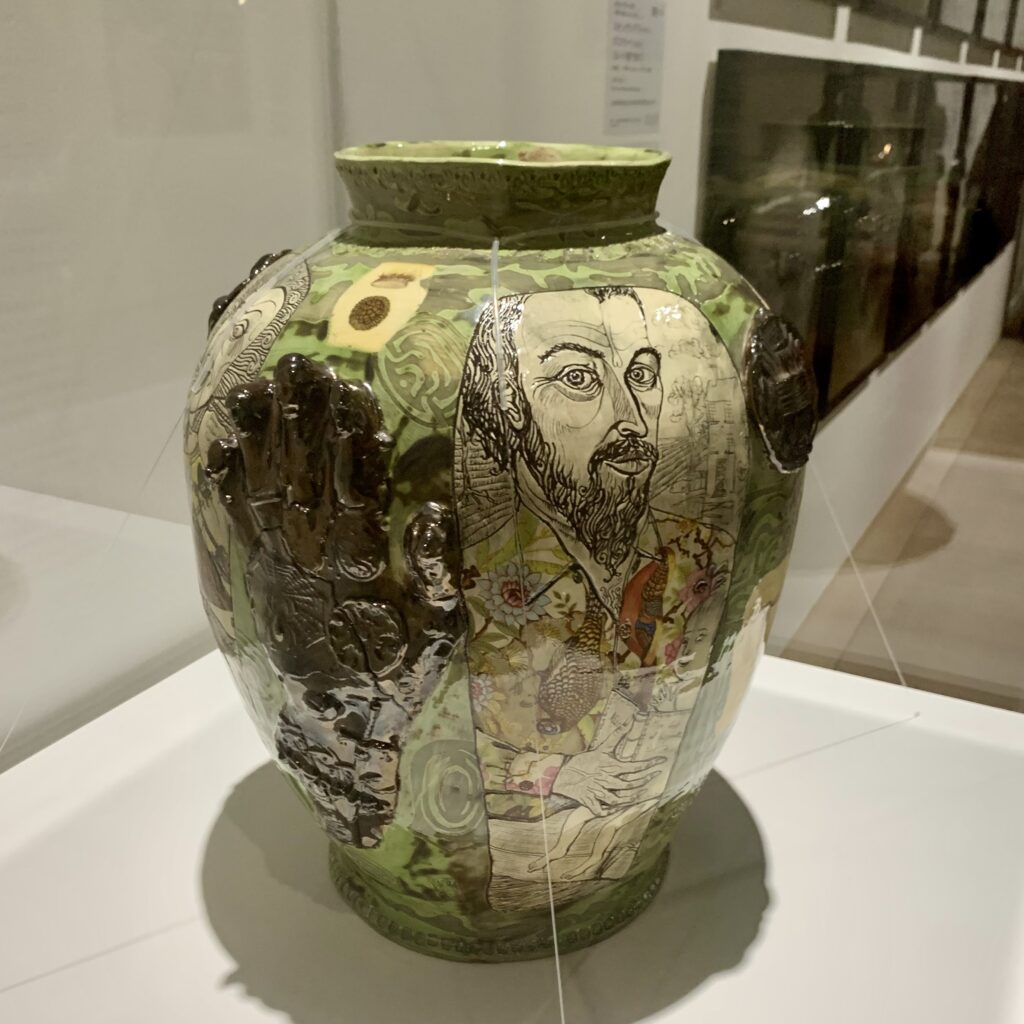
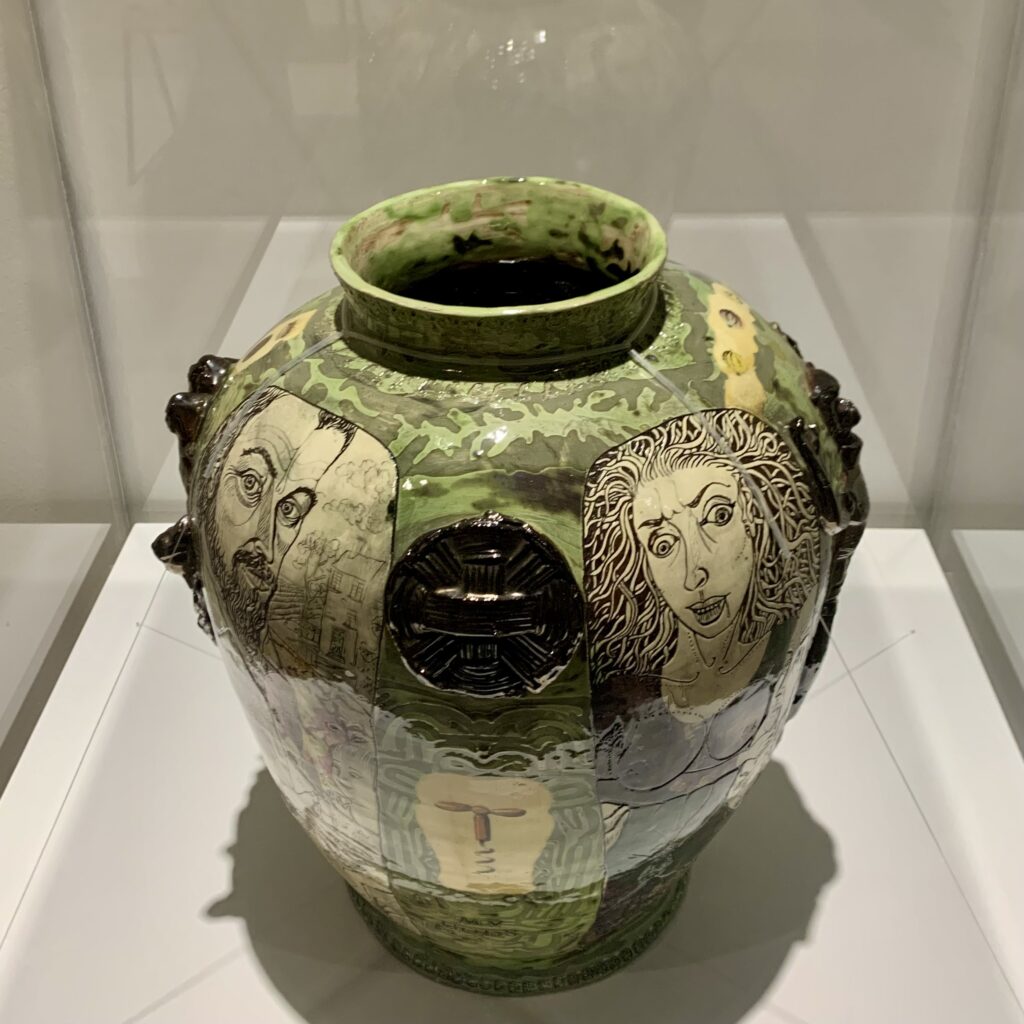
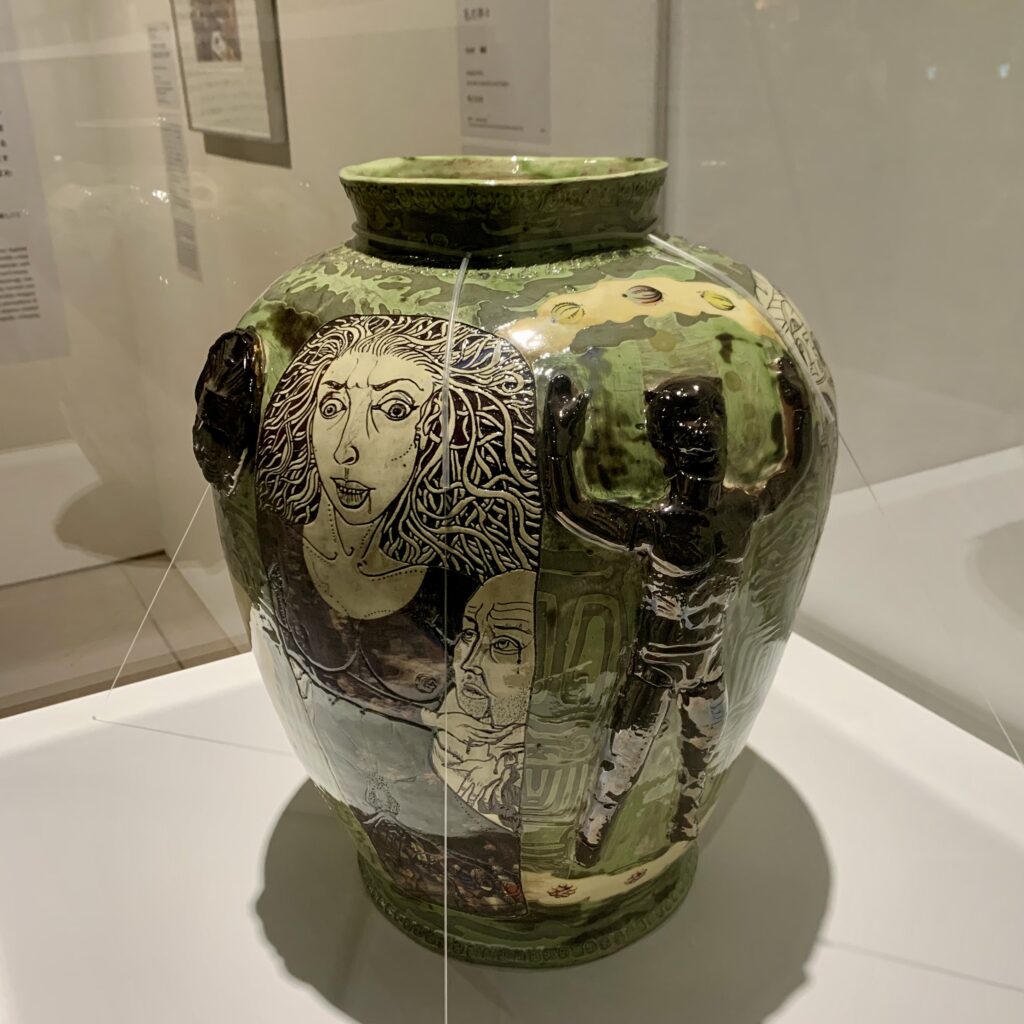
そして自分の制作という視点から、今回かなり気になったのがグレイソン・ペリーの《私の神々》です。
1994年制作の陶器作品です。大きな壺の表面には、人間の顔、人物、模様、文字、異なる文化や時代を思わせるイメージが混在しています。
しかしペリーの作品を見ると、「器そのものを何について語るメディアとして使うのか」という別の問いが現れます。
伝統的な陶器の形を使いながら、そこへ現代社会、個人的記憶、ジェンダー、大衆文化といった異質なものを持ち込まれています。器は、一つの支持体にもなり得ます。
自分自身、日用品やパッケージなど身近なものを陶器に置き換える制作をしています。もちろんペリーとは方法もテーマも違います。それでも、
「陶芸を使って、陶芸以外のものについて語ることができる」
という点は、自分の制作について考えるうえでかなり重要でした。
Is something that is "nothing special" really nothing special?
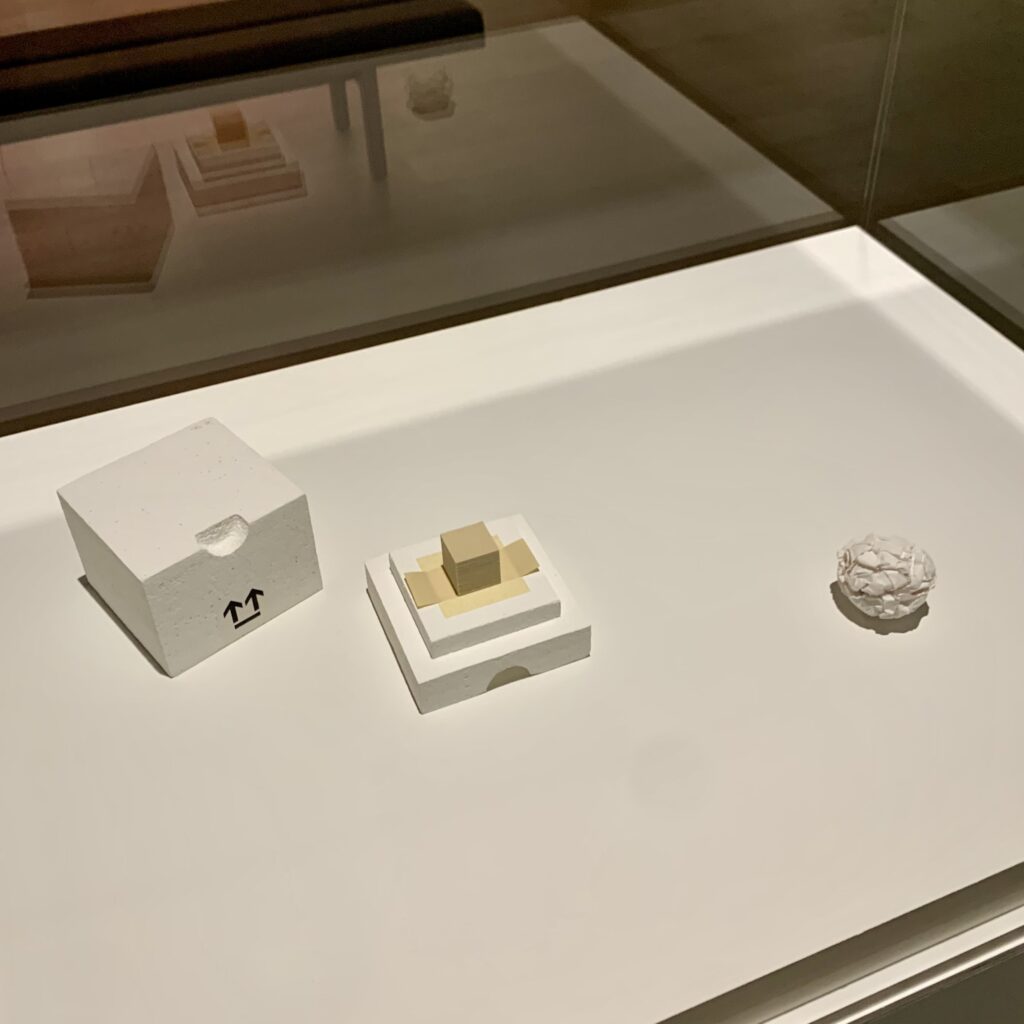
そして第6章のテーマが、「なんでもないものから何かが生まれる:身近にあるもの」です。
1990年代のアーティストたちは、高価な素材だけではなく、安価で手に入りやすい日用品や既製品を作品へ持ち込みました。日常生活の中では、わざわざ意味を考えないものばかりです。
だからこそ、展示空間へ移された瞬間に違和感が生まれています。
「なぜこれがここにあるのか」。
その疑問が、物を見る目を変えていきます。
Damien Hirst | Cigarettes, ashtrays, lighters
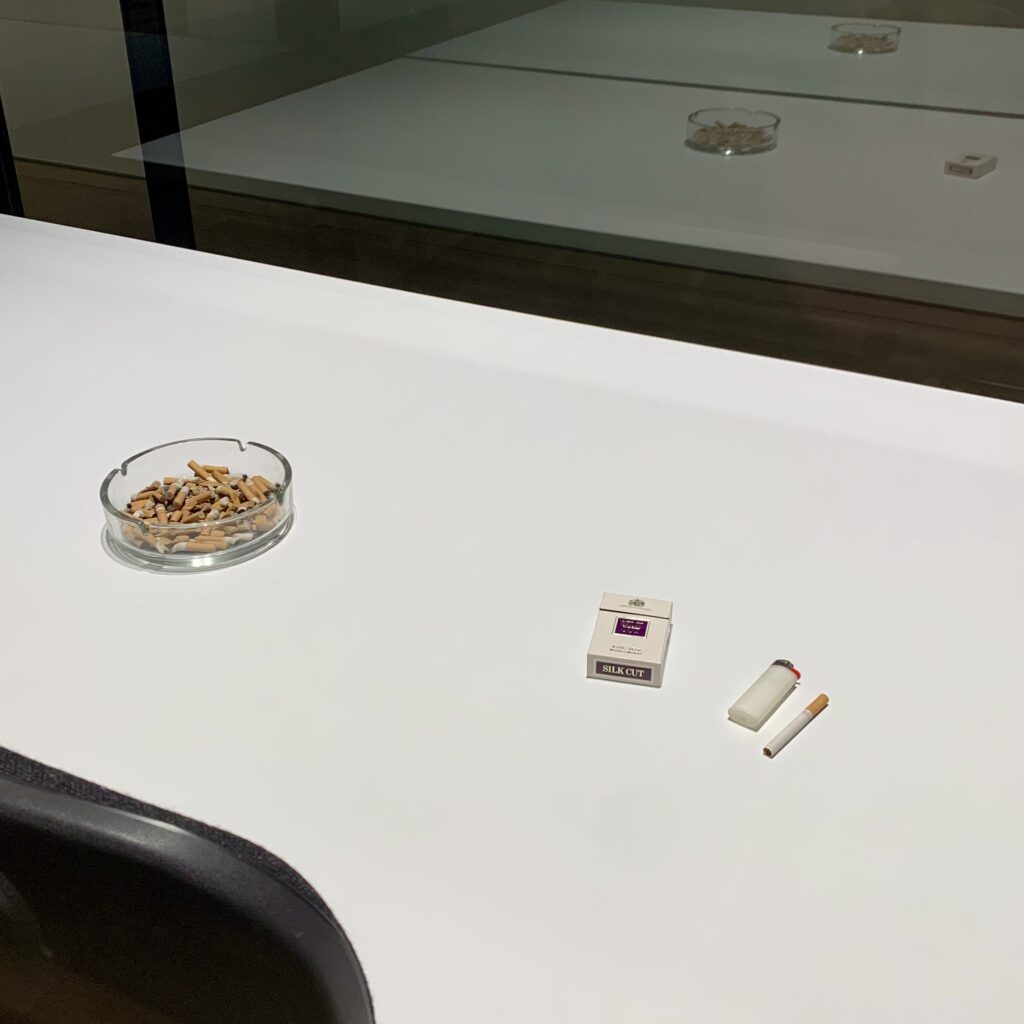
説明: 椅子、灰皿、ライター、煙草などの日用品を閉じたガラス空間へ配置したダミアン・ハーストの作品。依存、身体、時間、死などを想起させる
今回撮った写真の中にも、灰皿いっぱいの吸い殻、煙草の箱、ライター、煙草が置かれた展示があります。
ダミアン・ハーストの《後天的な回避不能》。
1991年の作品です。入り口入ってすぐの展示でしたがが、特別な美術材料ではなかったため一度素通りしてしまいました。
構成物は煙草、灰皿、ライター、机と椅子という日常的な物です。
しかし、それをガラスケースのような閉じた空間に置くことで、突然そこに別の意味が生まれています。煙草は嗜好品であると同時に、依存、健康、死、時間の経過を連想させるものでもあります。
吸い終わった煙草の山を見れば、そこに「不在の人間」まで想像することができる。配置や文脈が変わったことによって、普段見過ごしている物をもう一度考えさせる作品です。
この感覚は、自分の制作にもかなり近いものがあります。(*この作品に関連したものを作ろうと思い、先日、浅草にある「たばこと塩の博物館」にリサーチに行ってきました。)
Cornelia Parker | Blows up a shed
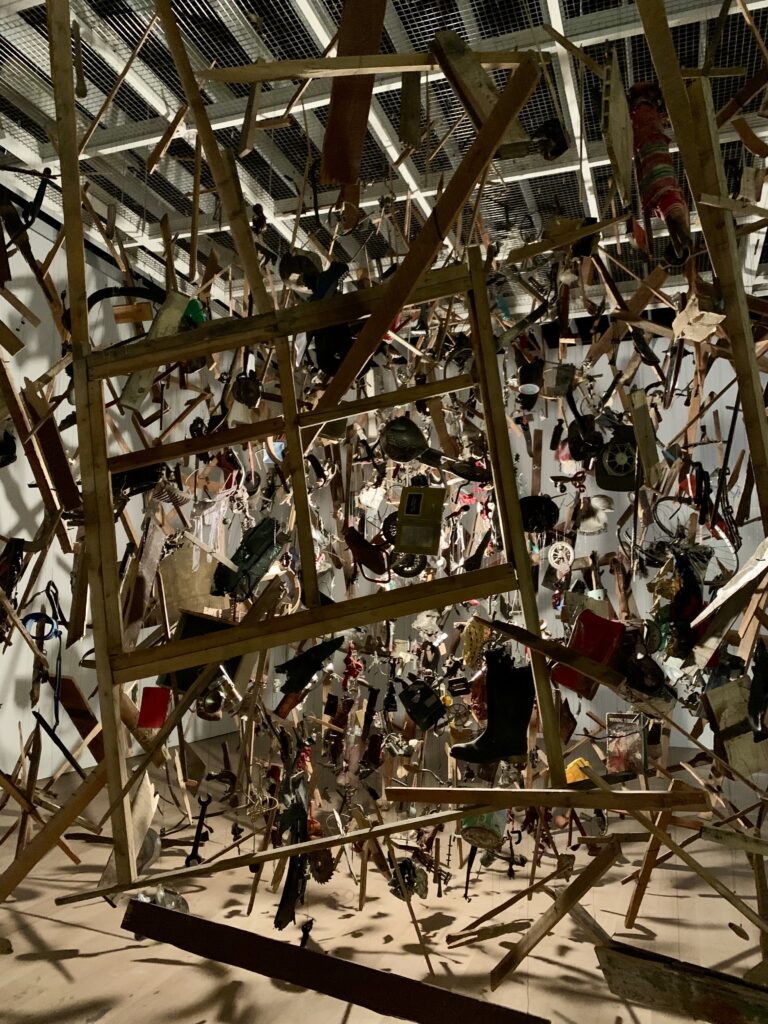
説明: 英国陸軍に物置小屋を爆破してもらい、その破片を空間に吊り下げて再構成したコーネリア・パーカーの代表作。
ハースト的な考え方をさらに極端な方法で示すのが、コーネリア・パーカーの《コールド・ダーク・マター:爆発の分解イメージ》。
1991年の作品です。素材になったのは、庭に置かれているような普通の物置小屋。パーカーはそれを英国陸軍に依頼して爆破し、破片を回収しました。
さまざまな破片を空中へ吊り下げ、中央から光を当てることによって、爆発した一瞬が時間を止められたような空間が現れます。
When you place the film and art side by side, 1990s Britain becomes three-dimensional.
同じ物を見ていても、**見方を変えれば、意味が変わる。**そして、意味が変われば作品になり得る。これは現代美術だけの話ではないと思います。
90年代英国では、それまで別々に存在していると思われていた美術、映画、音楽、ファッション、雑誌、クラブ、都市生活が互いにつながりながら、新しい文化をつくっていました。
『Trainspotting』を見てからハーストを見る。『brass!"or"The Full Monty』を見てから、廃倉庫で始まった「Freeze」を考える。『Secrets and Lies』を見てから、家や家庭用品を使った作品を見る。『24 Hour Party People』を見てから、『The Face』『Dazed』『frieze』が並ぶ壁を見る。
すべてが同じ時代の中でつながっています。1990年代の英国が面白いのは、そのつながりが非常にはっきり見えることです。
YBAを見た後に残ったのは、
「何を作るか」より先に、「世界をどう見るか」がある。
という感覚でした。
comment