
—How Schwarzenegger designed his "body"
What comes to mind when you hear the name Arnold Schwarzenegger?
movie"TerminatorA black leather jacket and sunglasses.
movie"CommandoA gigantic body holding a weapon.
Alternatively, it might be his unusual career path, going from being one of the world's top bodybuilders to a Hollywood star, and eventually even becoming a politician.
I've watched the movie many times, butThe Champion's Strength TrainingAfter reading it and thinking about it again, my view of the actor Schwarzenegger has changed a little.
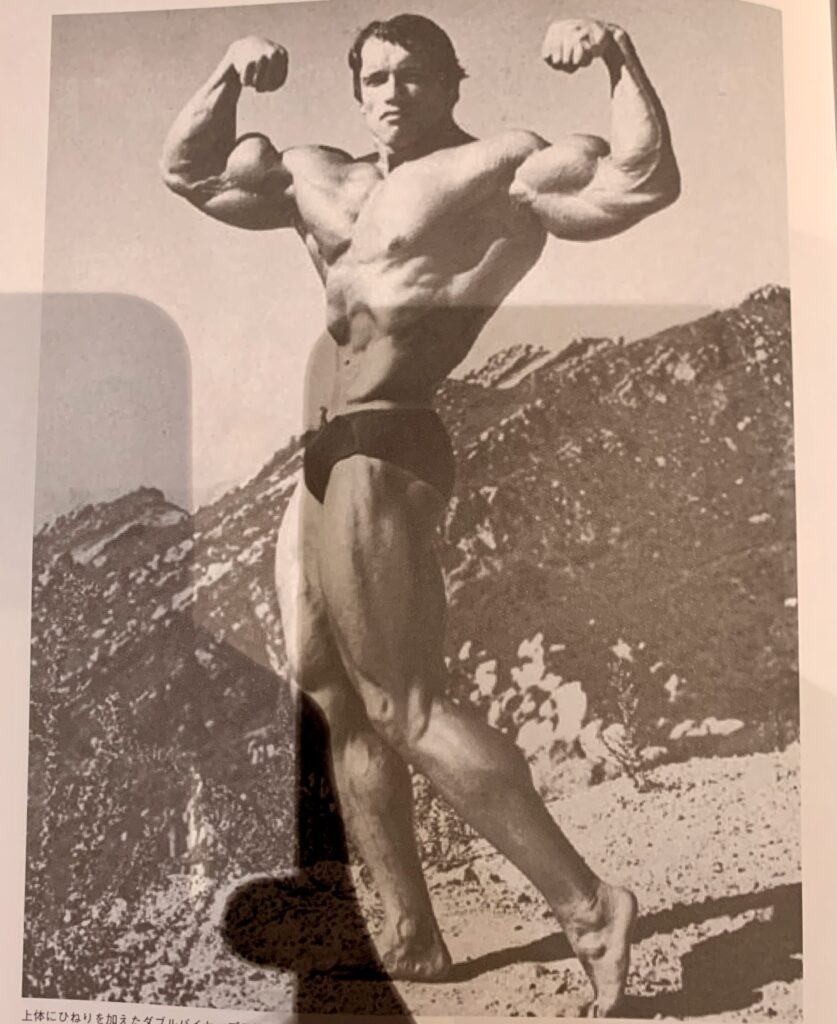
His physique is not simply that of an "extremely well-trained body."
It was a body that was intentionally designed through observation, application of stress, checking responses, and subsequent adjustments.
And this approach to building a strong physique isn't limited to just weight training.
It can be used for work, studying, and manufacturing.
This time it'sThe Champion's Strength TrainingFrom "[Title of the book]", I will pick out the points that I found particularly interesting.
"How can a person improve themselves?"
and,
"Why was Schwarzenegger's physique such a powerful representation in 1980s films?"
I'd like to consider this.
- 1. The basic principle of strength training is not "trying hard," but designing adaptation.
- 2. As you improve, your own reactions become more important than the "correct method."
- 3. Is "not having enough time" really just a matter of time?
- 4. Bodybuilding is not just a sport about "making muscles bigger"
- 5. The film "Pumping Iron" made the body a part of popular culture.
- 6. And then that body becomes the Terminator from the movie 'Terminator'.
- 7. When watching a movie, try separating the "bodies" from the "costumes."
- 8. Six steps to self-improvement that you can take away from "The Champion's Strength Training"
- In conclusion—I myself can "design"
1. The basic principle of strength training is not "trying hard," but designing adaptation.
I myself hold the NSCA-CPT personal trainer certification.
Therefore"The Champion's Strength TrainingWhat I initially found interesting about reading "[Title of the book]" was that it approached the body in a very systematic way, rather than focusing on abstract theories.
A prime example of this is "progressive overload."
Simply put, the human body adapts to the stimuli it receives.
For example, you start training with a certain weight.
It's tough at first.
However, if you continue, your body will adapt to the load, and it will become easier to handle than before.
Therefore, we will introduce yet another new stimulus.
There are various methods, including not only weight, but also the number of repetitions, sets, and the difficulty of the exercise, but the basic structure is...
Load → Adaptation → New load → Further adaptation
That is the case.
The important point is that this isn't about "trying your absolute best every time."
The body isn't perfected during training.
After being subjected to stress, you need to get nutrition, rest, and recover.
Excessive aerobic exercise or continuing to train beyond your recovery capacity can actually decrease performance.
that's why,
Designing recovery is just as important as increasing the workload.
I think this is a point that people who are just starting out with weight training should keep in mind.
"I'll try harder,"
Observe how your body is reacting to the current stimulus.
That forms the basis of training.
2. As you improve, your own reactions become more important than the "correct method."
Another thing that left a strong impression on me in this book was the description of the mind.
Beginners need the basics.
Learn the form.
Learn the principles of training.
Learn about diet and rest.
However, as you gain more experience, that alone will no longer be enough.
Because everyone's body is different.
A training method that works very well for one person may not be equally effective for another.
What becomes necessary then is the ability to observe oneself.
Learn the basics.
Put it into practice.
Let's see the reaction.
Find the difference.
Correct it.
I'll try again.
As I was reading this, I thought, "This applies to things other than weight training as well."
It could be a drawing, writing, or even a job.
Rather than starting completely on your own, it's better to first learn a superior method.
Let's actually try it.
Let's look at the results.
Then, you adjust the parts that don't suit you.
Improvement is not about finding the correct answer once,
How many times can we run this correction loop?
That might be the case.
3. Is "not having enough time" really just a matter of time?
『The Champion's Strength TrainingThe book also discusses training time.
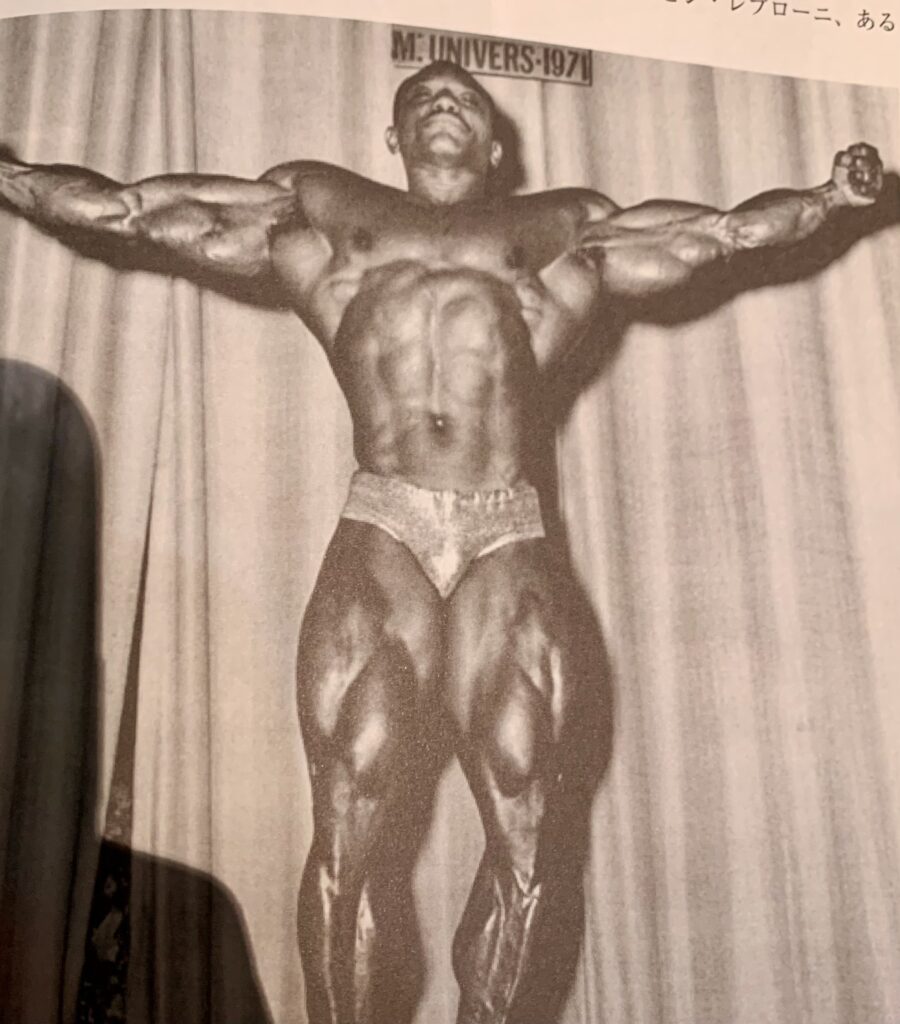
Legendary bodybuilder Sergio Oliva would go to the gym even after working all night.
Schwarzenegger himself, during his time in the Austrian Army, made time to train even during military exercises.
The question that arises from this is simple.
"Are you really short on time?"
Of course, this shouldn't be interpreted as meaning "work even if it means sacrificing sleep."
People have different jobs, family circumstances, and physical capabilities.
Nevertheless, this question has some useful aspects.
Are we truly allocating time to the things we say we "want to do"?
I want to exercise.
I want to read a book.
I want to study English.
I want to create a work of art.
As I thought this, I looked at my weekly schedule and realized there wasn't even an hour allocated for it.
If that's the case, the problem is not just the absolute amount of time,
Priorities are not reflected in the schedule.
Maybe.
This is something I myself need to be careful about.
4. Bodybuilding is not just a sport about "making muscles bigger"
The book gets even more interesting in the second half.
This is because it doesn't simply enlarge the body, but instead meticulously discusses the shape, proportions, balance, and separation of each body part.
Just having huge arms isn't enough to complete it.
How does the shoulder connect to the upper arm?
How is the balance between the chest and back?
What kind of silhouette will it have when you look at the whole body, including the legs?
Regarding Sergio Oliva's physique, it's not simply a matter of saying "he has thick arms."
Let's examine the shape and relationships of the deltoid muscle, upper arm, and forearm.
At this point, bodybuilding is what I'm looking for.Sculptures made from the human bodyIt starts to look that way.
Just as a sculptor creates a shape while looking at the material,
"This is what's missing."
"I want to expand this area."
"If you tighten this area, the whole thing will look more beautiful."
And so, I edit my own body.
Incidentally, this book also introduces body type classifications such as ectomorph, mesomorph, and endomorph.
I myself am quite close to being an ectomorph in terms of classification.
They don't gain fat easily, are slender, and have thin arms, legs, and neck.
I was reading it thinking, "Ah, I knew it..."
However, this classical somatotype classification is no longer considered a valid theory for scientifically categorizing human constitutions into three types.
Nevertheless, it's interesting to read as a document that reveals how the bodybuilding culture of that time perceived individual differences in physique and how it tried to incorporate them into training.
5. The film "Pumping Iron" made the body a part of popular culture.
In the 1970s, bodybuilding was not as widespread in mainstream society as it is today.
One of the works that was important in changing that situation was the film 'Pumping IronThat is it.
By showcasing not only the physiques of bodybuilders but also their psychological battles leading up to competitions and their personalities, the world of bodybuilding became a "watching culture" accessible to the general public.
『The Champion's Strength TrainingThe book also mentions that bodybuilding gained significant recognition around this time, and that the venues for competitions also changed.
What's important here is,
A well-trained body is no longer something that exists only within the stadium.
The body itself is featured in the media and enters popular culture.
Schwarzenegger was the symbolic figure of that movement.
6. And then that body becomes the Terminator from the movie 'Terminator'.
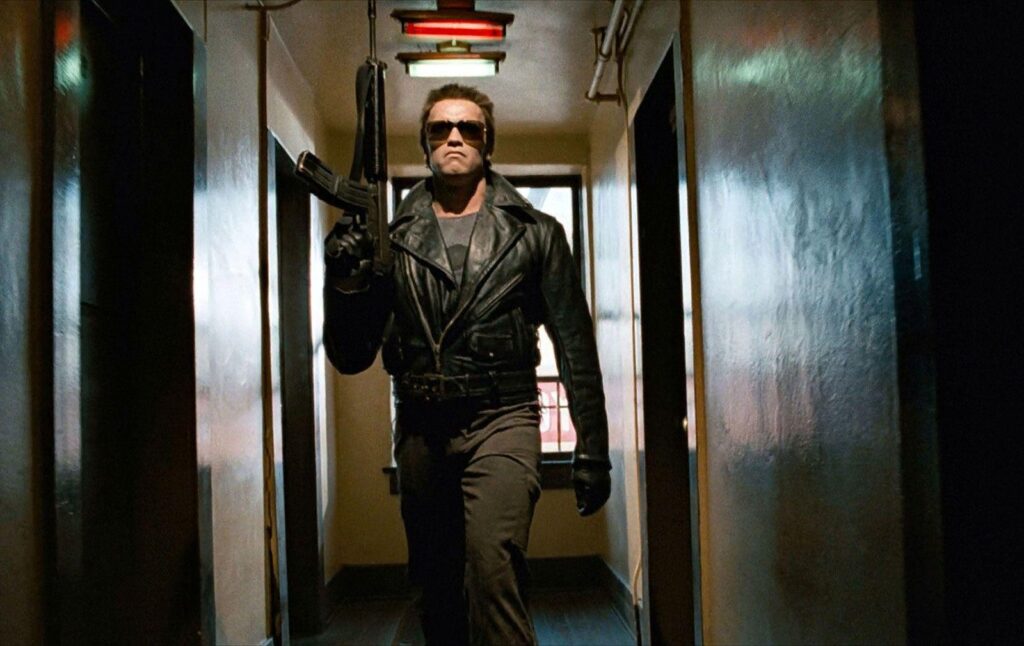
The T-800, played by Schwarzenegger, is not a human being, but a machine in human form.
Therefore, from the moment they appeared,
"This guy is not normal."
It's necessary to make them think that.
That's where Schwarzenegger's body comes into play.
Huge shoulders. A thick neck. Abnormally developed chest and arms.
The very body he spent years building visually explains the T-800's inhumanity.
It's not just special effects makeup and costumes.The actor's own body is part of the special effects.
this is"CommandoWhen it becomes '', it takes on a different meaning.
This time it's not a machine, but former special forces member John Matrix.
They accomplish one thing after another that ordinary people could never possibly do.
If you think about it calmly, it's absurd, but the fact that Schwarzenegger's body is on screen,
"With this man, maybe..."
This creates a cinematic persuasiveness that makes it seem like they could actually pull it off.
In 1980s action movies, a well-trained male body was not just a physical body,
A visual symbol that conveys strength itself to the audience.
That's what it had become.
7. When watching a movie, try separating the "bodies" from the "costumes."
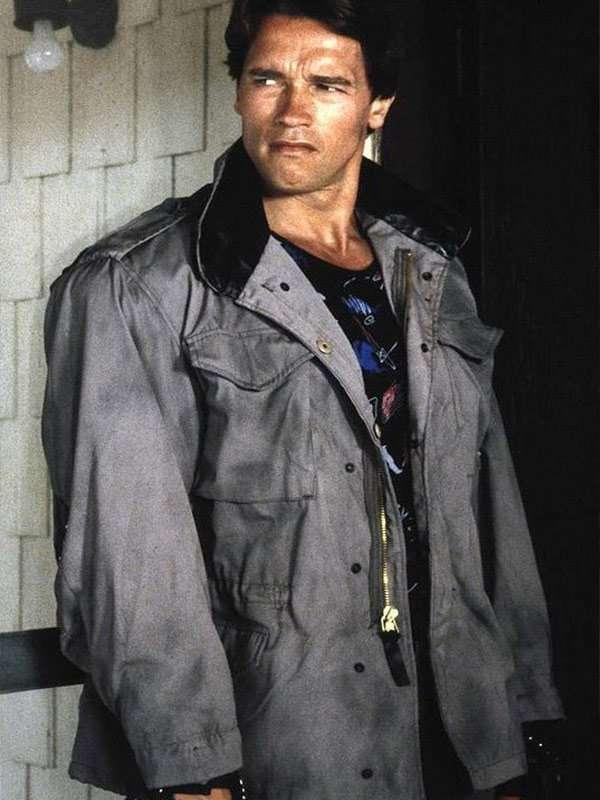
And as someone who loves clothes, I'm also curious about what she's wearing on top of her body.
『TerminatorWhen you think of him, the image that comes to mind is a black leather jacket and sunglasses.
The black motorcycle jacket worn by the T-800 in the first film is made by Bates.
Meanwhile, costumes based on the M-65 field jacket also appear in the early stages of the game.
Turning our attention to Kyle Reese, we can see a different lineage of military wear, such as U.S. military-style raincoats.
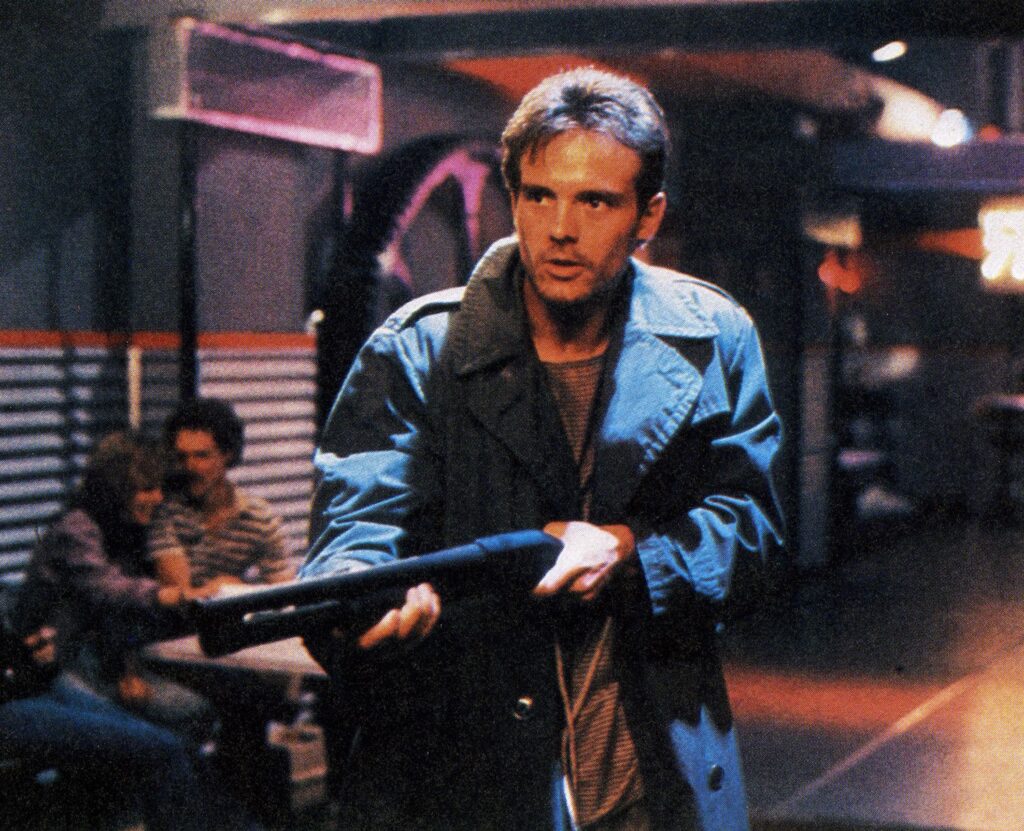
I'd like to suggest one way to watch movies.
The next time I watch an old movie,
①Body
② Costume
③ Role
Let's observe them separately.
Why this actor?
Why this body?
Why did you dress that body in these clothes?
What kind of person will the audience perceive based on that combination?
Looking at it this way, costumes are no longer just "stylish clothes."
It becomes clear that the character is designed by combining the body and the costume.
this is"TerminatorI think this is a useful perspective not only for this film, but also when looking at costumes in movies in general.
8. Six steps to self-improvement that you can take away from "The Champion's Strength Training"
Finally, I'd like to summarize the parts of this book that can be used for things other than weight training.
In my opinion, it can be summarized into the following six stages.
1. Consider the final form.
Don't be vague about what you want to become.
2. Observe your current location.
Check the difference from the ideal.
3. Apply an appropriate load.
Instead of simply repeating what you can do now, move on to slightly more difficult tasks.
4. Recover
It's not just about the amount of effort, but also about creating a state where you can continue.
5. Observe the reaction.
Check what actually changed as a result of what you did.
6. Correct and repeat.
If the results are different, change the method and try again.
This is a training concept, but it can be applied to quite a few fields.
Write an essay.
I draw pictures.
Learn the job.
Practice sports.
To send out a message.
All of them,
Observation → Load → Feedback → Correction
It changes through repetition.
In conclusion—I myself can "design"
『The Champion's Strength TrainingWhen I started reading it, I naturally thought it was a book about building muscle.
Of course, that's not wrong.
However, what strongly remained in my mind after finishing the book was
"How do you observe, design, and transform yourself, the raw material that is you?"
That was their way of thinking.
And once you know that, watching Schwarzenegger's movies changes even the meaning of the body you see on screen.
A physique sculpted as a bodybuilder.
『Pumping IronBodybuilding enters popular culture through "[this work]".
He transformed his body into cinematic expression.Terminator"or"Commando』。
Furthermore, he was wearing a leather jacket, an M-65 coat, and sunglasses over his body.
Weight training, movies, and fashion seem like separate topics.
But if you trace them one by one, they are all connected.
If you want to change yourself, don't just try harder; observe yourself.
Apply an appropriate load.
Let's look at the results.
Then correct it.
The fundamentals of the act of "making" probably haven't changed all that much.


comment