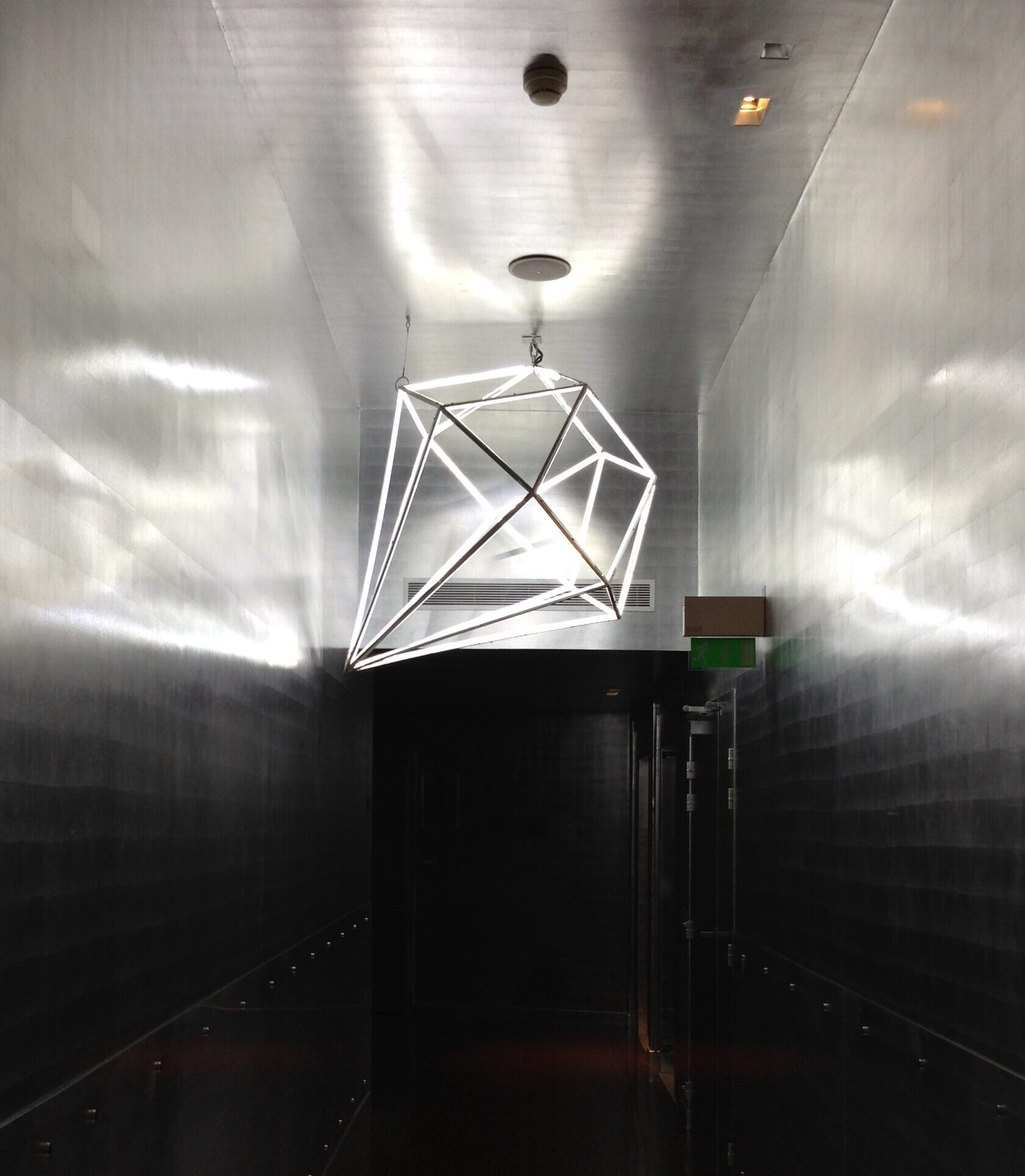
- What did Margiela do to the hotel?
- It was originally a 19th-century mansion.
- 1 | The boundary between "genuine" and "fake"
- 2 | "White" is not just for cleanliness
- 3 | Why are "empty pictures" displayed on the walls?
- 4 | By leaving it incomplete, the structure is revealed.
- 5 | Preserving history while overlaying it with "historical images"
- To understand Margiela's clothing, it's worthwhile to look at the hotel.
What did Margiela do to the hotel?
What comes to mind first when you hear the name "Margiela"?
An inside-out jacket, reconstructed vintage clothing, white paint, anonymity, tabi socks—is this artisanal?
Since 1999, Maison Margiela has had a line called "Line 13" that deals with interiors, installations, and decorative design. The Maison itself currently positions Line 13 as a line for "objects and publications."
One prime example of this concept being realized in a large-scale space is the hotel La Maison Champs Élysées in the 8th arrondissement of Paris.
I stayed at this hotel in 2014 when I visited Paris Men's Fashion Week.
Looking at the photos I took back then, more than ten years later, I realized that it wasn't just a "Margiela-esque white hotel," but rather a very meticulous experiment in which the design thinking I had been using in clothing was applied to interiors, furniture, lighting, and the surfaces of walls and floors.
It was originally a 19th-century mansion.
La Maison Champs Élysées is located at 8 Rue Jean Goujon in the 8th arrondissement of Paris. The current building's history dates back to the 19th century.
In 1864, the Duchess of Rivoli and Princess of Essling acquired the land, and the architect Jules Percheret designed a mansion there. The building was completed in 1866. Later, in 1919, it was acquired by the alumni association of École Centrale and subsequently used as a hotel.
During the renovations carried out from 2010 to 2011, Maison Martin Margiela was selected through a competition to design 17 guest rooms and suites, as well as the reception area, restaurant, bar, and cigar room. The hotel has a total of 57 rooms, and the 17 rooms designed by Margiela were part of a group called "Couture."
Some articles describe this hotel as "a hotel designed by Martin Margiela himself," but strictly speaking, it's a project of "Maison Martin Margiela."
1 | The boundary between "genuine" and "fake"
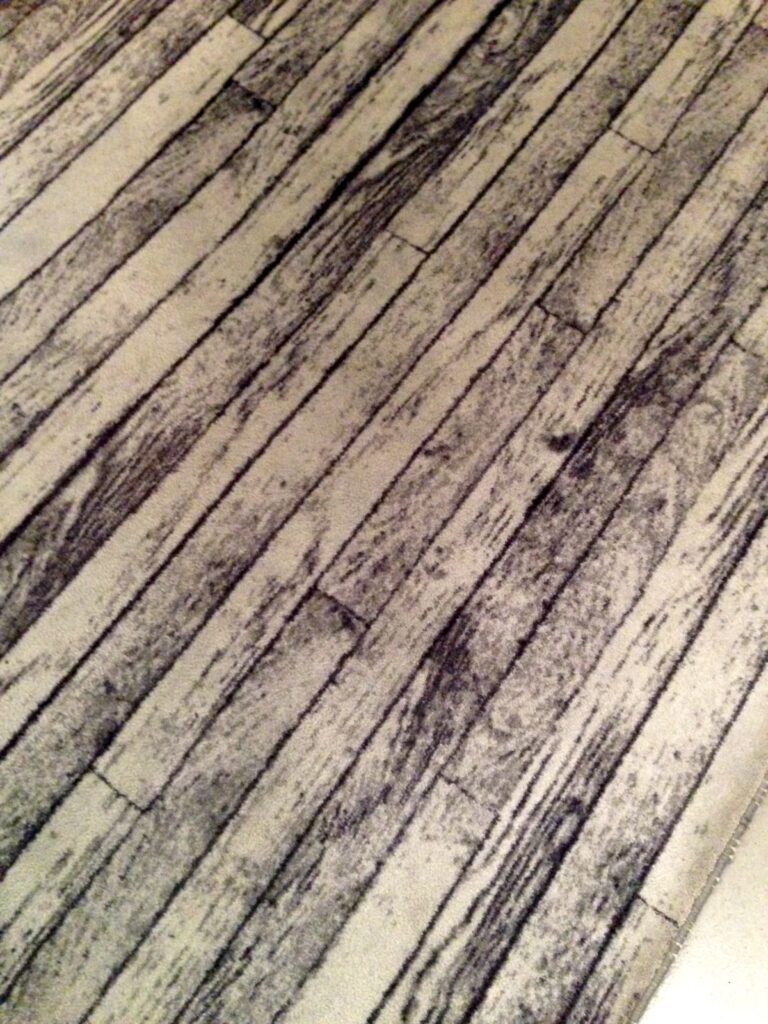
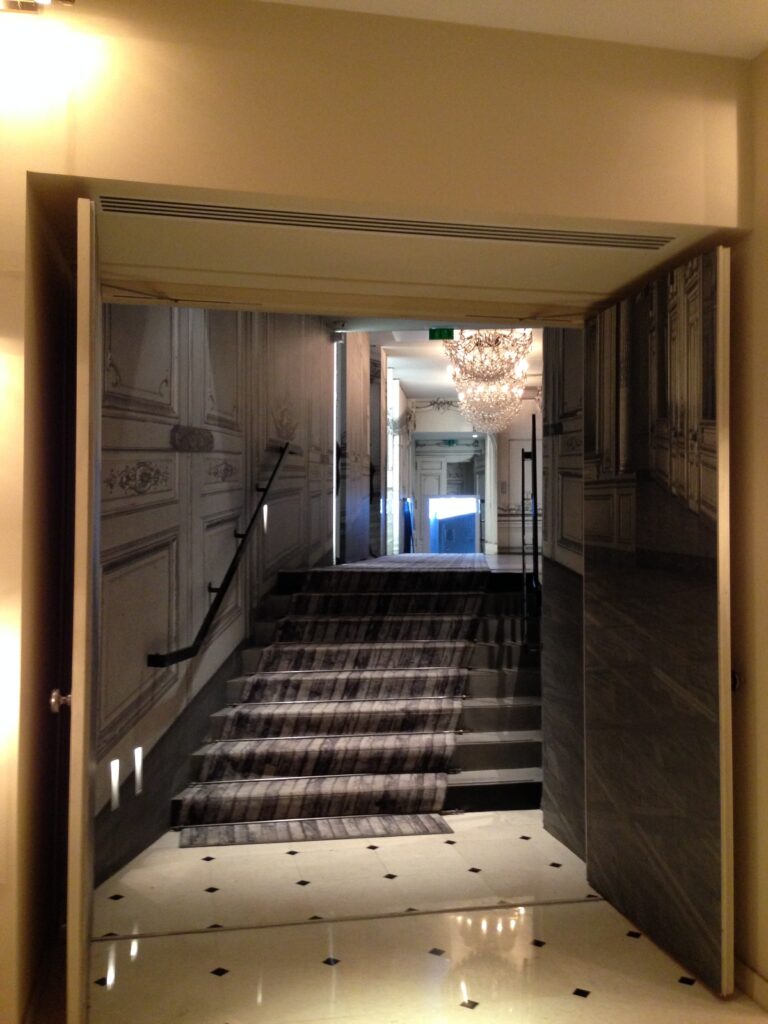
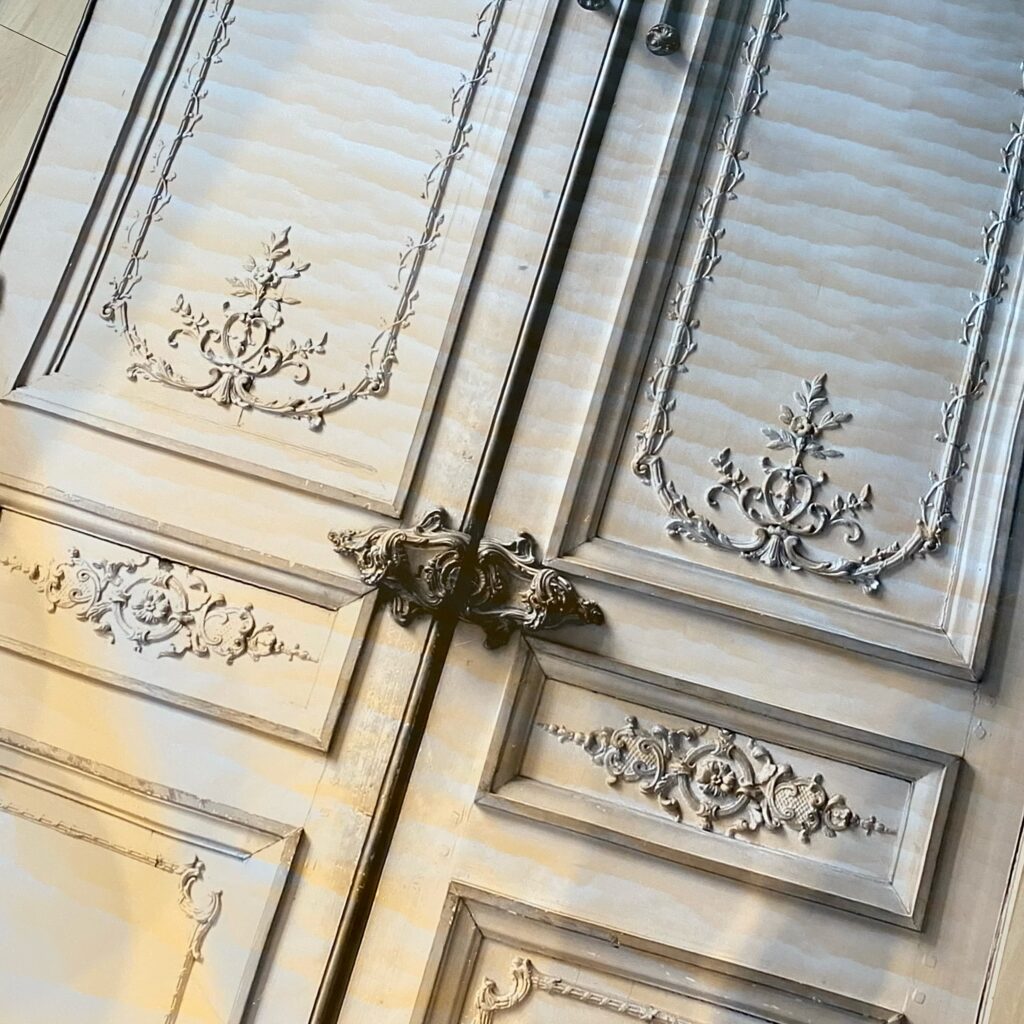
The most frequently encountered thing when walking around the hotel is,Trompe-l'oeil = optical illusionis.
Take the floor, for example. At first glance, it looks like old wooden flooring, but if you look closely, you'll see that the wood grain is printed onto the carpet.
Some of the guest rooms featured beige wool carpets with Persian rug prints. There was even a suite where historical interior decorations were photographed and then transferred onto the wallpaper and curtains.
One of the leading examples of incorporating trompe-l'oeil into fashion is Elsa Schiaparelli. Her sweater, which incorporated trompe-l'oeil ribbons and was released in 1927, was a great success, and she continued to use visual illusions repeatedly in her expressions, often associated with Surrealism.
While Schiaparelli used trompe l'oeil as a form of surrealism, in Margiela's case, trompe l'oeil seems to function as a way to disrupt the relationship between the material, thickness, and structure of clothing and its "image."
In his iconic Spring/Summer 1996 collection, Margiela photographed vintage clothing and printed those images onto light, flowing materials such as rayon and gauze.
Perhaps this is an expression, through clothing, of the question: what do we actually see, and what do we perceive as authentic?
In a hotel, does something that looks like wood necessarily have to be wood? Does ceiling decoration need to be actually carved? Is a carpet not a carpet unless it's woven? The subject matter expressed through clothing expands from the clothing to the floor, walls, and ceiling.
The trompe-l'oeil door poster I own perfectly illustrates this concept. Simply by hanging a poster on the wall, a "door" that doesn't actually exist there appears.
At La Maison Champs Élysées, instead of simply preserving the architectural decorations, we saw many instances where they were reinterpreted and incorporated as images for the walls and floors.
2 | "White" is not just for cleanliness
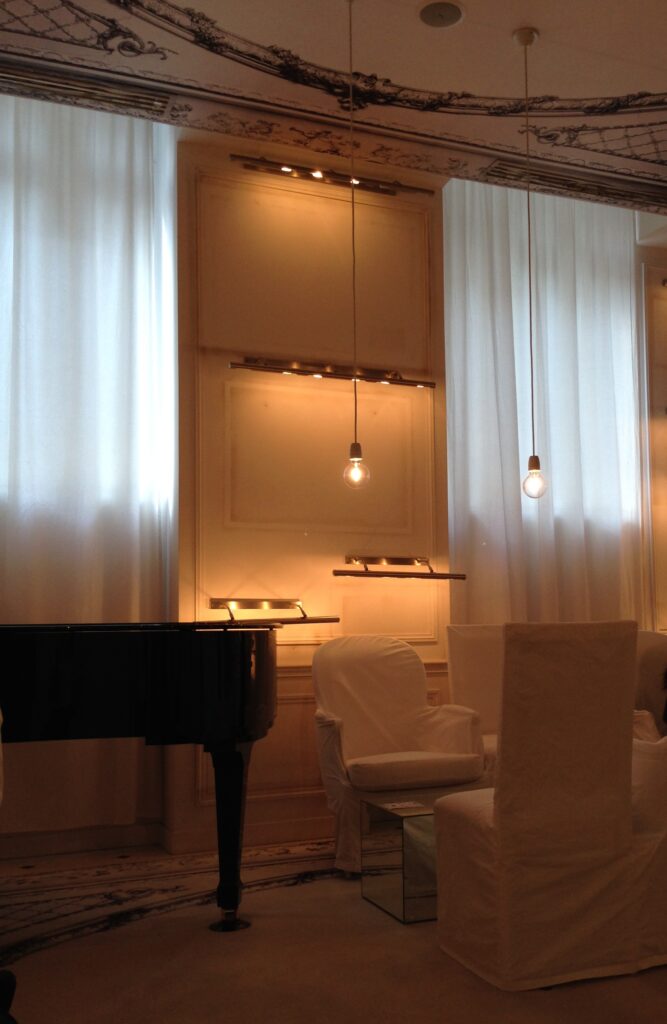
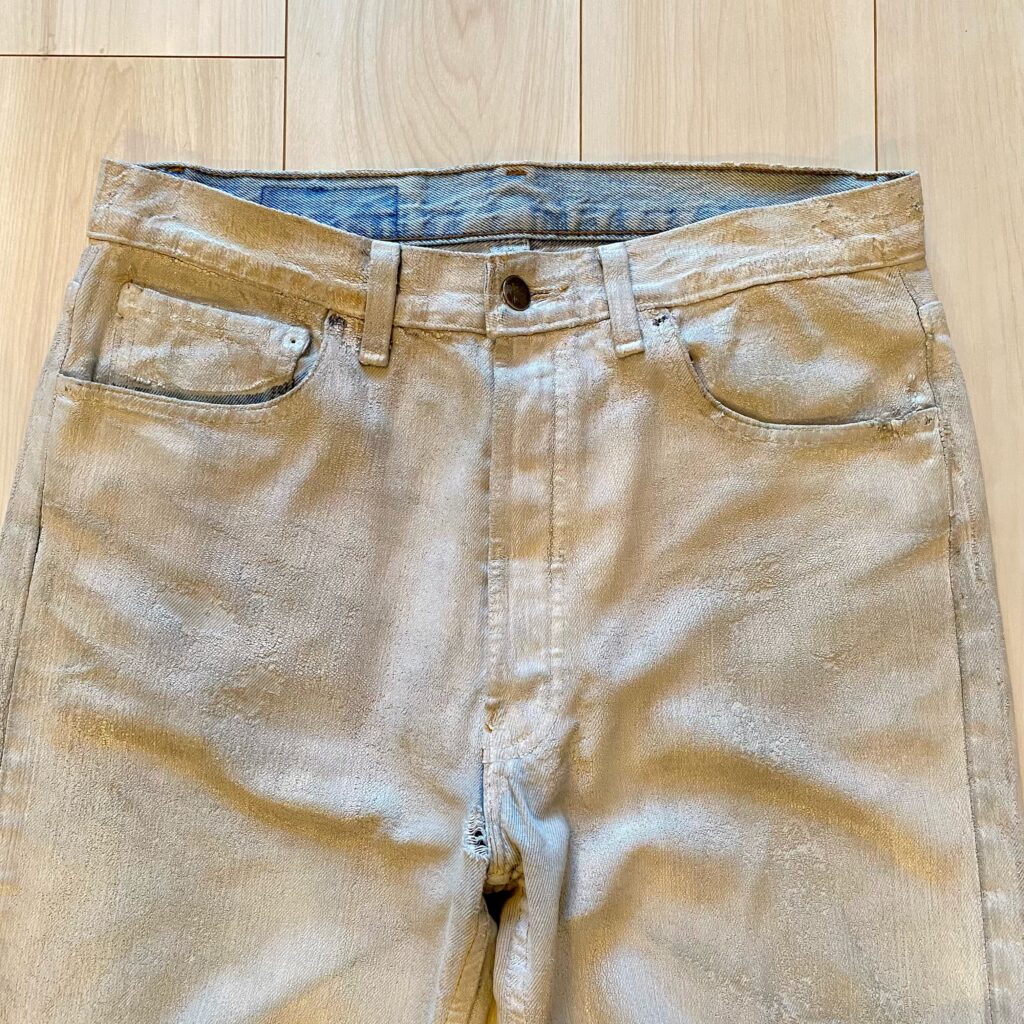
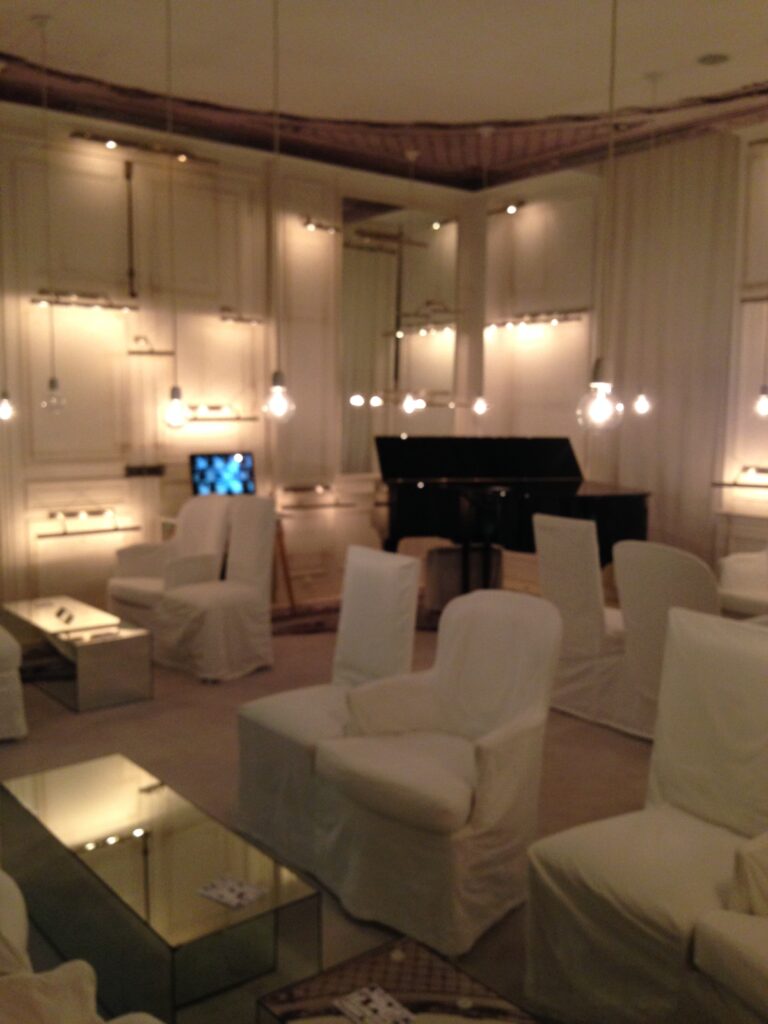
Looking back at the photos, chairs covered in white cloth appear everywhere in the hotel. The outlines of the chairs themselves are visible, but the individuality of each piece of furniture—the upholstery, the wood, the decorations—is hidden by the white cloth.
The "Bianchetto" technique, which the Maison has now officially introduced, involves applying a layer of white paint to the surface of existing items. Over time and with use, the paint peels off, revealing the material underneath.
Of course, the white fabric used in the hotel and this Bianchetto are not made using the same technique. But,
Instead of adding new decorations to an object, erase the information it already has.
These design operations have something in common.
Covering the chair with white cloth diminishes the historical differences between furniture styles such as "Louis XV style" and "Louis XVI style." Conversely, this emphasizes the "outline of the chair," such as the height of the backrest, the shape of the armrests, and the width of the seat.
A design that encourages a re-evaluation of the original object by reducing the amount of information it contains.。
At ARTISANAL, we reuse and repurpose existing clothing and materials, transforming them into something entirely new. My own painted denim is one example that illustrates this concept.
3 | Why are "empty pictures" displayed on the walls?
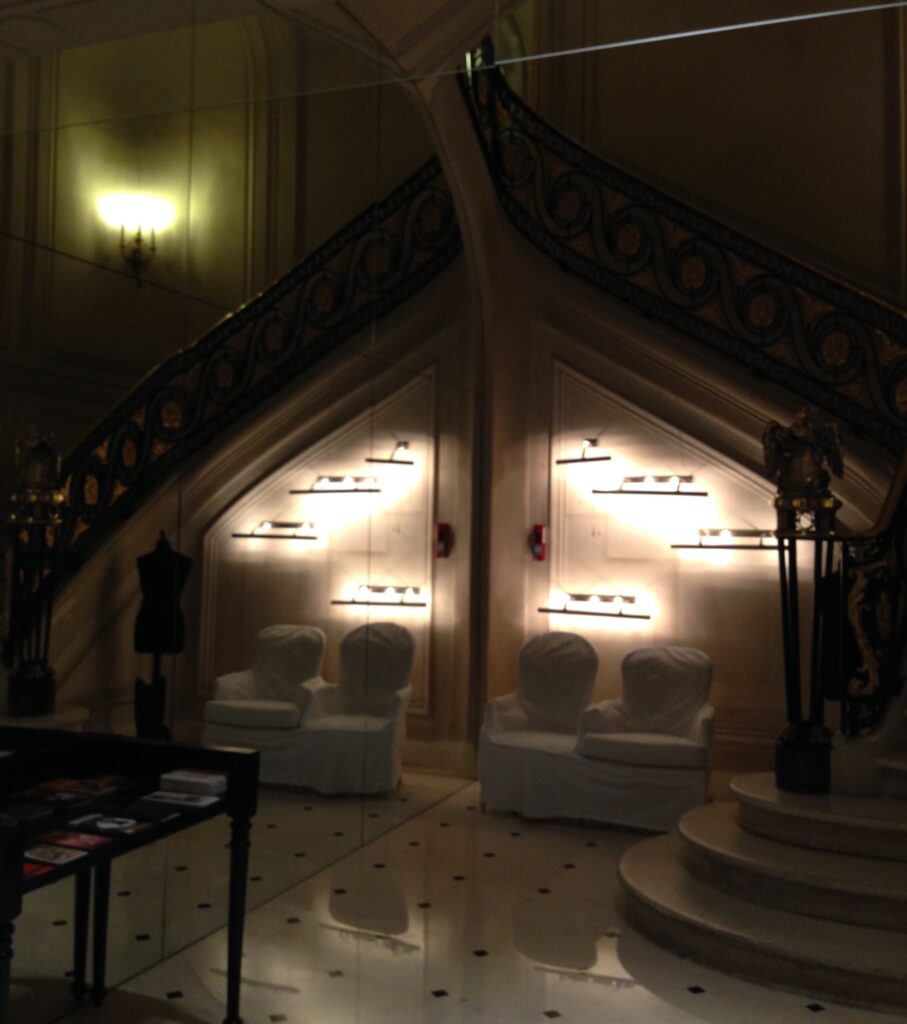
I have a photo of the wall at the bottom of the stairs. Several picture lights are installed on the wall. However, there are no pictures beneath them. Only the lights illuminate the non-existent images.
The hotel's promotional materials from 2011 also include a description to the effect that "only traces of paintings that never existed in the past remain" on this wall. Normally, in exhibitions, the artwork is the main focus, and lighting is merely an auxiliary device for viewing the artwork, but in this hotel, the relationship is reversed.
When an artwork disappears and only the device that illuminated it remains, we automatically imagine that "something was there before." Instead of seeing what exists, we imagine something that doesn't exist.
Margiela repeatedly uses designs that utilize this kind of "absence." I even own a leather jacket with a print of the area where a sticker was removed. It's a jacket I really like, and it makes me wonder what kind of sticker was on it.
4 | By leaving it incomplete, the structure is revealed.
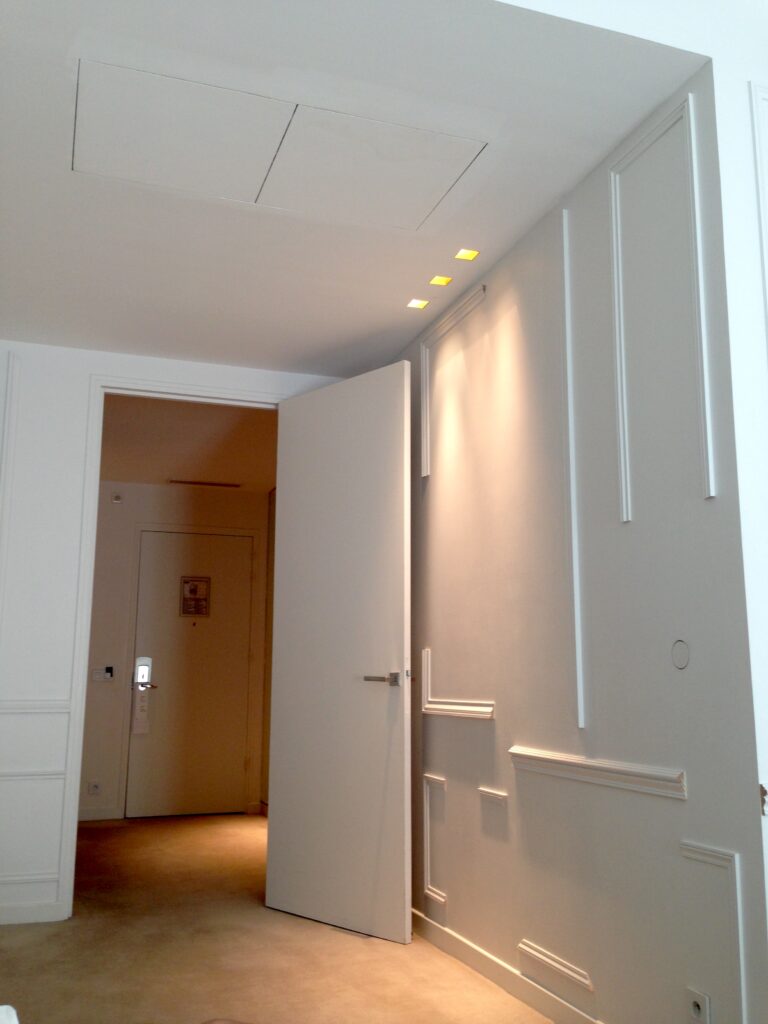
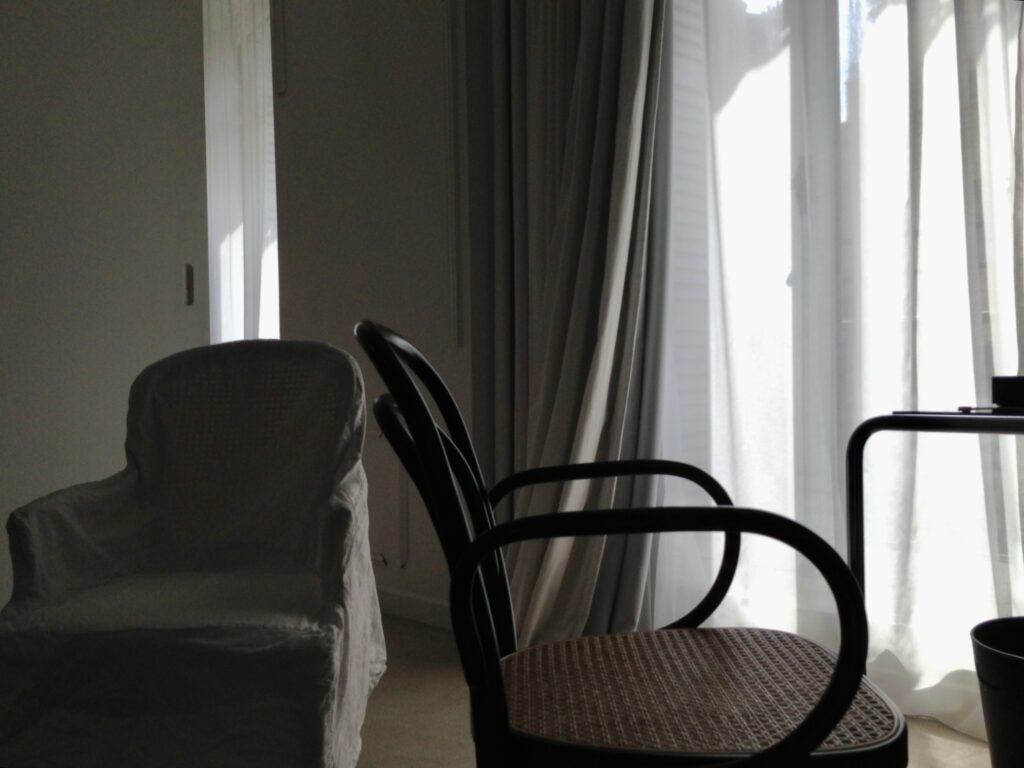
Looking at the photos of the guest rooms, you can see classic molding on the walls. However, it's not finished; it abruptly ends midway. It's not a work in progress, but rather the molding itself is part of the design.
In fact, in the three suites designed by Margiela, the wooden molding was intentionally interrupted midway, giving the impression of being "unfinished or in progress."
In ordinary clothing, seam allowances, interlining, basting stitches, and the internal structure are hidden once the garment is finished. However, Margiela has brought these "things that are usually removed before completion" to the surface as part of his designs.
If a hotel finishes its moldings completely, we'll just pass it by without thinking, considering it a "classic wall." But because it's cut off midway, we start to pay attention, wondering, "Was this decorative?" or "How was it made?"
This method deliberately makes people aware of the structure that will become invisible once the project is complete.
5 | Preserving history while overlaying it with "historical images"
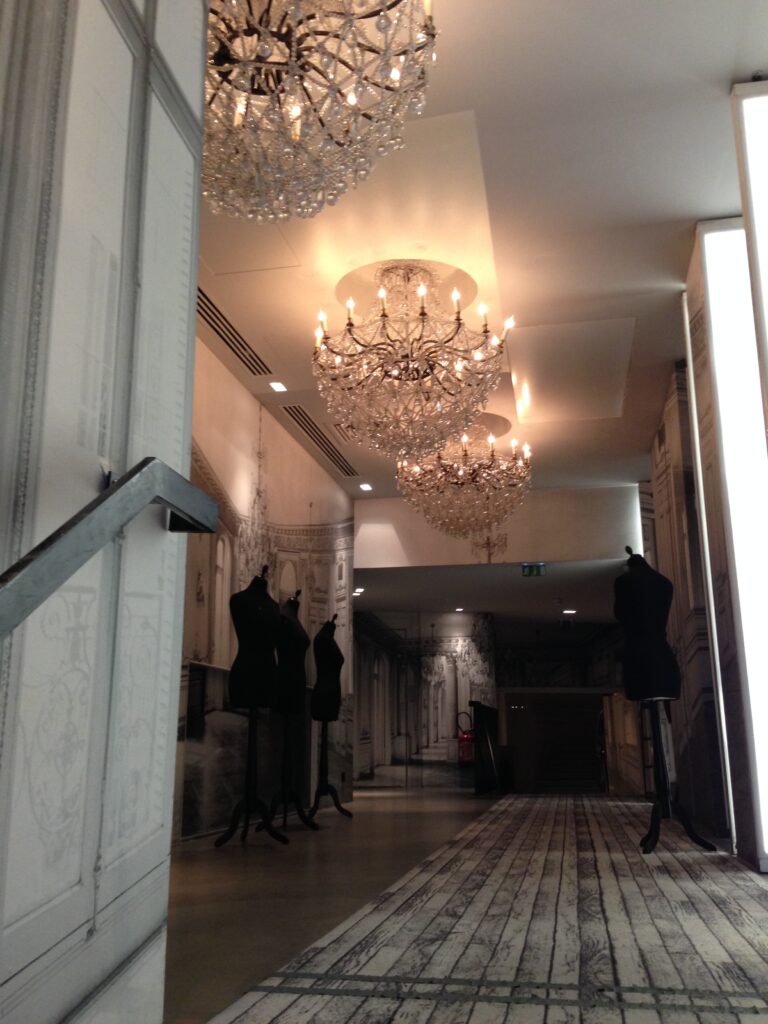

La Maison Champs Élysées retains traces of its 19th-century mansion past: the staircases, wall decorations, moldings, and chandeliers. As you walk through the hotel, you can feel the very structure of the space that an old Parisian mansion once possessed.
However, what's interesting about Margiela is that he didn't simply "restore" the history to its former state. While preserving the actual historical space, he added another layer of "architectural memory" to the interior of the authentic building.
Here again, the important thing is not whether the original or the copy is superior, but rather creating a distance between the object itself and the image we have of it.
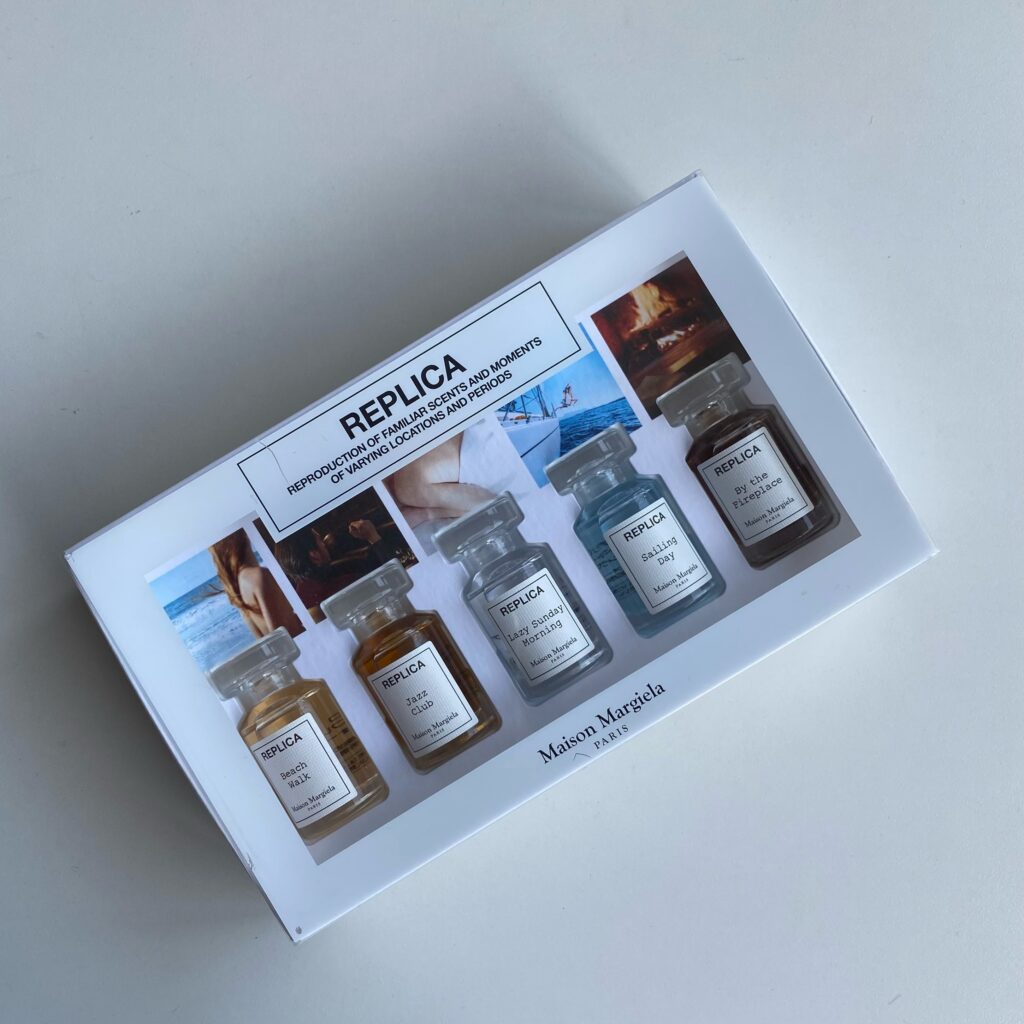
Considering this concept, the "Replica" concept developed by Maison Martin Margiela in 1994 also becomes interesting. Replica involves recreating existing clothing and accessories while indicating their origin and date of origin.
In other words, design isn't just about "inventing new forms from nothing," but rather it's about selecting something that already exists and repositioning it in a different era, place, or context—that itself is presented as design.
Then, in 2012, the name "REPLICA" was also used for fragrances. In those fragrances, the objects being recreated shifted from clothing to memories of places and times, such as "Beach Walk," "Jazz Club," and "Lazy Sunday Morning."
Looking at Margiela's work over a long period of time, it seems that there is a consistent underlying thought process: "How can we see something that already exists in a different light?"
What I've come to realize about La Maison Champs Élysées is that by layering historical reproductions and memories upon the remaining history, it blurred the boundaries between authenticity and image, and between past and present.
To understand Margiela's clothing, it's worthwhile to look at the hotel.
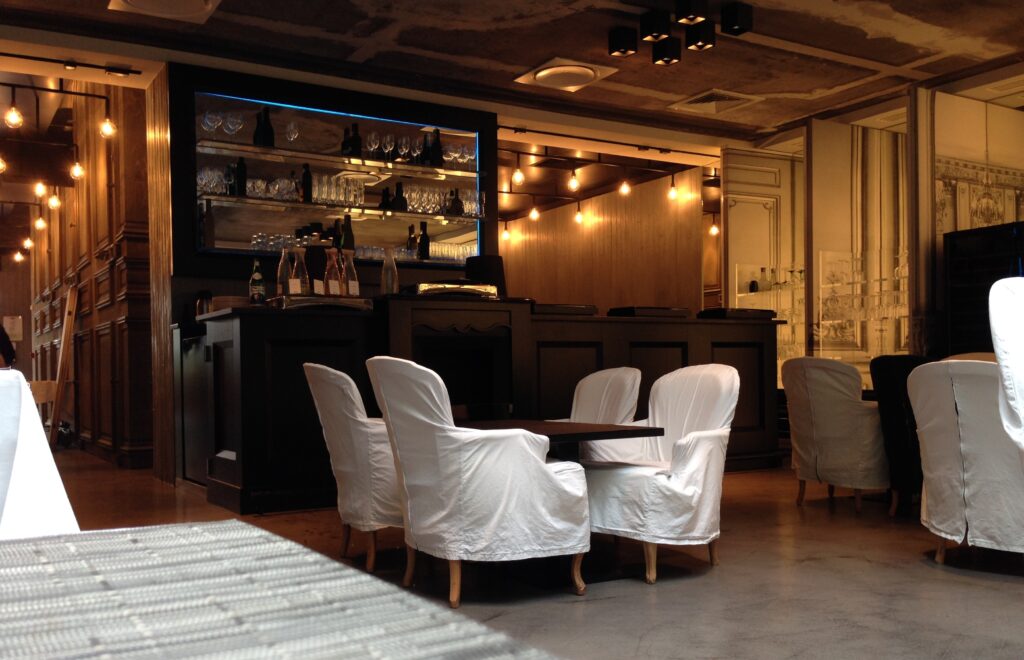
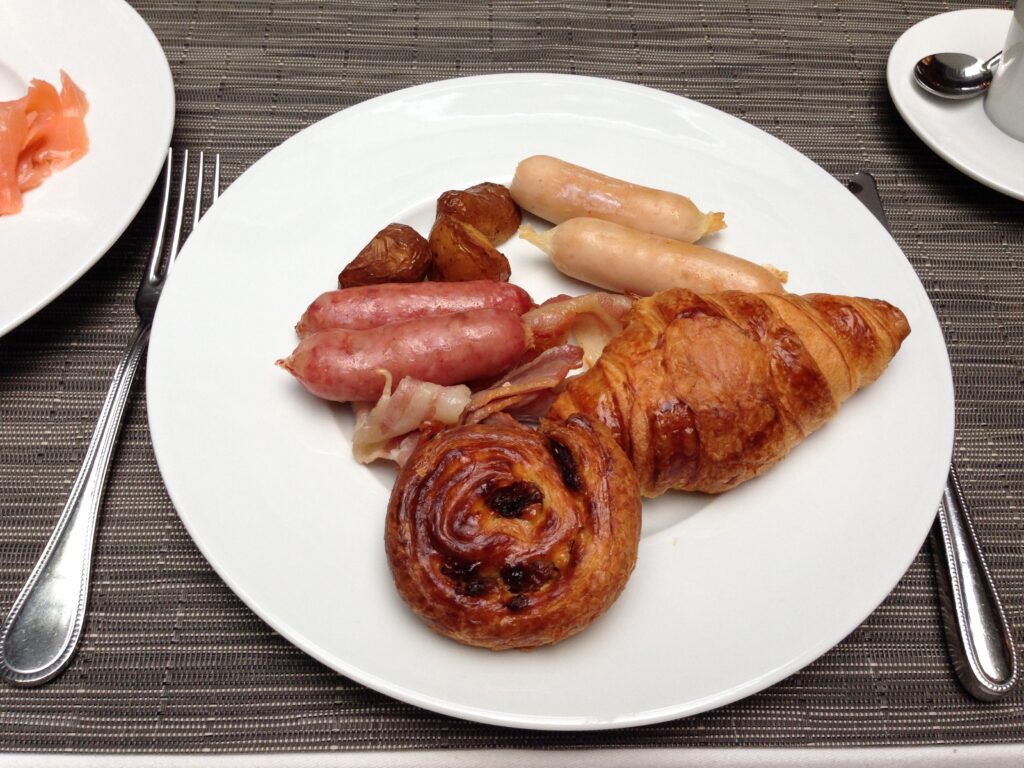
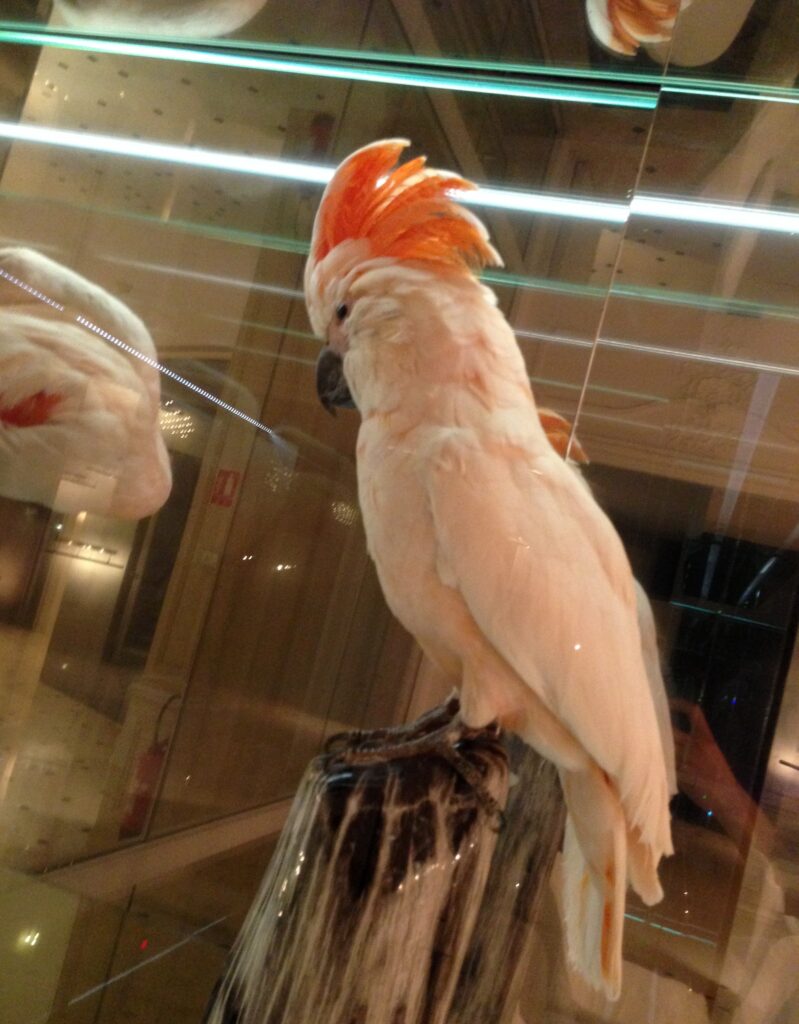
When I stayed at this hotel in 2014, I wasn't analyzing it in detail. I went to see Yohji Yamamoto's Paris Fashion Week, and simply chose it because I thought, "If it's a hotel designed by Margiela, I'd like to stay there."
The photos I'm using here were taken with an iPhone from over ten years ago, so they don't have the same resolution as current smartphones. Nevertheless, they have a different kind of value now.
The hotel may be renovated in the future. Shops, exhibitions, and show venues don't last forever. But photographs preserve how the space existed at that particular moment.
One of the advantages of photographs is that they allow us to study them again later. I was reminded of this when I looked back at the photographs of La Maison Champs Élysées.
comment