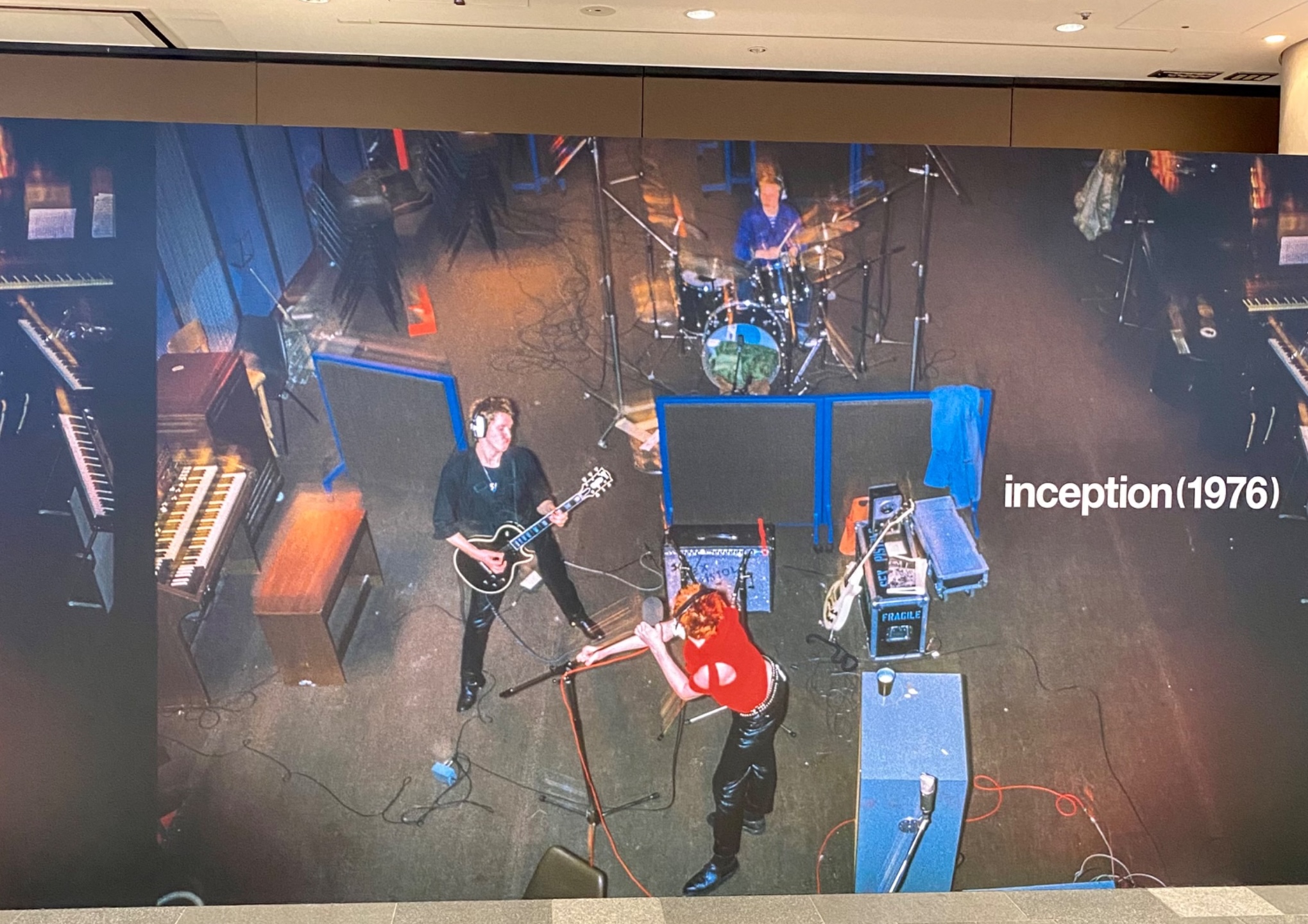
Anti-establishment clothing became cultural heritage 50 years later.
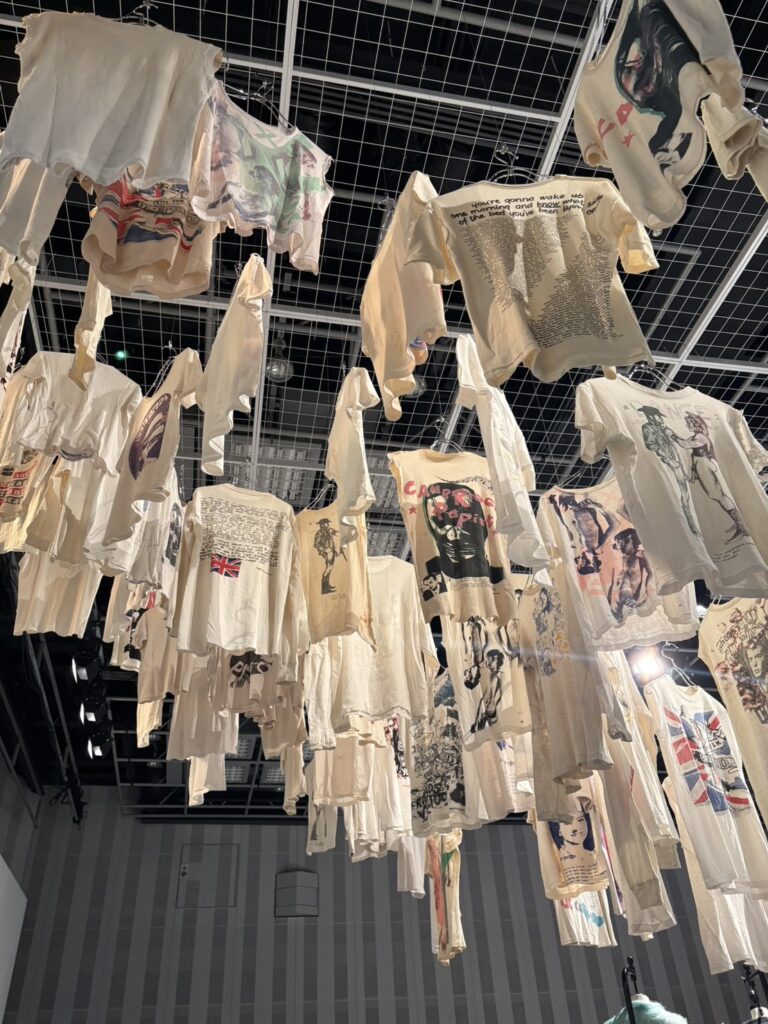
In May 2026, I went to "inception (1976)" held at Omotesando Hills. The venue wasn't particularly large, but the content was incredibly dense.
There were posters, newspapers, records, photographs, and film materials related to the Sex Pistols. And, above all, an astonishing amount of original clothing by Malcolm McLaren and Vivienne Westwood, from "SEX" and "SEDITIONARIES" to "World's End."
This exhibition, directed by Hiroshi Fujiwara as part of Omotesando Hills' 20th anniversary celebrations, was planned to mark the 50th anniversary of the Sex Pistols' debut with "Anarchy in the UK" in 1976.
As I walked and admired the sights, I felt a strange sensation. That's because what was before me wasn't originally created to become a "cultural heritage site."
On the contrary, it was created to mock, provoke, and in some cases destroy existing culture, fashion, common sense, class, and authority.
In 2026, it stood there on a white display stand, under uniform lighting, as a historical artifact that should be carefully preserved.
Anti-establishment clothing had become cultural heritage.
I believe this paradox is precisely what makes this exhibition so memorable.
When you see it in person, the "punk" aspect starts to look fake.
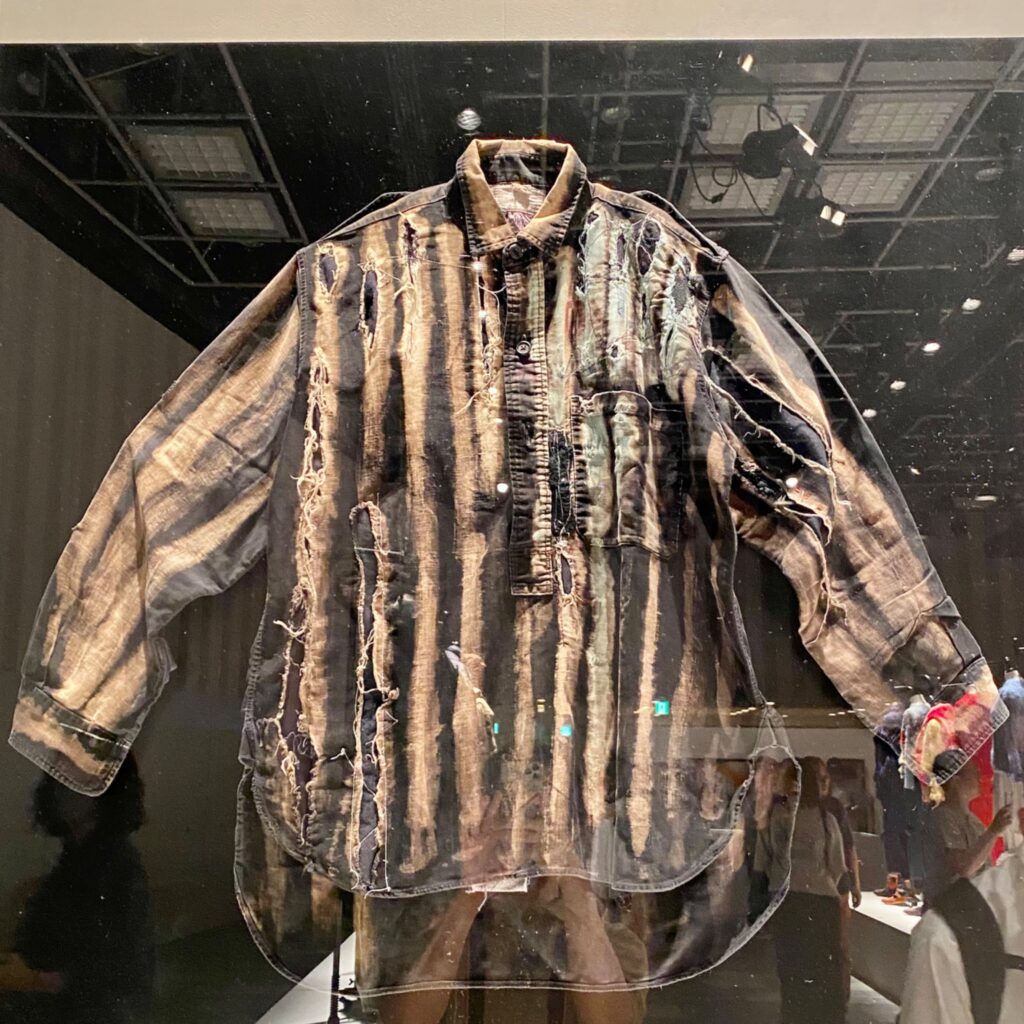
When people hear the term "punk fashion," many probably picture black leather jackets, studs, safety pins, ripped clothes, and mohawks.
Of course, that's not wrong either.
However, when you see a large number of actual pieces all at once in "Inception (1976)," those images start to seem more like "punk symbols" that were refined in later generations.
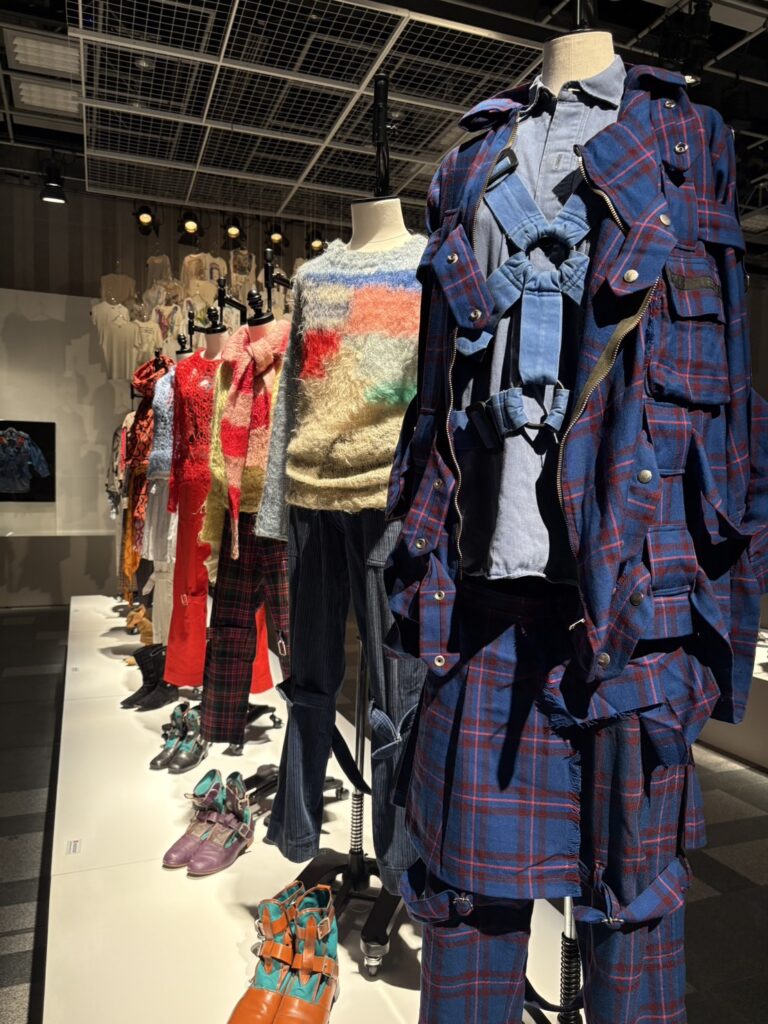
The venue was surprisingly colorful.
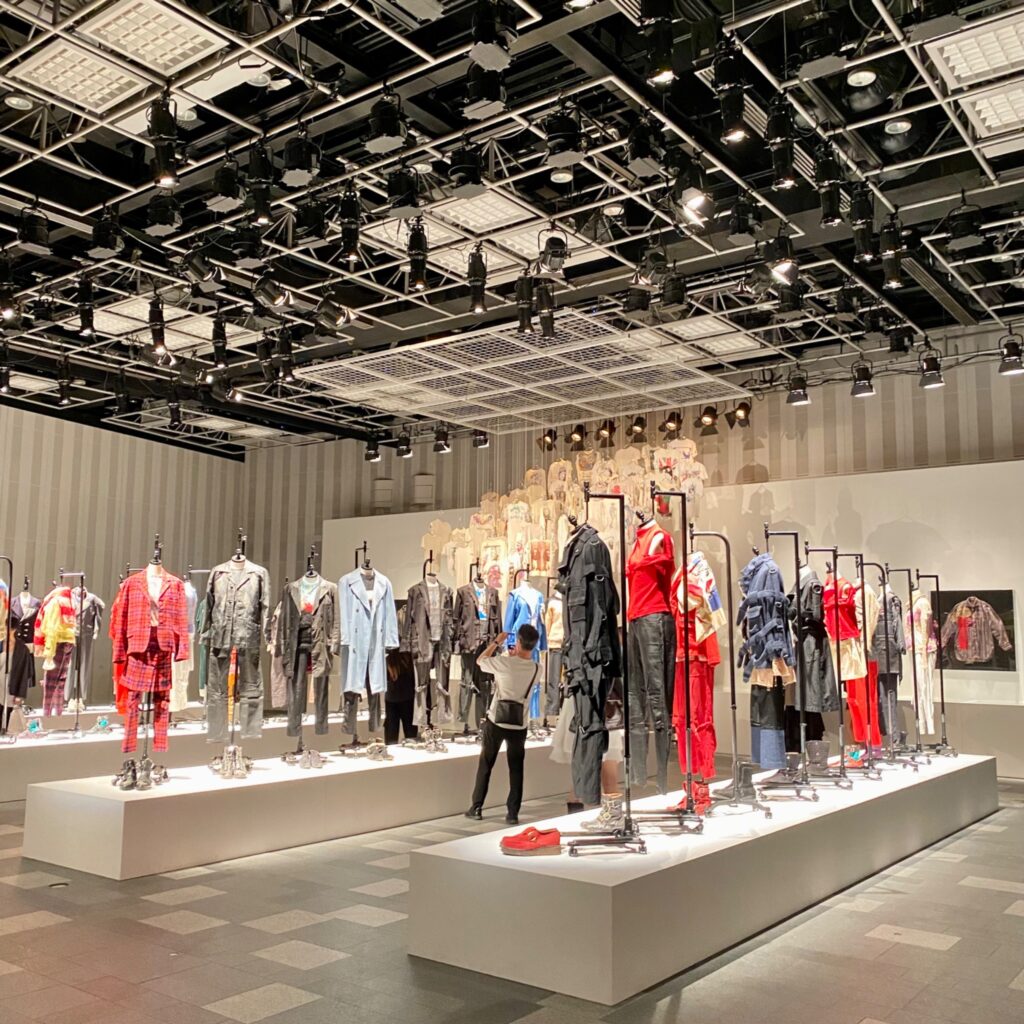
Red. Vivid blue. Light blue. Orange. Pink. Green. Tartan. Fluffy mohair. Classic checked tailored clothing. Bondage wear with bizarre straps crisscrossing the body.
There was a mix of vulgar graphic t-shirts and clothing with political messages.
Military uniforms, motorcycle wear, fetish wear, tailoring, workwear, sportswear.
Things that should exist in separate contexts are clashing.
In other words, punk is not a single type of uniform,
It's about combining things that were previously considered incompatible.
Perhaps it was the haphazard editing itself that was the problem.
The Sex Pistols could not have existed "by music alone".
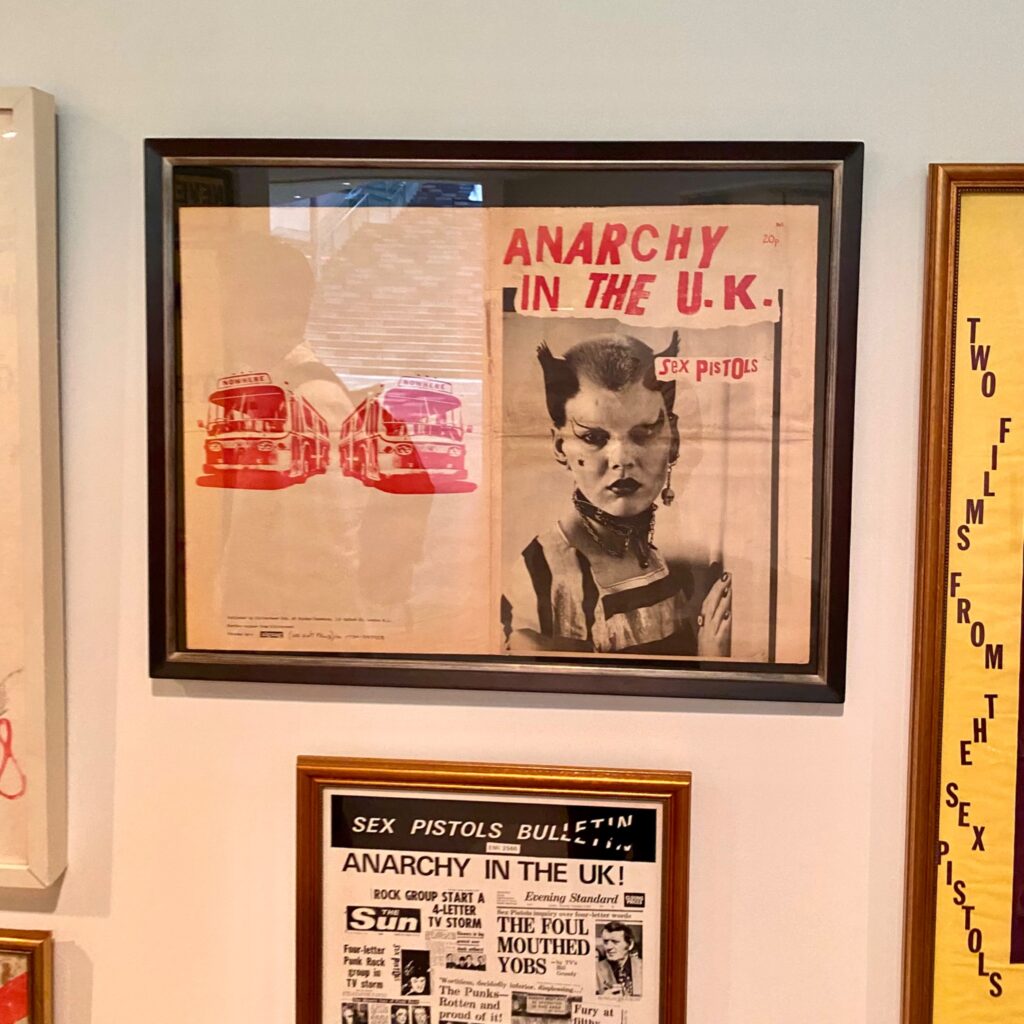
The walls were also adorned with a large number of newspaper articles from that era.
"THE FILTH AND THE FURY!"
"THE FOUL MOUTHED YOBS"
"WHO ARE THESE PUNKS?"
Such sensational headlines line the pages.
The more newspapers and television attacked the Sex Pistols, the more their presence spread throughout society, paradoxically. Even the opposing media outlets were ultimately incorporated as components of punk.
UK punk is all about the Sex Pistols, Vivienne Westwood's clothing, Malcolm McLaren's productions, Jamie Eilish's graphics, and the shops on King's Road.
It is only when all these different elements work together as a single network that the colossal image of "punk" is born.
Punk is a genre of music,A single cultural system encompassing clothing, graphics, media, and commerce.I think that was the case.
And this relationship between "culture and commerce" continues to this day.

The catalog for this exhibition was originally priced at 3,000 yen, but perhaps due to its popularity, I saw it being resold for around 10,000 yen even during the exhibition period.
Punk, a movement that championed anti-establishment sentiment and sought to break down existing values, now has a catalog documenting its history that has become "rare" and commands a premium price. It's quite ironic.
But if you think about it, punk has had this contradiction from the very beginning.
Rebellion becomes a T-shirt, a record, a poster, a badge, and 50 years later, an exhibition and a catalog.
Even cultures that rebel against the establishment are absorbed into the market the moment they spread.
Including the resale of the exhibition catalog, I think this exhibition showed the relationship between "punk and commerce" in 2026.
Sid and Nancy - Events become myths
Speaking of movies that deal with punk, there's Alex Cox's 'Sid and Nancy』。
This film, made in 1986, depicts the end of punk as a story of drugs, violence, love, and self-destruction, centering on the relationship between Sid and Nancy. Rather than being a primary source that preserves punk as it was in 1977-78,Documents showing how punk from 10 years ago was mythologized.It's a very interesting work.
The outward-looking energy of London in the first half of the film—the biker jackets, bondage, music, violence—is all replaced in the second half by drugs and codependency.Self-destruction directed inwardIt will change to this.
Then, in 2026, the film "The Blueprint for Destruction" will be released.
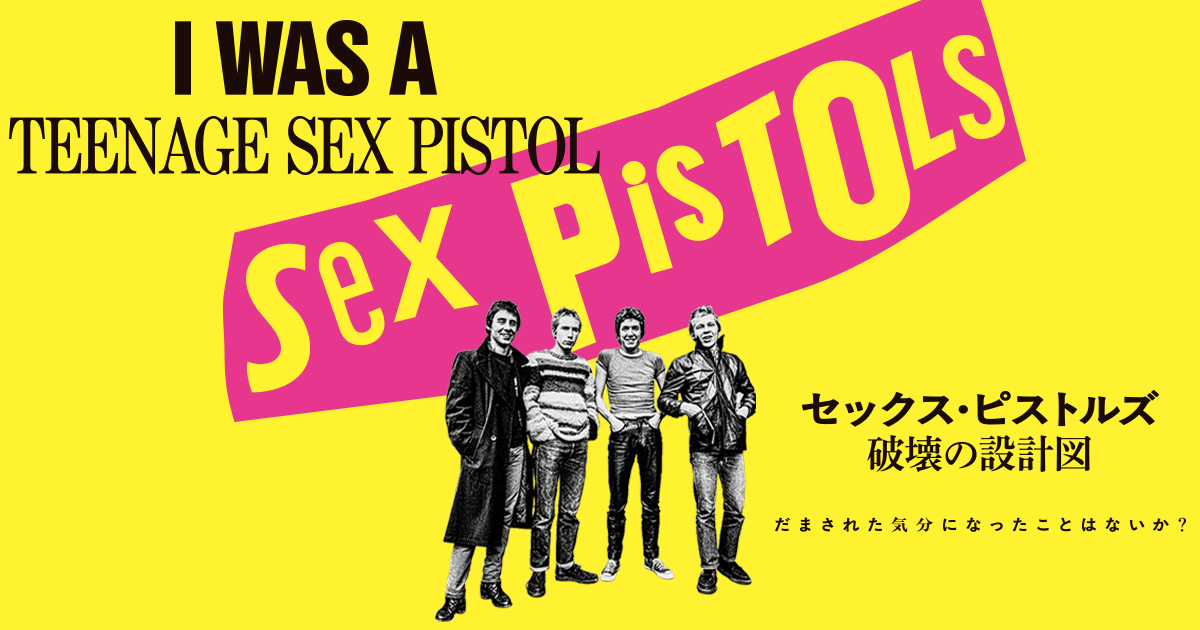
I learned that "Sex Pistols: The Blueprint for Destruction" will be released in Japan on October 2, 2026. The original title is "I Was a Teenage Sex Pistol".
This documentary centers around the recollections of the band's original bassist, Matlock, who also participated in its production. As of the time of writing this article, I haven't seen the film yet, of course.
Nevertheless, I couldn't help but react to the Japanese title, "The Blueprint for Destruction."
Because it resonated with what I felt when I saw the actual "Inception (1976)." I think punk intentionally designed everything and then exploded as a culture.
Of course, simplifying it to "Malcolm calculated it all" might also be relying on a myth he himself created. "Things designed to be destroyed are now being carefully preserved. I'm looking forward to seeing how Matlock re-examines this contradiction when it's released in October."
comment