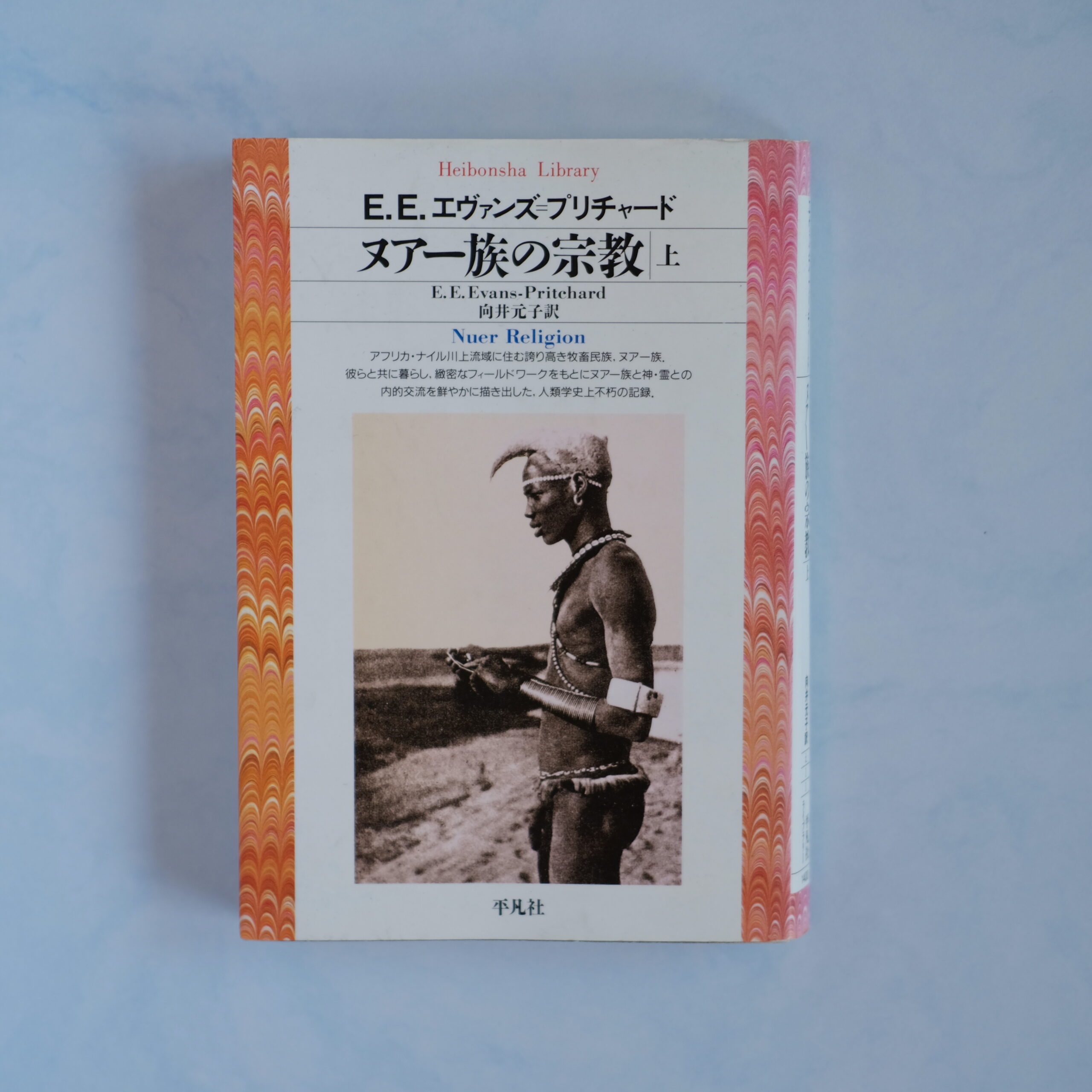
-An enduring record in the history of anthropology-
Edward Evan Evans-Pritchard (1902-1973) was a British social anthropologist.
There are many religions around the world, including Christianity, Islam, Hinduism, and Buddhism. This book is considered an important ethnography in social and cultural anthropology, systematically presenting the religions of African ethnic groups based on detailed fieldwork. The Englishman, Mr. Pritchard, entered a Nuer village without a dictionary or interpreter, and conducted fieldwork for a year.
The Nuer are a group of people living near the Bahar al-Ghazal and Sobat rivers, tributaries of the Nile, in South Sudan, Africa. Their religion, which deals with the relationship between God and man, is not narrowly defined and is centered on magic. If a prophecy made through magic fails, the prophet explains that another magic act interfered and caused the failure, and they accept this. Their religious belief, that God is everywhere but everything originates from one source, is neither animism, polytheism, nor monotheism.
For the Nuer people, the cattle sacrificed to their gods are not only economically and socially important, but also central to their spiritual culture. They have a similar relationship with cattle to the Japanese people's perception of money. The photographs of their cattle that appear throughout the book are wonderful, and seeing the beautifully and carefully carved horns of the cattle shows how much the Nuer people cherish their animals.
As I continued reading the second volume, the book touched upon the adornments of the Nuer people. The Nuer's approach to wearing furs, spears, and bracelets is very unique, and I would like to incorporate it into my own designs someday. This book, a two-volume set, is very rewarding to read. I watched videos of the Nuer people from that era on YouTube while reading it.
Thank you for reading.
Well then, goodbye. Take care :)
Author: E.E. Evans-Pritchard Translator: Motoko Mukai Paperback: 345p (Volume 1), 320p (Volume 2) Publisher: Heibonsha
First reading completed on 2021/04/20
"Memo"
The Nuer – PREVIEW
The Nuer people, with their slender limbs, walk through a village shrouded in smoke. The large number of cattle, passed down from parent to child and used in sacrifices, all have sharp, impressive horns, and their houses with conical roofs are charming.
South Sudan Nuer youth traditional dancing
The Nuer are pastoralists who make a living by grazing cattle, goats, and sheep, and cultivating grains. During the rainy season, they form permanent settlements on high ground such as embankments. The Nuer use cattle as a standard of economic value, and build social relationships through exchange and transfer. Settlements are composed of kinship ties centered around specific ancestral groups, and families practice polygamy within patrilineal clans. There is no political unity for the entire ethnic group; unity is sought between regional tribes that share cultural commonalities. Because inter-tribal warfare and conflicts frequently occur, a priestly ministry has developed to mediate these disputes. If retaliatory killings are not considered appropriate, the priests attempt internal mediation. Generally, cattle are also used as a means of compensation in these cases.

comment