- —Slavery and the history of American clothing in the 18th and 19th centuries
- First stage—being stripped of your clothes and having your body itself controlled.
- Phase two – determining "who" will receive the issued clothing.
- Third stage—slavery was also connected to the modern fashion industry.
- Stage Four – Reclaiming oneself within the clothes provided
- Stage Five – You decide what to wear on your body.
- Where can I watch the 1977 version of 'Roots' now?
—Slavery and the history of American clothing in the 18th and 19th centuries
On the day I was going to see The Roots live, I was reminded of a work I hadn't thought about in a long time, as I looked at the name "Roots."
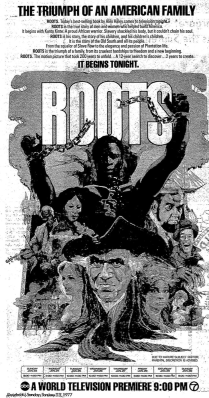
This is the American television drama "Roots," which aired in 1977.
Kunta Kinte, born in West Africa, was captured by slave traders and forcibly taken to America. From there, the family's memories are passed down through generations, from his daughter Kizzy to his grandson George and beyond.
This film depicts approximately 200 years of American history through the story of a single Black family. While it is a drama about slavery, it is also very compelling even if you only focus on the clothing.
Clothing is taken away, then provided. Roles are defined by clothing. Yet, people still infuse their own culture and aesthetic sense into their clothes. And in the end, they decide for themselves what they wear.
Even just by tracing the changes in clothing, we can see the history of the transition from slavery to freedom.
Why was 'Roots' from 1977 so important?
"Roots" was produced based on Alex Haley's 1976 novel "Roots: The Saga of an American Family."
The series aired on ABC for eight consecutive nights from January 23rd to 30th, 1977, and was watched by an estimated 130 million people across the United States. It is estimated that about 85% of American television-owning households watched at least part of the show, and that the final episode alone was watched by over 100 million people.
Furthermore, it received a record-breaking 37 Emmy Award nominations and won 9, becoming a social phenomenon that transcended being just a television drama.
After the broadcast, more people try to research their own ancestors and family history, and the very interest in one's roots—the question of "where do I come from?"—spreads into popular culture.
However, the lineage that Hayley presented, tracing her lineage from Kunta Kinte to herself, has been questioned by subsequent historians and genealogists regarding its historical accuracy. Hayley herself used the term "faction" to describe her book "Roots," which combines fact and fiction.
First stage—being stripped of your clothes and having your body itself controlled.
When considering the history of clothing in slavery, the first thing we should consider is not "what people wore," but "what people had the right to wear."
Slaved people were physically restrained against their will. The Smithsonian Museum still houses iron collars dating from around 1800-1850.
The restraints used to prevent escape and control enslaved individuals mean that the body itself becomes an object of ownership and control. Before even considering clothing choices, individuals are deprived of the freedom to move their own bodies according to their own will.
In "Roots," Kunta Kinte is taken to America and given a different name, "Toby." Changing one's name and changing one's clothes can both be seen as acts of detaching oneself from the culture and identity to which one previously belonged.

Phase two – determining "who" will receive the issued clothing.
After being sent to American plantations, the enslaved people were provided with clothing. Detailed records exist of what kind of clothing was given to the enslaved laborers.
For men, a wool jacket, breeches, two linen shirts, stockings, and shoes are recommended.
For women, the basic annual rations included a wool jacket, skirt, two linen shifts, stockings, and shoes.
Men's shirts and women's shifts were often made from a coarse, unbleached linen called "osnabagh," which was inexpensive and durable.
Clothing,
"What does that person want to wear?"
Instead,
"What is the minimum requirement for getting someone to work?"
It was treated as a cost of running a farm.
Furthermore, the quality of the clothing provided varied depending on the job.
Fieldworkers in the fields were given rough, durable clothing, while servants working in their master's house were sometimes given higher-quality garments.
Male servants working in the mansion were given a uniform called a "riverie." It was a three-piece suit, similar to men's clothing of the time, consisting of a coat, waistcoat, and breeches.
Why dress servants in fine clothes? Because they are seen by guests. A servant's appearance also reflected the wealth and status of the master himself.
Clothing is not only for keeping warm or for work,
"Who will be treated as a human being, where, and in what way?"
It also served the purpose of visualizing the hierarchy within farming communities.
Third stage—slavery was also connected to the modern fashion industry.
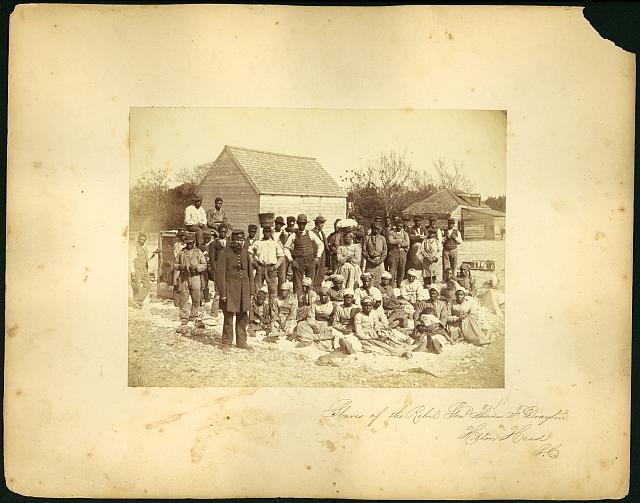
As the 19th century began, the relationship between slavery and clothing extended beyond the confines of the plantation. This is where the story leads to the modern textile and ready-made clothing industry.
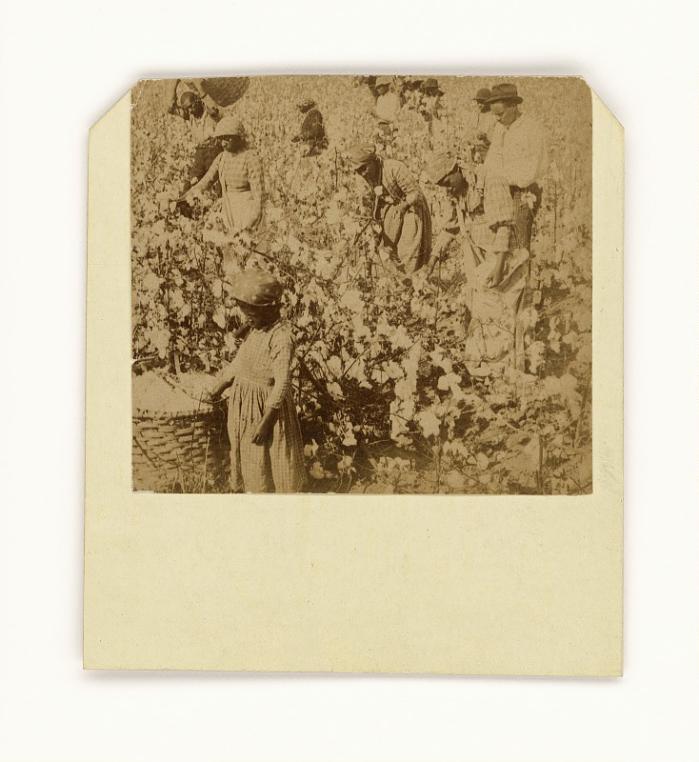
In the American South, vast quantities of cotton were produced through slave labor, which became the raw material for the textile industry. Meanwhile, in the North, the textile and garment industries developed, and the production of ready-made clothing expanded.
According to the Smithsonian Museum, the market for producing inexpensive ready-made clothing for slaves in the South expanded from the 1810s onward, and by 1860, approximately two-thirds of the ready-made clothing produced in New York was being sent to the South.
When you talk about slavery,
"Southern cotton plantations"
They may have a strong image as such.
However, in reality, cotton production using slave labor, from spinning and weaving to sewing, ready-made clothing, and distribution, was all interconnected as a single economic system.
When we think about clothing today, it's interesting to consider not just the "finished garment," but also who produced the raw materials, who sewed it, where it traveled, and who profited from it—the entire supply chain.

Stage Four – Reclaiming oneself within the clothes provided
While clothing may appear entirely to be a "tool of the oppressors," enslaved people also purchased, exchanged, and added their own clothing and accessories within their limited circumstances.
"What to wear"
Even though that great freedom has been taken away,
"How to wear it"
It wasn't possible to completely strip away everything to that extent. One's own aesthetic sense, culture, and memories become intertwined with the clothes they are given.
Stage Five – You decide what to wear on your body.
In 1865, with the end of the Civil War and the 13th Amendment to the U.S. Constitution, slavery in the United States was abolished in principle. While this did not eliminate racial discrimination or economic inequality, it brought about significant changes from the perspective of fashion history.
The act of choosing, buying, and wearing clothes that had previously been "provided" by her husband began to take on a different meaning.
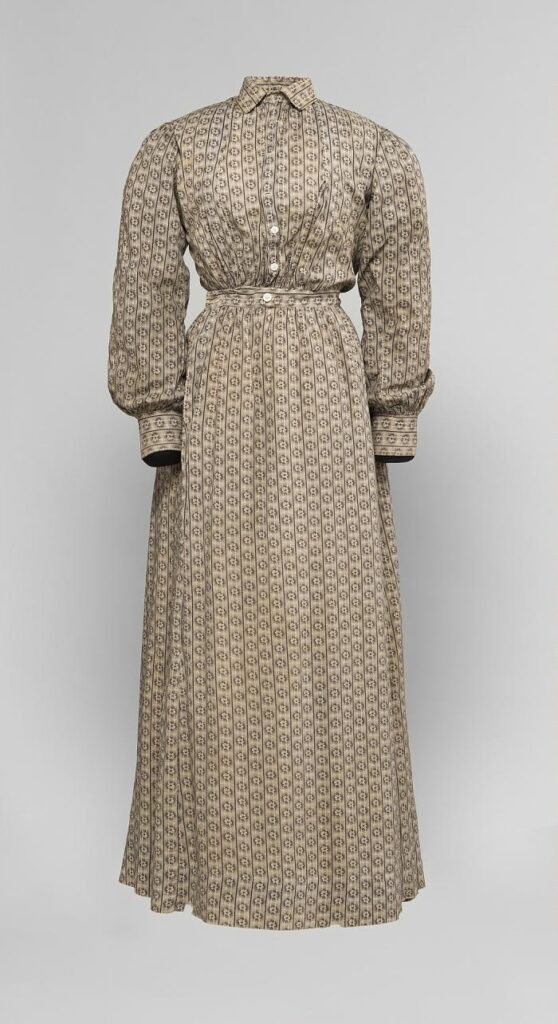
The Smithsonian Museum houses dresses believed to have been worn by women who were formerly enslaved, sometime between 1870 and 1890.
A single hand-sewn dress, made from brown and floral fabric, was passed down to her descendants even after her death.
Where can I watch the 1977 version of 'Roots' now?
I've written about "Roots" up to this point, but there's one problem: it's currently very difficult to watch.
When I watched it, it wasn't on a video streaming service, but on a DVD that was stored in the archives.
As of September 2026, checking domestic distribution information reveals that it is not available for unlimited streaming on major video streaming services, and TSUTAYA DISCAS's DVD rental service is listed as the most practical option.
However, since DVD and Blu-ray box sets have also been released, there are ways to find physical media, including secondhand copies.
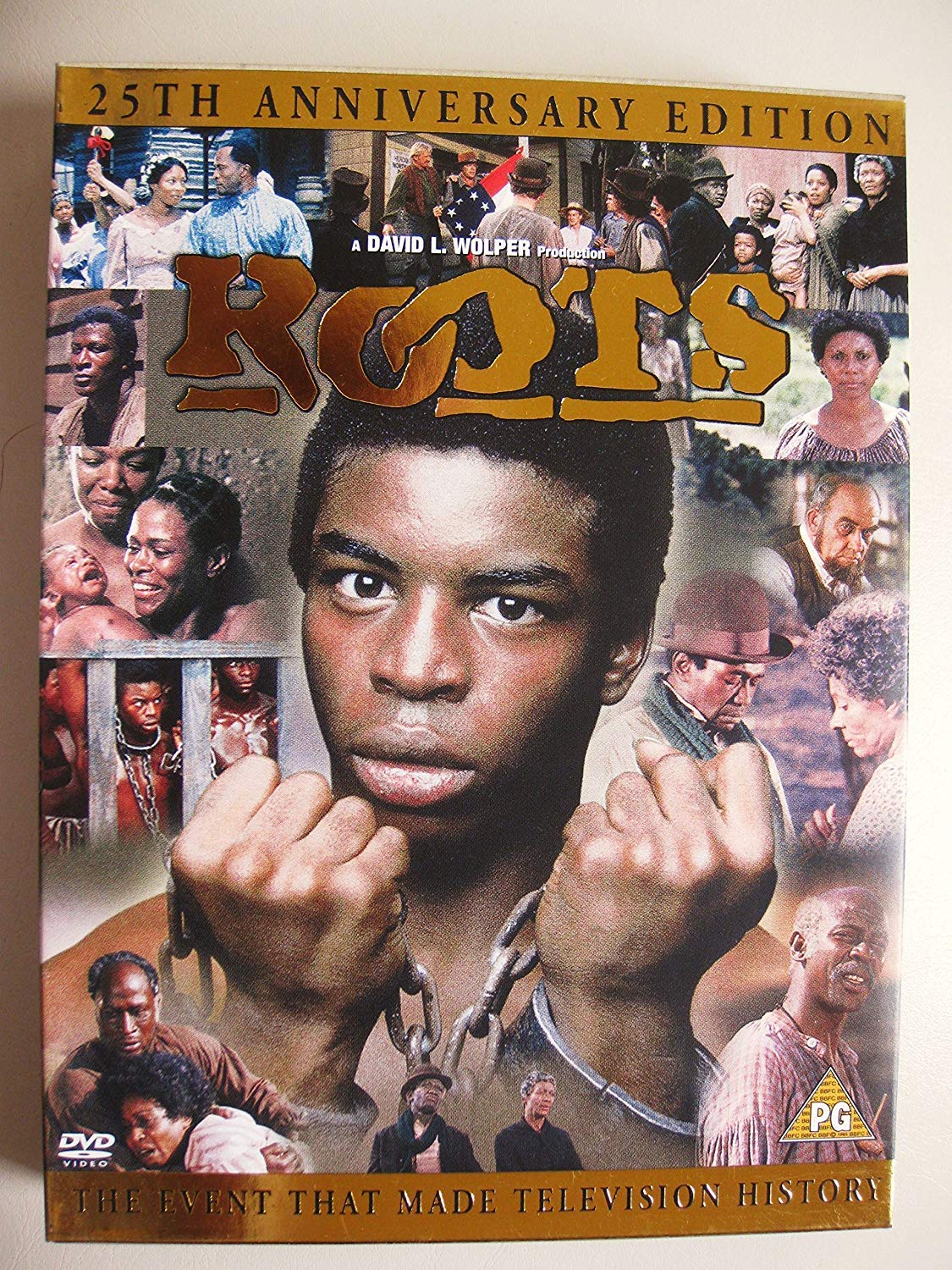
A masterpiece that became a nationwide social phenomenon in 1977 is now, about 50 years later, not easily accessible with just a click.
Just because something is available on a streaming service doesn't mean it will last forever. Owning and preserving physical media such as DVDs, Blu-rays, books, magazines, and photographs may also play a role in passing on culture to the next generation.

comment